My Transformational Journey on Udemy as a Soft Skills and Personality Development Trainer #PersonalityDevelopment #SoftSkillsTraining #UdemyInstructor

“The beautiful thing about learning is that no one can take it away from you.” – B.B. King

A few years ago, I found myself scrolling through Udemy, searching for courses that could help me grow both personally and professionally. I was driven by a desire to improve myself, to discover my potential, and to find a space where I could evolve beyond my limitations. I enrolled in courses on life coach, emotional intelligence coach, and more ,and I remember being in awe of how transformative learning can be when it’s accessible, practical, and empowering.

Little did I know that this platform, which once served as a stepping stone in my journey of self-improvement, would one day become the very stage where I would stand not just as a learner but as a trainer, blogger, coach, and mentor.

Today, I proudly host my own course on Personality Development and Soft Skills on Udemy, helping learners from different walks of life , students, working professionals, and even homemakers and unlock their true potential and transform their lives. This is not just a milestone, it’s a deeply personal victory that I hold close to my heart.

“Your smile is your logo, your personality is your business card, and how you leave others feeling after having an experience with you becomes your trademark.” – Jay Danzie

In today’s competitive world, hard skills alone are not enough. What often determines success in interviews, workplaces, and even social scenarios is how you present yourself, how effectively you communicate, how well you adapt, and how confident you are. These are the very pillars of personality development and soft skills.

Whether you’re entering the job market, trying to climb the career ladder, or returning to work after a break — your personality speaks before your resume does. Your body language, your tone, your confidence, your empathy , they are all signals of your inner strength. And that’s why mastering soft skills is no longer optional; it’s essential.

Having worked with a wide spectrum of individuals, I’ve seen first-hand the transformation that occurs when people invest in themselves. I’ve trained:

  • Students who were once afraid of public speaking, now confidently delivering presentations in corporate boardrooms.
  • Working professionals who were overlooked for leadership roles, now promoted after mastering the art of communication and influence.
  • And most touchingly, housewives who once felt invisible or inferior, now walking into rooms with their heads held high, brimming with confidence, starting their own ventures, or rejoining the workforce.

It’s been humbling to witness these journeys, and I feel truly grateful to have been a part of them.

“First impressions are not just made in seconds, they’re made forever.”

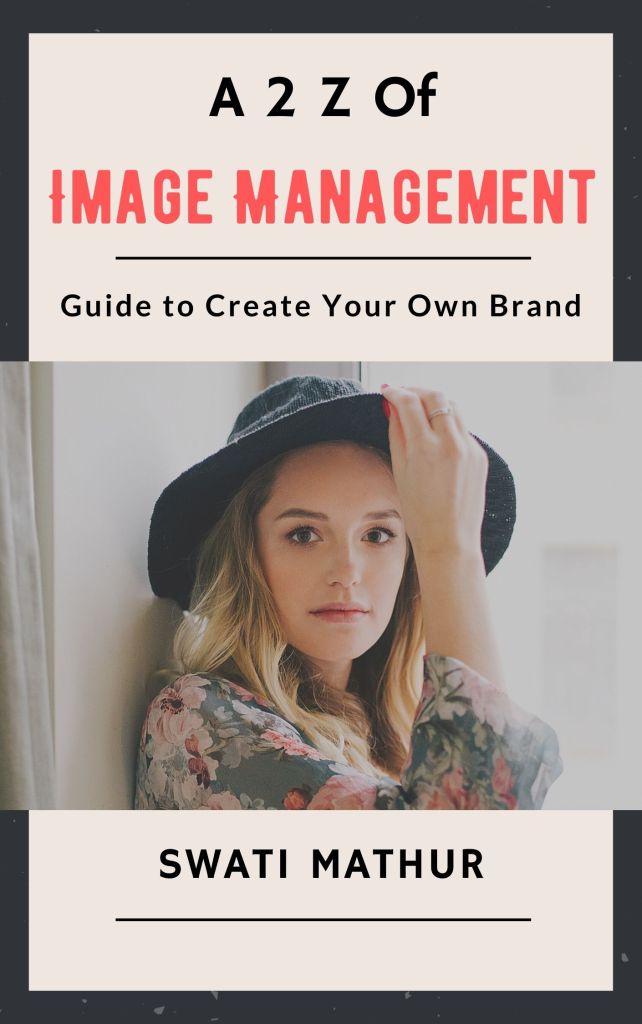
As my knowledge grew and my sessions became more structured, I compiled my insights into an eBook on Image Management, which quickly gained popularity among learners seeking practical tips for presenting themselves better , whether for job interviews, meetings, or social occasions.

This eBook became a foundation for many of my students who wanted quick, actionable strategies to enhance their physical presence, grooming, wardrobe choices, and non-verbal cues. It’s a tool I still recommend alongside my Udemy course, and together, they form a holistic personality-building package.

What started as a personal development journey has evolved into a full-fledged mission. Today, I dedicate my time to empowering others through blogs, live workshops, one-on-one coaching, and online courses. I believe in creating safe, nurturing spaces where people feel heard, understood, and encouraged to grow.

My sessions are more than just theoretical training. They are about real-life transformation , from low confidence to bold expression, from fear to fearlessness, from ‘I can’t’ to ‘Watch me do it’.

Every time a student lands a job, every time a housewife smiles at her reflection with newfound pride, and every time a participant says, “Your course changed my life,” I am reminded of why I do what I do.

“Gratitude turns what we have into enough, and more.” – Melody Beattie

I often look back at the girl who once hesitated to speak in public, who consumed every learning resource she could find on Udemy, hoping to someday grow into someone she’d be proud of.

Today, that same platform carries my name ,not as a student, but as a certified trainer impacting thousands. And for that, I am endlessly thankful. To my mentors, my students, my readers, and the Udemy community , thank you for believing in me, trusting my journey, and allowing me to be a small part of your transformation.

My story is proof that you don’t have to be great to start, but you have to start to become great. So if you’re standing at the beginning of your journey, unsure and overwhelmed , know this: with the right mindset, the right guidance, and the willingness to learn, you too can rise from a learner to a leader.

Let’s continue to grow, inspire, and uplift . One course, one session, one life at a time..

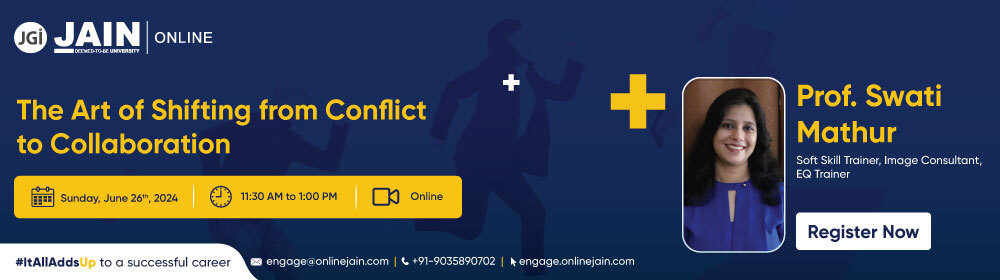
The Art of Shifting from Conflict to Collaboration #CampusToCorporate #Workshop

As both a blogger and a trainer, I recently had the incredible opportunity to conduct a session on a topic that resonates deeply with my audience: “Conflict as a Learning Opportunity.” The experience was profoundly enriching, shedding light on how conflicts, often perceived as obstacles, can be transformed into pivotal learning experiences that propel us towards success.

Conflict, while often seen as a negative experience, can be a significant opportunity for learning, especially for students and freshers. It allows individuals to develop critical skills such as problem-solving, communication, and empathy. Here are some examples illustrating how conflict can be a learning opportunity:

1. Group Projects in Academics

Learning Opportunities:

  • Communication Skills: Students must express their viewpoints clearly and listen to others, which improves their ability to articulate ideas and understand different perspectives.
  • Compromise and Negotiation: Finding a middle ground teaches students how to negotiate and reach a consensus, essential skills in both personal and professional settings.
  • Leadership and Initiative: Conflicts often reveal natural leaders who step up to mediate and guide the group towards a solution.

2. Classroom Discussions

During a classroom debate, students have differing opinions on a controversial topic.

Learning Opportunities:

  • Critical Thinking: Students must back up their arguments with evidence, fostering critical thinking and analytical skills.
  • Respectful Disagreement: Learning to disagree respectfully and constructively is crucial for personal development and maintaining professional relationships.
  • Expanding Horizons: Exposure to diverse opinions can broaden students’ understanding and appreciation of different perspectives.

3. Workplace Dynamics for Freshers

A fresher joins a new workplace and finds their work style conflicting with a team member’s approach.

Learning Opportunities:

  • Adaptability: Freshers learn to adapt their working style to fit the team dynamic, which is vital for career growth.
  • Conflict Resolution: Handling workplace conflicts teaches freshers effective conflict resolution strategies, making them more resilient and better team players.
  • Professional Growth: Experiencing and resolving conflicts can boost confidence and help freshers understand their own strengths and weaknesses.

4. Cultural Differences

Students or freshers from different cultural backgrounds have conflicts due to varying norms and values.

Learning Opportunities:

  • Cultural Awareness: Conflicts arising from cultural differences can educate individuals about other cultures, fostering inclusivity and empathy.
  • Interpersonal Skills: Navigating cultural conflicts can enhance interpersonal skills and teach the importance of cultural sensitivity in diverse environments.

5. Resource Allocation

Students in a lab have limited resources and must decide how to allocate them fairly.

Learning Opportunities:

  • Resource Management: This scenario teaches students how to manage resources effectively and make decisions based on prioritization.
  • Team Collaboration: Working together to resolve resource conflicts improves teamwork and collaboration skills.
  • Strategic Thinking: Students develop strategic thinking by evaluating the importance and urgency of tasks requiring the resources.

6. Peer Review and Feedback

During peer review sessions, students may receive critical feedback that they perceive as negative.

Learning Opportunities:

  • Receiving Constructive Criticism: Learning to accept and act on constructive criticism can greatly enhance personal and academic development.
  • Improvement and Growth: Understanding and addressing peers’ feedback leads to improved work quality and personal growth.
  • Giving Feedback: Providing thoughtful, constructive feedback helps students learn how to communicate their thoughts diplomatically and supportively.

A competitive approach to conflict resolution involves a desire to win the conflict at the expense of the other party. This technique is assertive and uncooperative.

When to Use:

  • When quick, decisive action is necessary (e.g., in emergencies).
  • When enforcing rules or standing up for vital issues.

Pros:

  • Can lead to quick resolution.
  • Useful in high-stakes situations.

Cons:

  • May breed resentment.
  • Can damage relationships.

Collaboration involves working together to find a mutually beneficial solution. This approach is both assertive and cooperative.

When to Use:

  • When the interests of both parties are too important to be compromised.
  • When a long-term relationship is important.
  • When the situation is complex and requires creative solutions.

Pros:

  • Can lead to win-win solutions.
  • Strengthens relationships.

Cons:

  • Time-consuming.
  • Requires trust and open communication.

Compromise involves finding a middle ground where each party gives up something to reach a mutually acceptable solution. This technique is moderately assertive and cooperative.

When to Use:

  • When the goals are important but not worth potential disruption.
  • When time constraints are present.
  • When collaboration or competition fails.

Pros:

  • Often quicker than collaboration.
  • Can provide a temporary solution while a more permanent one is sought.

Cons:

  • May result in a solution where no one is fully satisfied.
  • Risk of superficial agreements.

Avoidance involves withdrawing from the conflict or sidestepping the issue. This approach is unassertive and uncooperative.

When to Use:

  • When the conflict is trivial.
  • When there are more important issues to focus on.
  • When the cost of confrontation outweighs the benefits.
  • When emotions need to cool down.

Pros:

  • Can provide time to think and plan.
  • Reduces immediate stress.

Cons:

  • Can lead to unresolved issues.
  • May result in loss of opportunities for resolution.

Accommodation involves putting the other party’s needs and concerns above one’s own. This technique is unassertive and cooperative.

When to Use:

  • When the issue matters more to the other party.
  • When maintaining harmony is more important than winning.
  • When the relationship is more important than the outcome.

Pros:

  • Preserves relationships.
  • Can be appropriate when one party is wrong or has more information.

Cons:

  • May lead to resentment.
  • Risk of being taken advantage of.

Mediation involves bringing in a neutral third party to help resolve the conflict. The mediator facilitates discussion but does not impose a solution.

When to Use:

  • When parties are unable to resolve the conflict themselves.
  • When a neutral perspective is needed to find common ground.

Pros:

  • Can lead to mutually agreed solutions.
  • Helps clarify misunderstandings and improve communication.

Cons:

  • May not be effective if parties are not willing to compromise.
  • Can be time-consuming and costly.

Arbitration involves a neutral third party making a binding decision to resolve the conflict. Unlike mediation, the arbitrator’s decision is final and enforceable.

When to Use:

  • When parties agree to abide by the arbitrator’s decision.
  • When a legally binding resolution is necessary.

Pros:

  • Provides a clear, enforceable resolution.
  • Can be faster than litigation.

Cons:

  • Parties may have less control over the outcome.
  • Can be costly.

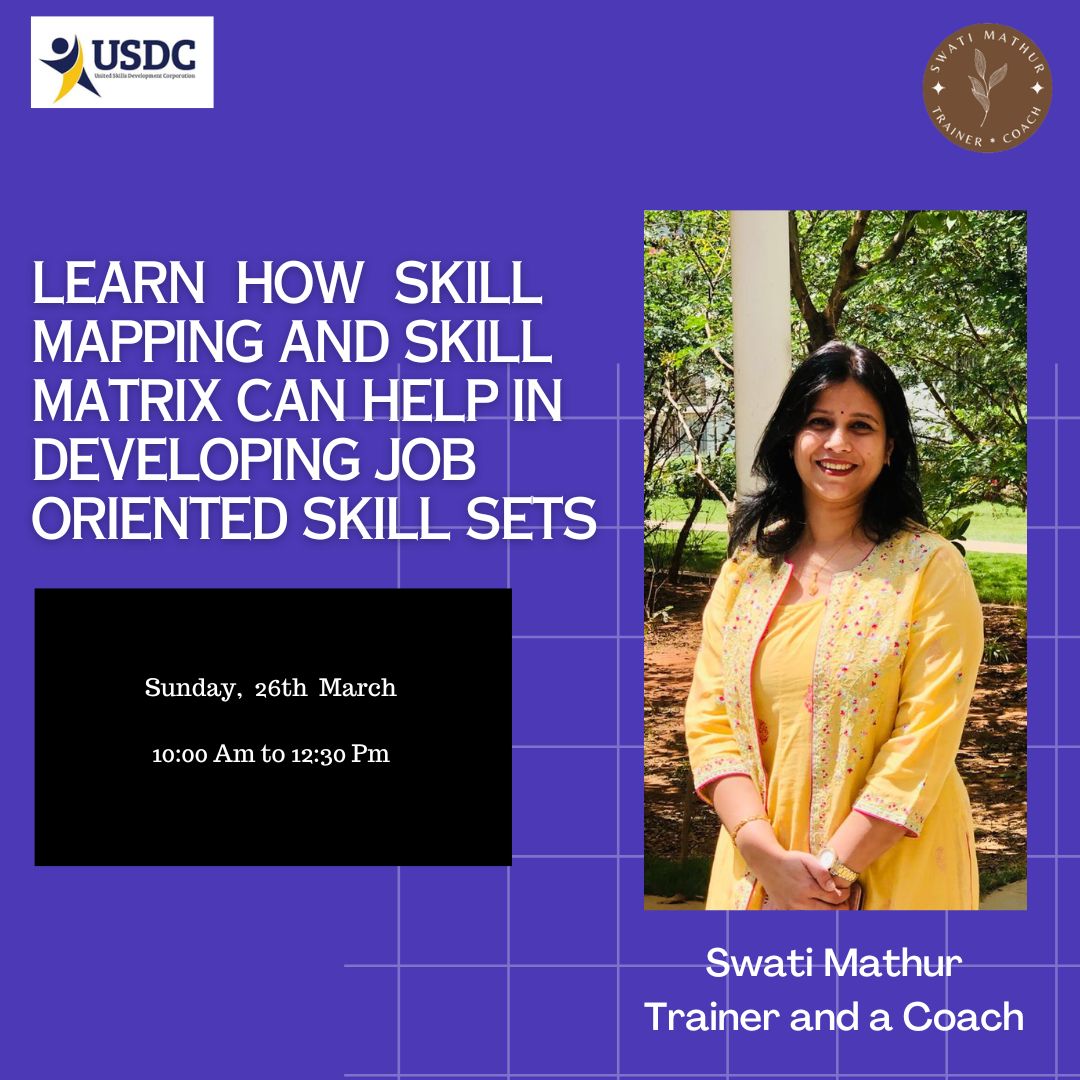
Workshops Conducted For USDC Group #Workshop #Training

Such sessions apprise the students of the current career prospects in different fields of Information, Technology, Research etc.. To groom students for their prospective career, such sessions aim at enhancing the aptitude and reasoning capabilities of the students and familiarizing them with pattern of various placement on regular basis.

I also conduct personality development program to polish and groom the students to the ground of personality, knowledge, sociability, attitude and skills so as to prepare them for the written tests, interviews and other competitive examinations. These sessions actively address the key human resource challenges faced by the world of academia and industry – and thereby help bridge the divide that separates these two islands.

Soft Skill Development Program

The session emphasizes on practical & functional skills for the real life situation in the world outside class room. The objective is to understand the communication and its importance, Voice and accent enhancement-Pronunciation, Language enrichment & speech- Fluency grammar, Vocabulary enhancement, Speech Fluency, Listening skills with pre and post assessments. For Interview Skills we work on the Barriers for Effective Communication like:

  • Basic & Intermediate – English Grammar, Sentence Formation, Spoken English, Fluency, Basics of communication
  • Spoken English, Accent Neutralization, Intonation, Accent Comprehension, Conversation Skills, Advanced Grammar
  • Presentation Skills
  • Study Skills (Note Taking, Organizing, Data, Memory etc)
  • Memory Techniques
  • Team Skills
  • Group Interaction Extempore
  • Developing verbal & non-verbal communication skills
  • Role Plays

In Skill mapping session students are introduced to mapping their skills which is a visual representation of the skills needed to perform well in any given role and comparing that with the existing skills. This comparison will allow to identify the gaps. Skill maps can provide a view of the entire team by showing the contributions and skills of each individual in teams.

Anyone who is interested in these sessions can approach us and we can help you customize these session according to your need.

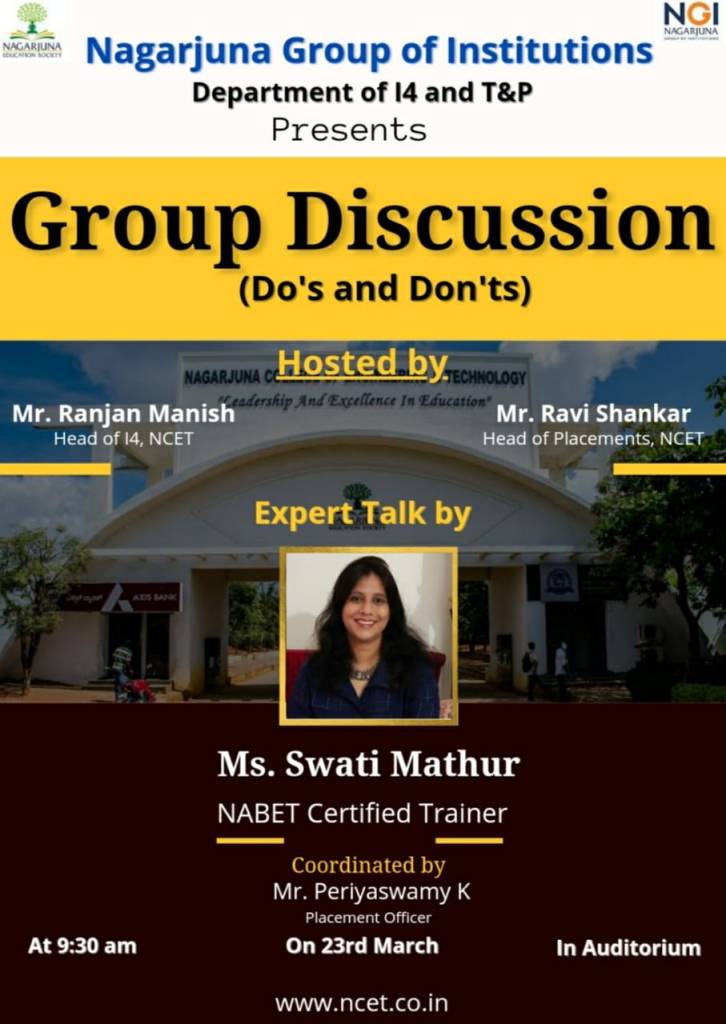
Session On Do’s and Don’t’s Of Group Discussion with Young Minds- Workshops / Collaborations

Group discussion is a systematic way on a particular topic, not a wrestling match to score points. It calls for a lot more maturity and logic. Group discussion is extensively used along with personal interviews for the final selection of candidates for a job interview. It helps in selecting the best among the candidates. All candidates are placed on an equal footing in a GD. It is also designed as a situation test wherein a candidate’s group worthiness and potential as employee comes out explicitly.

To read more check our my blog post here

Difference Between Resume Making and Resume Building

In order to understand the difference between a resume making and resume building first we need to know what Resume is:

Resume is a marketing documents which is used to make a favorable impression on the recruiter. This is the first point of contact so make sure that it is impressive and to the point. A Resume is a detailed summary of your credentials which greatly assist you in various arenas of your professional life. The sole purpose of your resume is to sell your credentials for the purpose of employment. Your Resume is to get you an interview, not a job! . An Interview call means your resume has made a favorable impression and your qualifications and experience have been found to be appropriate for the assignment. The thought of having to write a resume can be daunting for the most seasoned of players and even more in the current job market, so for fresher who wouldn’t know what to include, what to leave out and what format to followed can be a big dilemma. There are times when Resume is sent through e-mail, that’s when the need to know basics of E-mail Etiquette’s comes into picture. You can know more about resume making here.

Resume making is mainly putting your achievements on a sheet of paper. It has more to do with the structuring of your details. It can be done on a short period of time. While resume building is a continuous and a complex process which should begin very early and spread over a period of 3 to 4 years.. It is the act of visualizing the content of your resume.

So when should the task of resume building begin?

Ideally, when a student enters his/her graduation course and set her/her professional goal. The student should visualize what their resume should contain and start working towards achieving them, Let us now understand what should the resume contain and more importantly why? To answer this question, we need to think from the point of view of the interviewer. It is very common for any student to be tensed before a job interview. It is because, there is a lot of uncertainty regarding the type of questions that he/she might have to face in the interview. It is possible for a student to exercise control over the type of question they might have to face, at least to a certain extent. Yes that true but this can only happen when they start focusing on resume building.

Now this can happen if your resume has all these content:

  • Internships : Where a student will have a short term work experience in any company to get some entry level exposure to a particular industry or field. It is as much as learning experience as it is work. Here students spend their time on specific project of their interest, learning about the field, networking and developing hard and soft skills.
  • Workshops : This is where a teaching staff presents theme or concepts or the development of a skill related to the course of the study. Workshops gives more hands on learning however also allow more discussion, debate, interaction and presentation on a given topic.
  • Seminars: It is an important part of an academic program where a group of advanced students studying under a professor with each doing original research and all exchanging results through reports and discussions.
  • Project : This is nothing but a learning by doing. Students needs to do many mini projects and major project in their final here. This will give them exposure and deeper understanding of the concepts . A project is a chance to immerse yourself in a more ‘active learning’ experience. It will include activities such as planning, researching, creating, thinking critically, building, testing, and reporting.
  • Self Study: Using self-study, students are able to go beyond simply learning what their class textbooks and instructors teach them. By practicing self-study, they are encouraged to further explore topics they are interested in, developing stronger study skills as a result.
  • Paper presentation: Paper presentation is a technical event which is an individual competition where each participant is required to make a paper about a given topic or area, and then present it in front of the juries. It involves extensive research and originality.
  • Proactive technical orientation: The Technological  Orientation scale measures the tendency or habit of seeking to increase one’s repertoire of skills and uses of technology-based resources and programs; toward valuing the Internet and other technological means of accessing credible sources of information or researching a problem; toward being interested in staying current and learning about new technologies.

You are literally telling the Interviewer the areas to ask you questions from. Isn’t this better than having theoretical knowledge and being scared of the interview? When the questions are from your area of interest , your experience and efforts, should you be worry about technical excellence, inferiority complex. going blank or low confidence? Resume building helps you to build confidence and that lead to success. As the saying goes ” Failing to plan is equal to planning to fail”.

If a student understand the basic difference between resume making and resume building , he not only become successful and confident but will be prepared to face any tough situations with ease.

@SwatiMathur

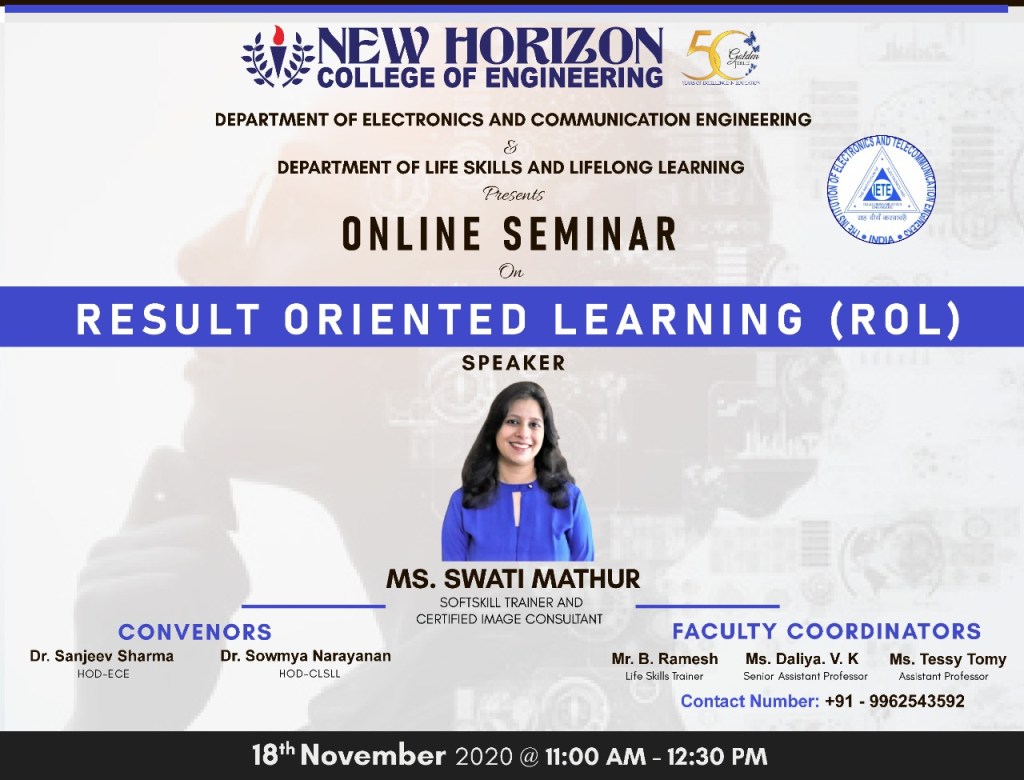
Result Oriented Learning (ROL) – Workshop

I was invited as an expert to to have a session with final year engineering students .I decided to address them on the most crucial topic ” Result Oriented learning”. It is a very important education strategy which every educational institute should adopt while planning their core curriculum in order to choose appropriate pedagogy.

What is ROL?

Result oriented learning is also known as outcome based education. As per Wikipedia, Outcome based education is an “Educational theory that bases each part of an education system around goals(outcome). By the end of educational experience, each student should have achieved the goal. There is no single specified style of teaching or assessment in outcome based education, instead , classes, opportunities and assessments should all help students achieve the specified outcome. The role of faculty adapts into instructor, trainer, facilitator and mentor based on the outcome targeted.”

Growing competition and fast changing technology makes it imperative to align learning with elements like time, skill based and adaptive to achieve the desired result. Therefore result oriented learning becomes vital for meeting the growing and changing corporate requirements to have an access to right knowledge at the right time.

Result oriented learning encourages students to focus more on higher order thinking rather than just acquiring and understanding the concept to gain credit points. While designing the learning process or a plan one needs to define the desired outcome and objective.

Continue reading “Result Oriented Learning (ROL) – Workshop”

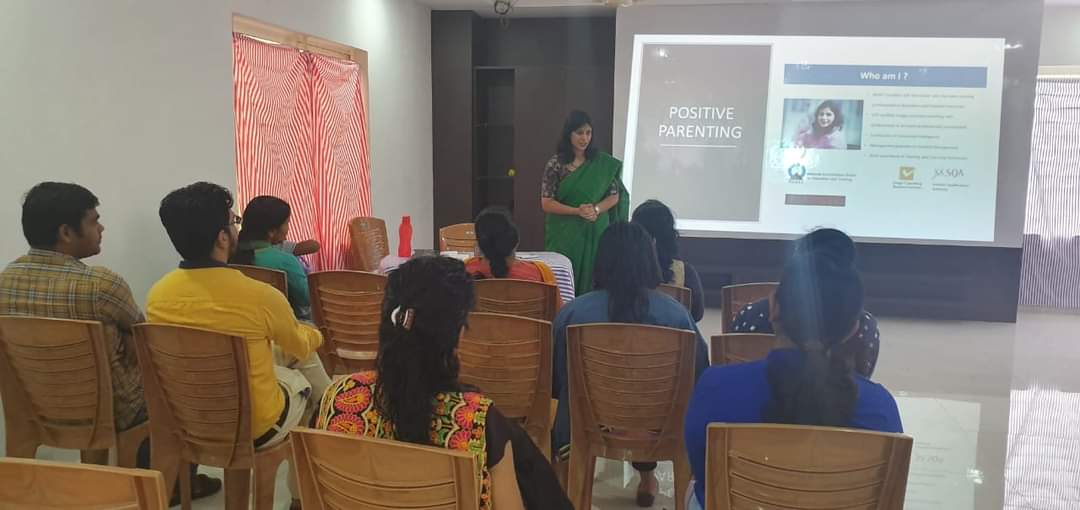
5 Positive Parenting Skills – Workshop

This Workshop was designed especially for working Parents but is applicable for all.

Everyone know’s being a parent is not easy but no one told you how it is going to be like. Each parent has their own experience and learning. There have been lot of research which has gone into understanding why the child behave and react the way they do.

Every parent wants to give their best to their kids upbringing process but we need to understand just having good intention is not enough but understanding kids emotions is the key for good parenting.

In our society there is a common belief we like to call the “Big Lie”—the idea that our society and childhood upbringing do not influence who we are today at the deepest level. Most people don’t deny those things have an impact, but they think the effect is minimal and resist believing that their experiences and other people formed their beliefs. However, the reality is that by the time we reach adulthood, all of us have developed a pattern of how we automatically react to life’s challenges. We have also develop belief systems and attitudes that have been shaped by those around us. Each of us have learned different ways of reacting, which is why when faced with challenging situations some people may react by shutting down, others react with anger, other with anxiety, and others with excitement. What determines the different reactions is the different ways the individuals view the challenges, based on their conditioning—their learned response. So there are certain skills every parent should posses in order to have better relationship with their children.

5 Positive Parenting Skills

Continue reading “5 Positive Parenting Skills – Workshop”

How to make Online Learning Effective – Workshop

Covid-19 has profoundly change the way India learns. Everybody is going virtual that makes it even more important to understand how to make these online learning more effective.

Apart from different learning techniques this workshop focuses on various tips to make online learning effective. Some of these tips are:

Continue reading “How to make Online Learning Effective – Workshop”

Changing the way India Learns

Metamorphosis (Swati Mathur) in association with Burgeon Training Solutions conducted a workshop on “Changing the way India Learns“.

Learning in an ongoing process, once you stop learning you stop growing. But is that enough? What is important is that you should transform yourself from a passive learner to an active learner. We have seen this transformation from different learning theories which starts from Behaviourism theory move on to Cognitivism theory and then to Constructivism theory.

Continue reading “Changing the way India Learns”