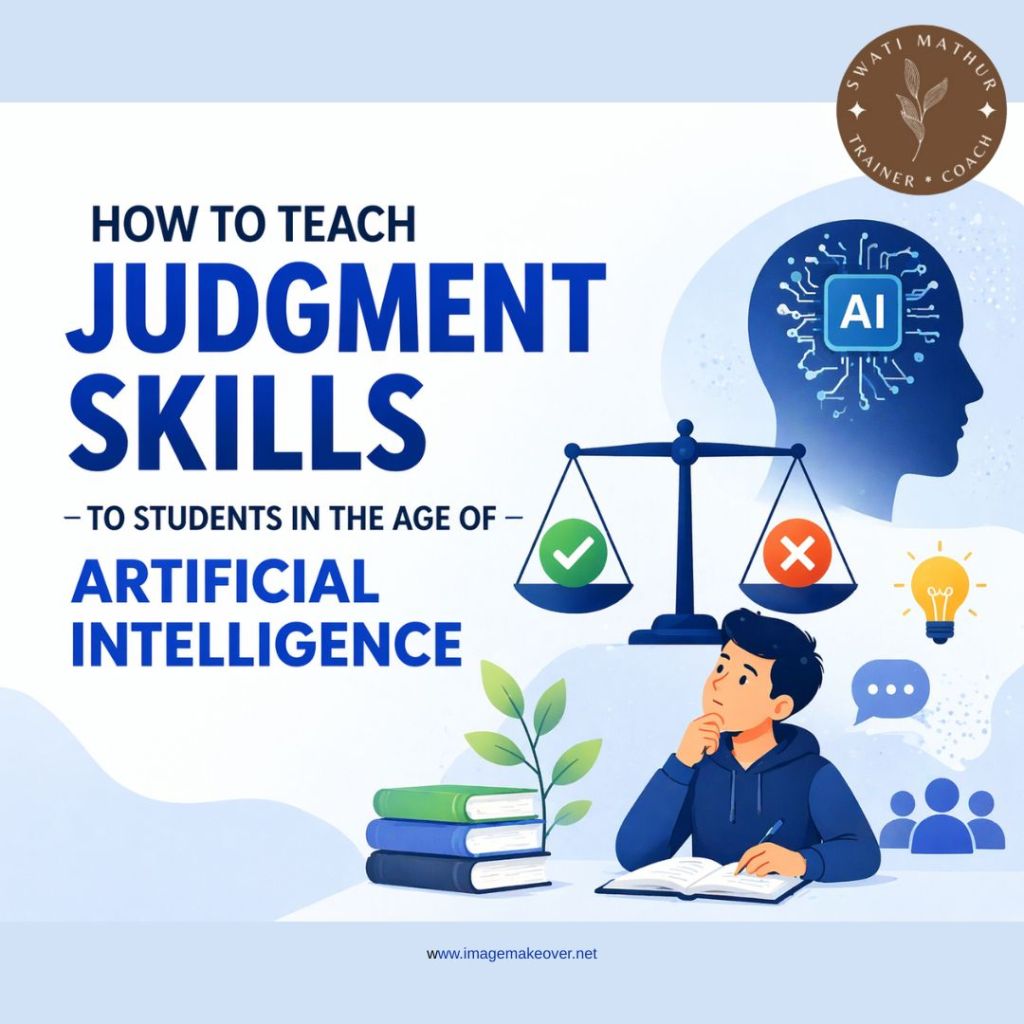
How to Teach Judgment Skills to Students in the Age of Artificial Intelligence #JudgementMatters

In today’s AI-driven world, where Artificial Intelligence (AI) can generate answers in seconds, the real challenge is no longer finding information, it is deciding what to do with it. As a soft skills trainer and a blogger, I often emphasize that success today is not about speed, but about sound decision-making.

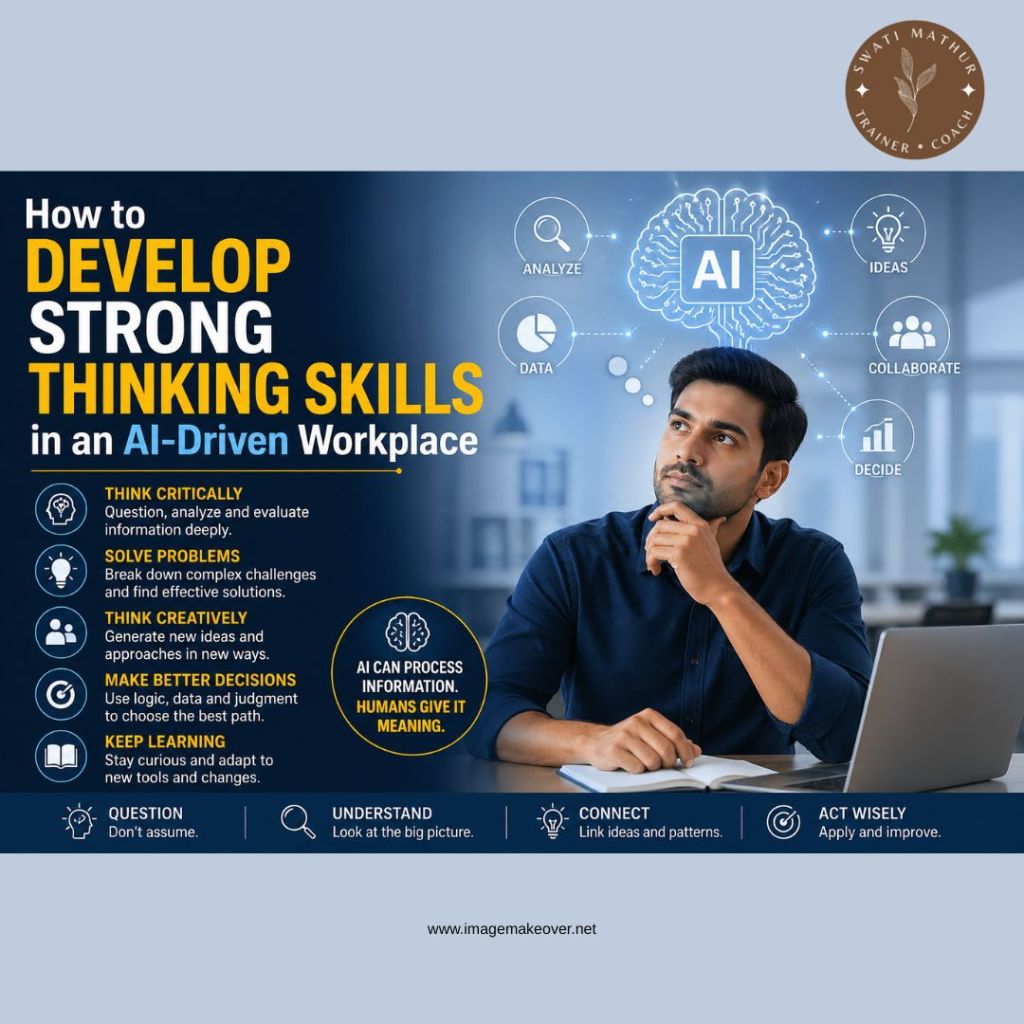
Judgment, therefore, becomes the defining skill. It is the bridge between information and action, knowledge and wisdom. Without it, even the best tools can lead you in the wrong direction. It is not just about making decisions but about making thoughtful, responsible, and context-aware decisions. In a world full of automated outputs, judgment helps you pause, evaluate, and choose wisely. It is very important to critically evaluate every information instead of just blindly accepting it. At the same time having clarity of purpose and awareness regarding consequences is equally important before taking any decision. When you develop judgment, you move from being a passive user of AI to an active thinker.

AI today can do anything from writing essays and reports to suggest career paths or provide business ideas and even offer solutions instantly. But what it cannot do is fully understand your personal context, emotions, and long-term goals. That gap is where judgment plays its role. Without judgment you may follow advice that doesn’t suit you, you may lose your originality or you may become dependent on tools. But with judgment you filter what truly matters, adapt ideas to your reality and make decisions aligned with your values.

In the AI age, not everything that sounds right is actually right. AI often presents information confidently, which can create an illusion of correctness.

Strong judgment begins when you start questioning:

  • Is this accurate?
  • Is this relevant to my situation?
  • What might be missing here?

For example, when a student receives a ready-made answer, instead of copying it, they should analyze whether they truly understand it.

AI works on general patterns, but your life is unique. What works for others may not work for you.

Good judgment requires you to:

  • Understand your strengths and limitations
  • Consider your environment and goals
  • Customize AI suggestions accordingly

For instance, a productivity method suggested by AI may not suit your learning style. Judgment helps you adapt it instead of blindly applying it. One-size solutions don’t work in real life therefore personalization is the key to effectiveness.

One of the biggest risks in the AI era is the temptation to take shortcuts. It is easy to generate assignments, projects, or answers without effort. But judgment asks a deeper question, Is this helping me grow? Ethical judgment helps you to maintain integrity, build trust and focus on long-term success instead of short-term gains. As I often tell students AI can help you finish tasks, but only honesty will help you build a future.

AI can give you multiple options, but it cannot take responsibility for your choices. That responsibility lies with you. Strong judgment means, evaluating pros and cons, accepting uncertainty and taking ownership of decisions. For example choosing a career path, making a business decision, or handling relationships, AI can guide, but you must decide and stand by it. Remember every decision has consequences and every choice shapes your future.

Judgment is not something you are born with, it is something you build over time.After every decision, take a moment to reflect what worked well, what could I improve and what did I learn? This habit strengthens your thinking and prepares you for better decisions in the future.

We are living in a time where intelligence is easily accessible.
But what will truly set you apart is not how much you know but it is how wisely you choose.

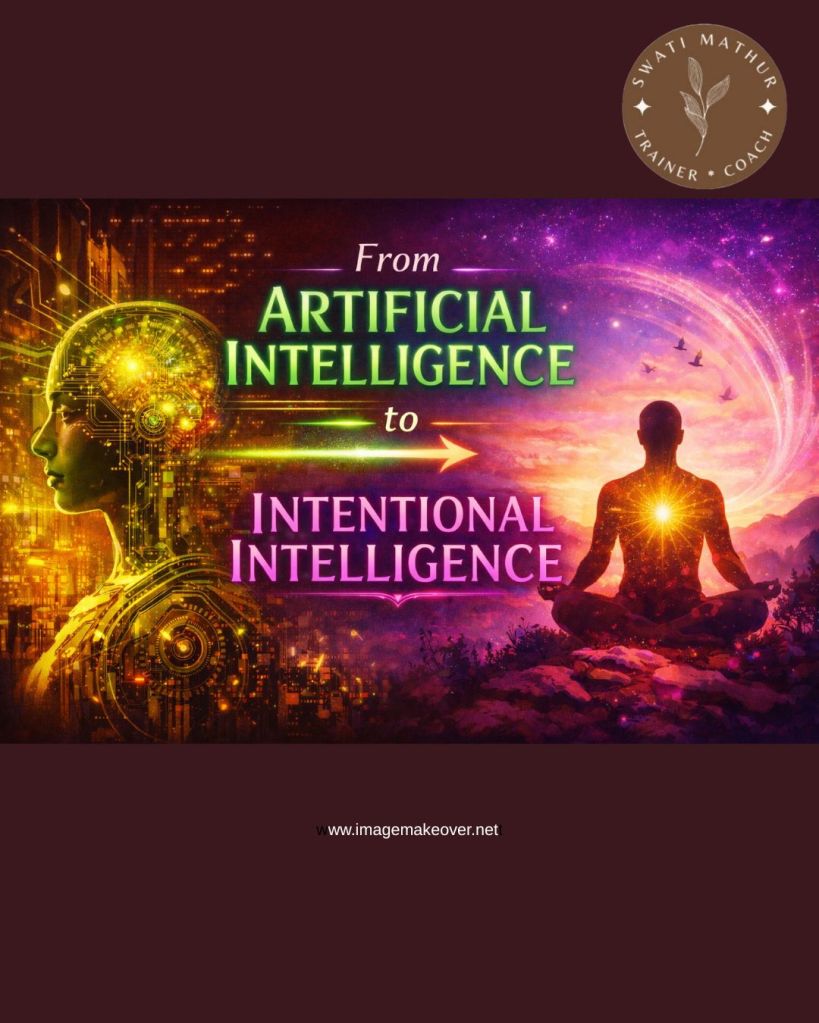
From Artificial Intelligence to Intentional Intelligence: The New Intelligence in AI Age #Intentional Intelligence Matters

In a world where Artificial Intelligence (AI) can think, write, analyze, and even create, the definition of intelligence has fundamentally changed. Earlier, intelligence was about what you know, today, it is about how consciously and purposefully you use what is available to you. This is where the concept of Intentional Intelligence becomes critical.

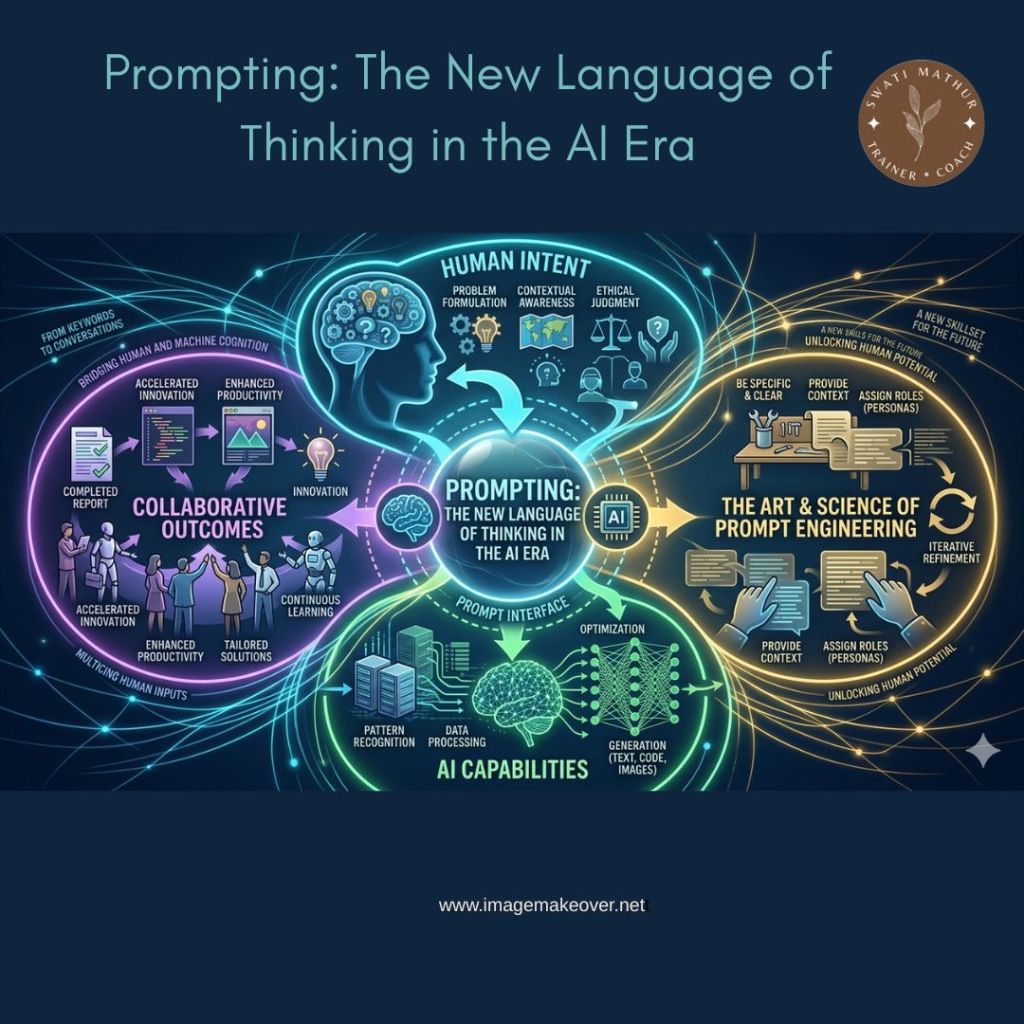
Intentional Intelligence is not just about being smart but it is about being aware, mindful, and purposeful in how you think, learn, and act, especially when powerful tools like AI are at your fingertips. Without intention, AI can make you faster but not necessarily better. In the age of AI, one of the biggest mistakes people make is jumping to tools without clarity. They open AI platforms, type random prompts, and expect meaningful results. But AI is like a mirror, it reflects the quality of your thinking. Before you use AI, pause and define your intention clearly,

  • What exactly am I trying to achieve?
  • What problem am I solving?
  • What kind of output do I really need?

When you operate with clarity, AI becomes a powerful assistant. Without it, it becomes a source of distraction and confusion. For example, a student who asks, “Explain this chapter so I can understand it deeply” will gain far more than someone who simply says, “Give me answers.” The difference is not in AI but it is in intention.

AI gives fast answers but high performers don’t accept them blindly. They engage, challenge, and refine. In fact, one of the most important skills in the AI age is learning how to question. Whenever you receive an output, train yourself to think,

  • Is this accurate and relevant?
  • What perspective is missing?
  • Can I improve or expand this idea?

This habit builds critical thinking, which is something AI cannot replace. For instance, if AI generates a business idea, an average user may accept it. But a high performer will always question like, “Is this practical in my context?”, “What are the risks?”, and “How can I make it unique?” This is where real intelligence begins not in receiving answers, but in refining them.

Most people use AI to consume, read, copy, paste, and move on. But high performers use AI to create. The goal is not to depend on AI for output, but to use it as a thinking partner. You can use AI to brainstorm ideas, to build your own frameworks from AI suggestions or combine your originality with AI efficiency. When you shift from consumption to creation, your value increases. For example, instead of copying an AI-generated assignment, a student can understand the structure, add personal insights and present a unique perspective. Now this transforms them from a user into a creator.

One of the most underrated habits in the AI age is reflection. When everything is instant, people rarely stop to think about what they actually learned. But learning does not come from access, it comes from processing. After using AI, take a moment to reflect, what new idea did I understand today? Did this improve my thinking or just save time? How can I apply this knowledge? Reflection converts information into deep intelligence.

For example, after completing a task using AI, instead of immediately moving on, a learner who reflects will retain more, think better, and grow faster.

AI is powerful but it can also make you lazy if used without discipline. Over-dependence reduces your ability to think independently. That’s why intentional users build boundaries. They decide when to use AI and when to think on their own. They avoid using AI for everything instead challenge themselves before seeking assistance. Discipline ensures that AI remains a tool and not a replacement. For instance, a student might first attempt solving a problem independently, and only then use AI to check or improve their answer. This builds confidence and capability.

In the age of AI, the gap is no longer between those who have access and those who don’t. The gap is between those who use AI passively and those who use it intentionally. Two people can use the same tool, but their outcomes will be completely different.

Which category you fall into?

Swati’s World of Thoughts – My Blogging Saga

Today, we’re delving into the realm of the letter “S”. As I pondered various topics, it dawned on me to delve into the saga of my blogging journey, starting with SwatisWorld ofhoughts, my first blog. Just to avoid any confusion, let me clarify that I manage two blogs: “Swati’s World of Thoughts,” about which I’m sharing my blogging expedition, and “Imagemakeover,” the platform through which I’m crafting this narrative.

So lets begin………….

My journey with my blog began in 2015, that was the time when I sought solace in the written word. For me it was more than just a blog; it was my sanctuary, a place where my thoughts could flow freely, unfiltered, and unencumbered by the constraints of daily life. With each keystroke, I poured my heart onto the digital canvas, creating a space that felt like home.

In those early days, my blog was a reflection of my inner world, a place where I penned down my thoughts, feelings, and emotions in form of poetry with a raw honesty that resonated with readers. It was a medium through which I found catharsis, a way to lighten the burdens that weighed heavy on my soul.

But as my love for literature grew, so did my aspirations for my blog. I discovered a passion for books—a passion so intense that it ignited a spark within me. With each book I devoured, I realized the power of words to transport, to transform, and to transcend. And thus, a new chapter in my journey began.

I decided to channel my love for books into my blog, transforming it into a haven for book enthusiasts. I started writing reviews that were not just critiques but love letters to the authors who had captured my heart. I wanted that the words I use danced off the page, weaving tales of wonder and enchantment that would inspired others to dive headfirst into the magical world of literature.

As my blog gained little traction, so did my confidence. I then realized that my voice mattered, and the words had the power to inspire, to educate, and to ignite change. And with each review I penned, I actually found myself growing—not just as a writer but as a person.

Today, Swati’s blog stands as a testament to the transformative power of passion and perseverance. What started as a simple outlet for my thoughts has evolved into a platform that helps me not just to express but to inspire too.

In this journey, I’ve come to realize that being a book reviewer brings both advantages and disadvantages. What I really enjoy are the opportunities to explore diverse genres, having power to influence readers’ choices and contribute to the success of authors and books I admire. The best part is receiving advanced copies of books, allowing me to read and review titles before they are officially published. Engaging with authors, publishers, and fellow reviewers that can lead to valuable connections within the literary community is the most motivating factor. But there are moments when I’m compelled to read books that don’t align with my preferences or are simply unengaging. Unfortunately, the constraints of time often mean I’m unable to indulge in books of my own choosing. Often face tight deadlines for reading and writing reviews, which care stressful, especially when juggling multiple commitments. Reviewing books requires subjective judgment, due to which personal preferences may affect the assessment of a book’s quality, potentially leading to biased reviews.

Despite the challenges, my passion for books eclipses any drawbacks. My happiest moments involve sitting with a steaming cup of hot ginger tea, nestled in my cozy corner with my favorite book in hand.

Sharing some of my favorite write up’s from the blog

What’s your happiest moment and how did you find my journey? Do share..

“Rhythms of Pen and Paper: Cultivating Good Handwriting Habits”

Even with the growing digitization of communication, handwriting is still very important in many facets of life. It’s a special way to express yourself. No two persons have exactly the same handwriting, even if they employ the same script or style. This is similar to fingerprints. It captures personality, uniqueness, and feelings that written words may not always capture. Everybody has a particular voice and appearance, and each person’s handwriting is no different. An innately personal handwriting style can be created by varying the size, slant, spacing, and shape of the letters. Some facets of a person’s personality can be seen in their handwriting. Someone with chaotic or erratic handwriting, on the other hand, can be considered as creative or impulsive, while someone with tidy, organized handwriting might be seen as thorough and detail-oriented. Graphologists, or handwriting analysts, frequently use handwriting analysis to deduce personality traits and attributes. Handwriting can also be influenced by emotions. For example, a person writing under stress or anxiety may use unsteady or uneven strokes, whereas a confident writer may use bold, assertive lines. Therefore, a person’s handwriting may represent their current emotional condition or attitude.

Important documents have always been handwritten, which lends them a feeling of authenticity and importance. Traditions and cultural legacy are also preserved through handwriting. It has been an important tool for artistic expression, documentation, and communication throughout history. Manuscripts, journals, and handwritten letters from people from many eras and civilizations can shed light on their ideas, emotions, and life experiences. Handwriting is a kind of cultural heritage and a concrete link to the past.

It has been demonstrated that handwriting improves memory, comprehension, and creativity among other cognitive functions. Compared to typing, it uses distinct brain regions, which improves knowledge retention. When writing by hand, the brain must process information differently than when typing. According to study, even the physical act of writing letters by hand improves the efficiency of information encoding in the memory. This phenomenon, called the “generation effect,” states that actively creating information improves retention over passively absorbing it. Fine motor skills are developed and enhanced by the complex motions required in handwriting, such as grasping the pen or pencil, creating letters, and regulating the pressure used. These abilities improve general dexterity and coordination and are necessary for tasks like buttoning clothing, tying shoelaces, and handling small things.

Handwriting requires coordination between the eyes and hands to guide the pen or pencil and accurately place letters on the page. This process helps to strengthen hand-eye coordination, which is essential for tasks such as driving, playing sports, and performing manual tasks.

Reading and writing involve visual perception and processing, as the brain must recognize and interpret letters, words, and sentences. Handwriting practice helps to reinforce these visual skills, improving letter recognition, word comprehension, and overall reading fluency. Writing by hand encourages creativity and idea generation by allowing for free-form expression and exploration. The physical act of putting pen to paper can stimulate the imagination and facilitate brainstorming, problem-solving, and conceptual thinking. Many writers and artists prefer to sketch ideas or draft outlines by hand before transferring them to digital formats. Engaging in the deliberate, intentional act of handwriting requires focus and concentration. It encourages individuals to slow down and pay attention to the task at hand, reducing distractions and enhancing mindfulness. This focused attention can improve productivity, task performance, and overall cognitive function.

Therapeutic effects of handwriting include stress alleviation and emotional management. In particular, journaling enables people to analyze and communicate their ideas, emotions, and experiences in a concrete and reflective manner. Writing can help people become more self-aware, emotionally clear, and resilient in the face of adversity. Handwriting offers a comprehensive cognitive exercise that enhances memory, motor abilities, vision, creativity, and emotional control, among other mental processes. People can profit from these cognitive advantages and improve their general cognitive functioning by practicing handwriting on a regular basis.

Handwritten letters, notes, and cards often carry a deeper emotional impact than digital messages. They can convey sincerity, thoughtfulness, and personal connection, which are sometimes lost in electronic communication.

Bad handwriting can have an impact your life and career. Poor handwriting can lead to misinterpretation of messages, causing confusion and errors in both personal and professional contexts. This can result in misunderstandings and wasted time trying to decipher unclear handwriting. In certain professions where clear communication is crucial, such as healthcare or legal fields, legible handwriting is essential. Illegible handwriting can reflect poorly on professionalism and attention to detail. In academic settings, neat handwriting is often required for exams and assignments. Illegible handwriting may lead to lower grades or missed opportunities for recognition. In some cases, illegible handwriting on job applications, resumes, or important documents can result in missed opportunities or delays in processing.

While the importance of handwriting may vary depending on individual circumstances and technological advancements, clear and legible handwriting remains a valuable skill in many aspects of life.

Somewhere I have heard that if a person has bad handwriting, he or she is very intelligent as they think faster than they write” but It’s important to note that these interpretations are anecdotal and not supported by scientific evidence. Handwriting is influenced by a variety of factors, including motor skills, habit, cultural norms, and personal preference, but it is not a reliable indicator of intelligence. Intelligence is a complex trait that encompasses various cognitive abilities, and handwriting is just one small aspect of human behavior. This statement is often used humorously or facetiously to suggest that individuals with messy or illegible handwriting are too intelligent or creative for their thoughts to be contained by the constraints of neat handwriting. While there isn’t a direct correlation between handwriting and intelligence. But we can have few interpretations of this statement.

One interpretation is that individuals with messy handwriting may have so many thoughts racing through their minds that they struggle to write them down quickly enough. Their handwriting might be messy because they’re trying to keep up with their rapid stream of consciousness. In this sense, it’s not that they’re intentionally writing poorly, but rather that their thoughts are moving faster than their hand can keep pace.

Another interpretation is that people with bad handwriting prioritize the content of their writing over its appearance. They may be more concerned with capturing ideas, insights, or information than with writing neatly. Their focus might be on generating ideas or solving problems rather than on the aesthetic presentation of their writing.

Some people associate messy handwriting with creativity or unconventional thinking. They may view messy handwriting as a sign of a creative mind that doesn’t conform to conventional standards. This interpretation suggests that individuals with messy handwriting are more likely to think outside the box and come up with innovative solutions to problems.

Alternatively, some individuals with messy handwriting may simply be distracted or impatient when writing. They may prioritize speed over legibility, resulting in handwriting that is rushed or sloppy. This interpretation doesn’t necessarily imply higher intelligence but rather a lack of attention to detail or a preference for efficiency.

Thought of explaining the importance of good or I can say legible handwriting through this beautiful and inspirational story.

However, Nia had a secret struggle, her handwriting was awful. Despite her intelligence and hard work, her messy scribble often led to misunderstandings and errors in her lab notes and research reports. Colleagues struggled to decipher her handwriting, and even she sometimes found it difficult to read her own notes. What an Irony right?

As Nia progressed in her career, her handwriting became a growing obstacle. Important findings were misinterpreted, experiments were compromised, and her reputation suffered. Despite her best efforts to improve her handwriting seemed beyond repair, and she faced constant criticism and setbacks.

Feeling frustrated and defeated she reached a breaking point. She realized that her bad handwriting was not just a minor inconvenience but was holding her back from reaching her full potential. Determined to overcome this obstacle she embarked on a journey of self-improvement.

NIa sought out handwriting experts, enrolled in calligraphy classes, and practiced diligently every day. She was relentless in her pursuit of perfection, refusing to let her past mistakes define her future. Slowly but surely her handwriting began to improve.

As Nia honed her handwriting skills, she discovered a newfound passion for the art of penmanship. She delved deep into the history and techniques of handwriting, immersing herself in the world of calligraphy and graphology. With each stroke of the pen, she felt a sense of empowerment and mastery.

With her newfound expertise, Nia not only excelled in her career but also became a sought-after handwriting expert. She offered workshops and seminars on handwriting improvement, helping others overcome their own struggles with penmanship. Her journey from adversity to mastery inspired countless others to embrace the power of perseverance and self-improvement.

Nia proved that with determination and dedication, even the most daunting obstacles can be overcome. Her story served as a testament to the transformative power of resilience and the importance of never giving up on one’s dreams. And as she looked back on her journey, she realized that her once-flawed handwriting had become a symbol of strength, resilience, and unwavering determination.

Nia’s story serves as a powerful source of motivation and inspiration for many , if she can overcome obstacles and achieve her dreams, so can anyone else.

Handwriting comes in various styles, so if one doesn’t suit you, feel free to explore different options until you find the one that feels most comfortable and natural for you.

  1. Print: This is the most basic form of handwriting, where each letter is formed individually and usually without connecting strokes.
  2. Cursive: Also known as script, cursive handwriting involves connecting letters within words with flowing strokes. There are various styles of cursive, such as Palmer Method, D’Nealian, and Zaner-Bloser.
  3. Italic: Italic handwriting is characterized by slanted and often more angular letters. It’s commonly used for calligraphy and decorative purposes.
  4. Gothic: This is a medieval style of handwriting characterized by elaborate, decorative letterforms with intricate flourishes.

Therefore, good handwriting is an important skill that not only facilitates effective communication but also enhances academic, professional, and personal success. By taking the time to improve and maintain legible handwriting, individuals can reap these benefits in various aspects of their lives.