
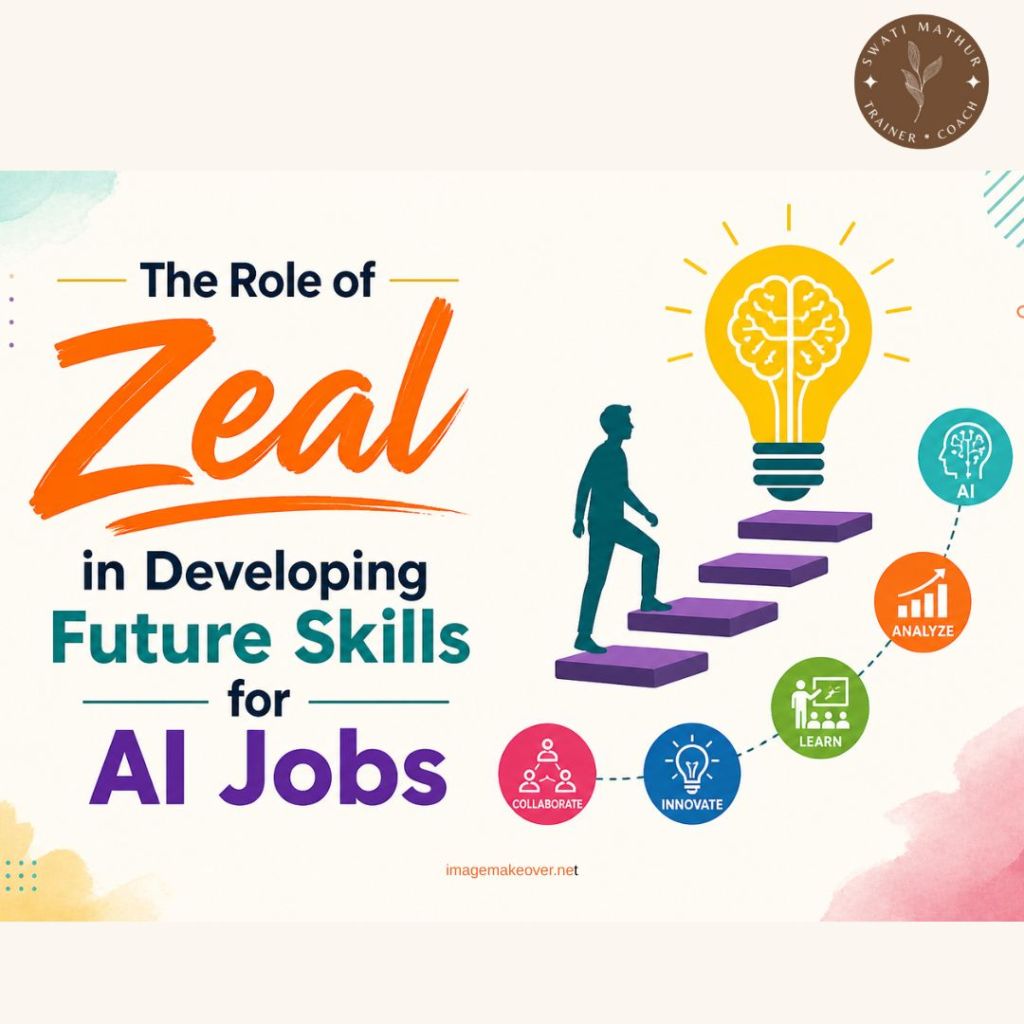
The Role of Zeal in Developing Future Skills for AI Jobs #ZealMatters

In a fast-changing world, skills and knowledge are important but they are not enough. What truly drives success is zeal. The energy, passion, and enthusiasm you bring to what you do. Zeal is what keeps you going when things are uncertain. When learning feels difficult, and when change feels overwhelming, it’s zeal that helps you going.

AI can work fast or process efficiently and even generate results. But it does not have the passion, curiosity or inner drive. That’s where humans stand apart. Zeal is what turns learning into excitement, turns work into purpose and challenges into opportunities.

In the AI era, learning never stops. But without energy and interest, learning becomes a burden. That’s when zeal helps you to stay curious, explore new ideas and enjoy the process of growth. Change can be overwhelming but when you have zeal you bounce back from setbacks, stay motivated despite challenges and keep moving forward. It gives you the strength to adapt. Energy is always contagious. When you bring enthusiasm teams feel motivated, collaboration improves and people engage more. A person with zeal doesn’t just grow they lift others along the way. Two people can have the same skills but different outcomes. And most of the time the difference is often energy. One does the work and the other brings life into the work. Zeal transforms ordinary effort into meaningful impact.

How to Build Zeal

  • Connect work with purpose: Why does this matter to you?
  • Celebrate small wins: Progress builds motivation
  • Stay curious: Keep exploring and learning
  • Surround yourself with positive energy: People influence mindset

In the AI-driven world tools will evolve, skills will change and roles will shift. But one thing will always matter and that’s your energy and attitude. Because Knowledge can be learned, skills can be developed but zeal must come from within. And when you bring zeal into what you do, you don’t just adapt to change you thrive in it.

As Ralph Waldo Emerson said:

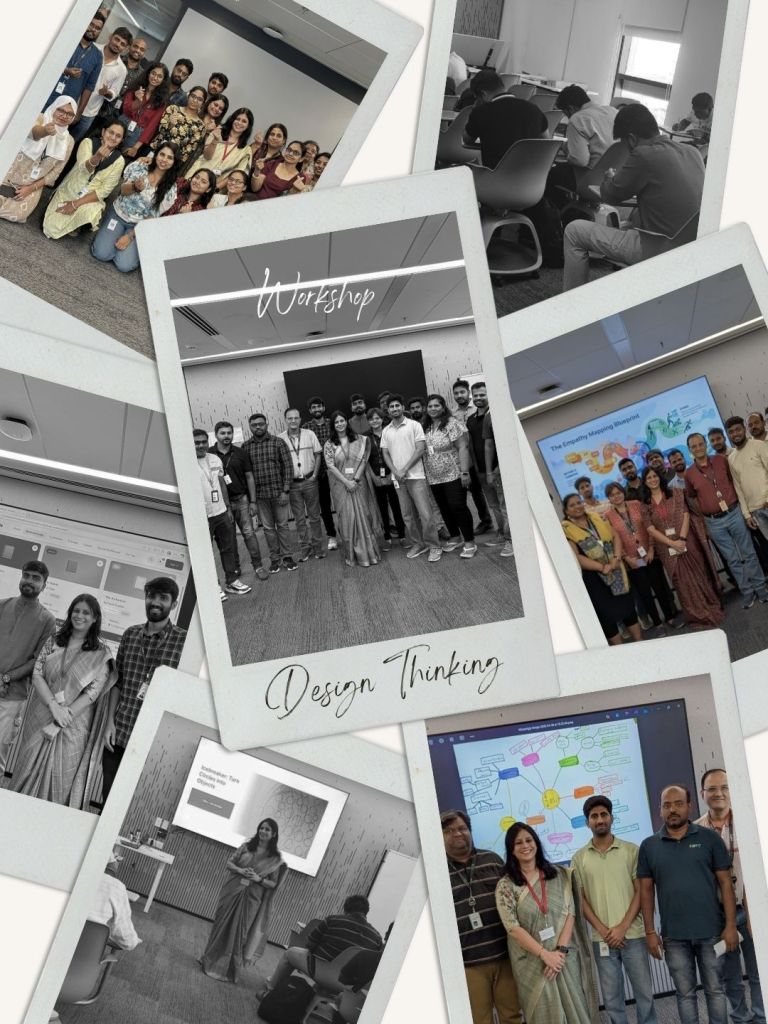
One of the most powerful reminders of Zeal in action came through a recent design thinking workshop I facilitated with HPE. The session wasn’t just about frameworks or methodologies it was about bringing a human-centered approach to problem-solving alive through energy, curiosity, and active participation. What truly made the workshop stand out was the enthusiasm in the room. The participants didn’t just engage with the process; they embraced it with a sense of ownership and excitement.

Design thinking, at its core, demands empathy, experimentation, and openness and none of these can thrive without Zeal. It is that inner drive, that willingness to explore, question, and co-create, which transforms a good workshop into a meaningful learning experience. The high level of participation and the collaborative spirit we witnessed reflected how Zeal fuels creativity and innovation.

This experience reinforced a simple yet powerful idea: while tools and techniques provide structure, it is human energy our Zeal that brings them to life. When people approach problem-solving with genuine interest and enthusiasm, outcomes are not just effective, but impactful and memorable.
This post is part of Blogchatter A2Z challenge 2026
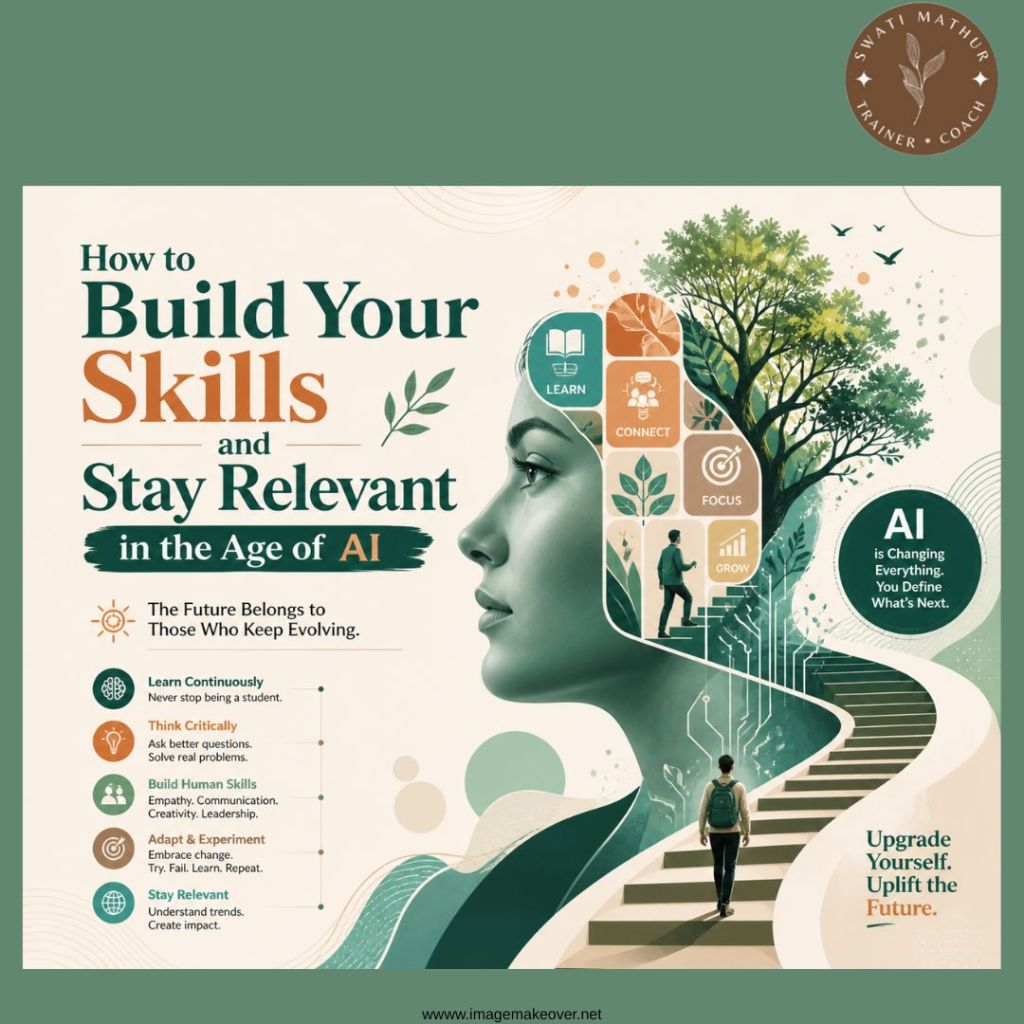
How to Build Your Skills and Stay Relevant in the Age of AI #YouMatters

In a world increasingly powered by Artificial Intelligence, automation, and algorithms, it’s easy to focus on tools, technology, and trends. But here’s the truth. The most important factor is still you. Your mindset, your decisions, your values, your ability to connect these are things AI cannot replicate.

As Peter Drucker said: “The best way to predict the future is to create it.” And the one creating that future is not AI alone, it’s you, working with AI. AI can generate content, it can analyze data and also automate processes but it cannot define your purpose or make deeply human decisions. It cannot build authentic relationships and also take responsibility for outcomes. That’s why your role is not becoming less important it is becoming more intentional. Two people can use the same AI tools and get completely different results. And why do you think this happens? Well yes, it is because of mindset.

  • A fixed mindset says: “AI will replace me.”
  • A growth mindset says: “How can I use AI to grow?” Your thinking determines whether AI becomes a threat or an opportunity.

AI can suggest options but it cannot choose for you. Every day, you make decisions like what to learn, what to ignore, how to respond and where to invest your time and energy. These choices define your direction.

In a world of automated messages and AI-generated content, authenticity stands out. People trust real voices, honest opinions and genuine interactions. You don’t need to be perfect you just need to be real.

AI can assist you but accountability remains human. Whether it’s a decision at work, a leadership choice or a communication you send it’s you who will be responsible for the outcome.

Let’s understand how can you strengthen yourself in the AI era,

  • Know your strengths: What makes you uniquely valuable?
  • Work on your mindset: Stay open, adaptable, and curious
  • Build emotional intelligence: Understand yourself and others
  • Take ownership: Don’t rely entirely on tools, use them wisely.

AI is a tool. Technology is an enabler but you are the driver. Because at the end of the day AI can support your journey but only you can define it.

This post is part of Blogchatter A2Z challenge 2026
In the Age of AI, Your X-Factor is Experimentation #ExperimentationMatters

In a world where Artificial Intelligence can generate answers instantly, suggest strategies, and even simulate outcomes, one critical question remains, Are you just consuming ideas or actually testing them?

This is where experimentation becomes a defining skill. Experimentation is the ability to take ideas and turn them into action, to test assumptions, learn from outcomes, and continuously improve. It is what transforms knowledge into capability. In the AI era, where access to information is no longer a barrier, the real advantage lies in what you do with that information.

As Peter Drucker wisely said:

And experimentation is how you begin creating. AI has democratized knowledge. You can learn almost anything in minutes be it concepts, tools, frameworks, strategies. But there is a gap between Knowing what to do and Actually doing it and making it work. Experimentation bridges that gap. It allows you to:

  • Validate ideas in real-world situations
  • Discover what works for you, not just in theory
  • Build confidence through hands-on experience
  • Develop adaptability in uncertain situations

In a fast-changing world, those who experiment don’t wait for certainty, they create clarity through action. One of the biggest reasons people don’t experiment is the desire to get things right the first time. But in reality perfection delays action and experimentation accelerates learning. Perfection says, “I will start when I am fully prepared.” On other hand experimentation says “I will start, learn, and improve as I go.”In the AI age, speed of learning matters more than initial accuracy. Let’s break down how experimentation shows up in real, everyday scenarios.

1. Trying New Tools Without Fear

AI tools are evolving at an incredible pace. New platforms, features, and capabilities are introduced constantly. A non-experimental mindset will say “I will use only what I already know.” But an experimental mindset will say “Let me explore this and see what it can do.” This means signing up for new tools and testing features, Trying different ways to solve the same problem and not being afraid of making mistakes while learning. Over time, this builds tool agility, the ability to adapt regardless of which tool you are using.

2. Learning Through Small Failures

Failure in experimentation is not an endpoint, it is feedback. Every failed attempt answers an important question: “What doesn’t work?” Instead of avoiding failure, experimenters analyze what went wrong, adjust their approach and try again with better understanding. This mindset reduces fear and increases resilience.

3. Iterating and Improving Continuously

Experimentation is not about trying once but it is about refining continuously.It follows a simple loop, Try, Observe, Learn, Improve and Repeat. For example writing prompts for AI and refining them for better output or delivering a training session and improving it based on feedback to testing different approaches in communication or problem-solving. Each iteration brings you closer to effectiveness.

4. Taking Initiative Instead of Waiting

Experimentation requires ownership. Instead of waiting for instructions, experimental thinkers, take the first step then test ideas independently and then learn proactively. This builds confidence and positions you as someone who acts and not just thinks. In modern workplaces, this is a highly valued trait.

AI has made experimentation faster, cheaper, and more accessible than ever before. You can test multiple ideas in minutes also generate variations instantly and receive feedback and refine quickly. But here’s the key insight AI accelerates experimentation but it does not replace it. AI can suggest possibilities. but only you can test, evaluate, and apply them meaningfully.

Let’s understand how to build an Experimentation Mindset.

1. Start Small, Start Now – You don’t need big projects to experiment. Try one new tool, test one new idea or make one small change. Small experiments reduce fear and build momentum.

2. Remove Fear of Judgment – Not every experiment needs to be perfect or public. Give yourself space to try without pressure, fail without embarrassment and learn without comparison. Growth happens when you allow yourself to explore freely.

3. Focus on Learning, Not Just Results – The goal of experimentation is not immediate success, it is insight. You should ask yourself what did I learn from this? or what can I do better next time? This mindset ensures continuous improvement.

4. Stay Curious – Curiosity fuels experimentation. When you ask what if I try this differently? or Is there a better way? You naturally move toward action and discovery.\

In the AI-driven world, information is everywhere, ideas are unlimited and possibilities are endless. But clarity does not come from thinking alone it comes from doing. Because thinking creates ideas, learning builds knowledge but experimentation creates real growth.

This post is part of Blogchatter A2Z challenge 2026
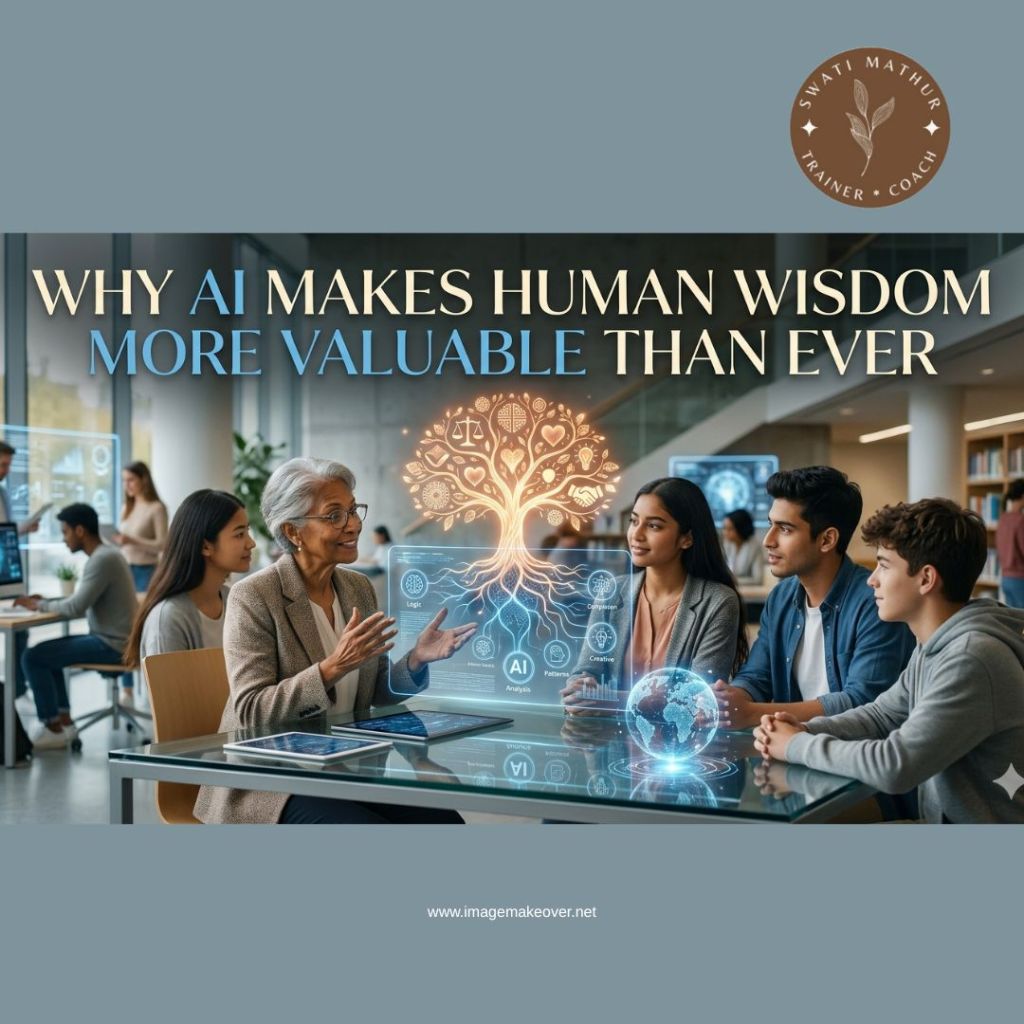
Why AI Makes Human Wisdom More Valuable Than Ever #WisdomMatters

In today’s world, Artificial Intelligence can process information faster than ever before. It can analyze patterns, generate insights, and even recommend decisions. But despite all this advancement, one quality remains uniquely human and deeply valuable is wisdom.

Wisdom goes beyond knowledge and intelligence. It is the ability to apply what you know with judgment, ethics, empathy, and long-term thinking. And in the AI era, knowing yourself and understanding the impact of your decisions matters more than ever. Some people mistake intelligence for but they are fundamentally different. Intelligence is about acquiring knowledge, solving problems, and processing information, on other hand Wisdom is about using that knowledge in the right way, at the right time, for the right reasons. AI excels at intelligence while humans must excel at wisdom. Let’s understand this with an example, AI can suggest the fastest solution but wisdom asks: Is this the right solution? Is it ethical? What are the consequences?

As T.S. Eliot reflected:

This gap between information and meaningful action is where wisdom plays a critical role. As AI becomes more powerful, decisions are becoming more and more complex and impactful. Technology can amplify both good and bad outcomes. But wisdom ensures that decisions are not just efficient, but responsible, actions consider human impact, not just results and short-term gains do not harm long-term outcomes. Without wisdom, even the smartest tools can lead to poor decisions.

1. Making Ethical Decisions

AI can provide options, but it does not have a moral compass. Wisdom will help you choose what is right, not just what is easy, it will consider fairness, responsibility, and integrity and think about the consequences of your actions on others. For instance, just because something can be automated doesn’t mean it should be and here wisdom helps you draw that line.

2. Understanding Human Impact

Data can show trends, but it cannot fully capture human emotions, struggles, and experiences. Wisdom allows you to balance logic with empathy, consider how decisions affect people, not just outcomes and build trust and respect in relationships. In leadership and teamwork, this becomes a critical differentiator.

3. Thinking Long-Term

AI often optimizes for efficiency and speed. Wisdom, however, looks beyond the immediate. It helps you ask what will this decision look like a year from now? or what are the long-term consequences? or are we solving the right problem or just the urgent one?So, wisdom shifts focus from quick wins to meaningful impact.

4. Balancing Logic with Intuition

AI operates on logic and data but humans bring intuition shaped by experience. Wisdom is the ability to use data without being controlled by it, it also trust your judgment when data is incomplete and combine rational thinking with human insight. This balance leads to better and more holistic decisions.

Wisdom is not something you gain instantly but it develops over time through experience, reflection, and conscious effort. Every experience, success or failure has a lesson. Reflection turns experience into insight. Wisdom grows when you listen to others and understand different viewpoints and also challenge your own thinking. Exposure to diverse perspectives deepens your understanding. Wisdom requires slowing down. Not every decision needs to be immediate. Taking time to think often leads to better outcomes.

True wisdom is reflected in consistent behavior. When your actions align with your values you build credibility, earn trust and make decisions with clarity.

In the AI-driven world where information is everywhere, intelligence is accessible and tools are powerful but still wisdom remains rare and that is what makes it valuable. Intelligence can tell you what to do while wisdom tells you whether you should do it

In a world full of answers, wisdom is knowing which ones truly matter.

This post is part of Blogchatter A2Z challenge 2026
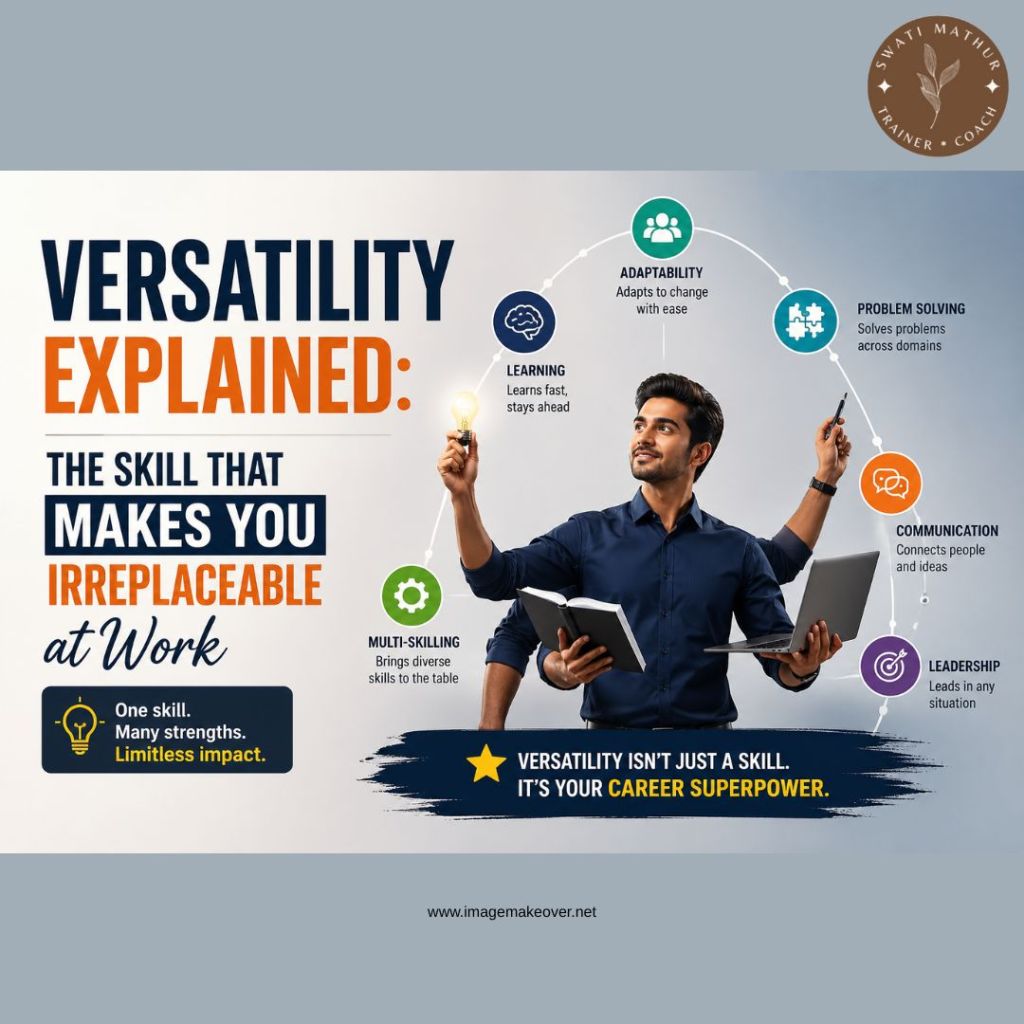
Versatility Explained: The Skill That Makes You Irreplaceable at Work #VersatilityMatters

In the past, success was often defined by specialization being known for one skill, one role, one domain. But in today’s AI-driven world, that definition is shifting. Success now depends on versatility that is your ability to adapt, learn, and contribute across different roles, tools, and situations. Versatility is not just a skill. It is a mindset of flexibility, agility, and openness to change.

Artificial Intelligence is not replacing humans entirely, it is reshaping the nature of work. Tasks are being automated, workflows are evolving, and job roles are becoming more fluid.

Earlier, roles were clearly defined:

  • A marketer did marketing
  • A developer wrote code
  • A trainer delivered sessions

Today, boundaries are blurring. A marketer uses AI tools and analytics, a developer collaborates with design and product teams and a trainer integrates technology, storytelling, and data insights. This is why rigid roles are fading, and dynamic skill sets are rising What Versatility Looks Like in Practice, let’s break down the expectations of modern professionals.

1. Learning New Tools Quickly

In the AI era, tools are constantly evolving. What you learned last year may already be outdated. Versatility means you are not attached to one tool, you focus on understanding how tools work, not just how to use one tool and you can quickly adapt when a new platform or technology is introduced. For example, someone versatile doesn’t struggle when switching from one AI tool to another but they adapt because they understand the logic behind them.

2. Shifting Between Tasks and Responsibilities

Earlier, people stayed within fixed job descriptions. Today, professionals are expected to wear multiple hats. Here versatility helps in moving from execution to strategy when needed, handle both individual tasks and team responsibilities and take ownership beyond your defined role. Instead of saying, “This is not my job,” a versatile person asks, “How can I contribute here?”

3. Collaborating Across Domains

Work today is highly interconnected. You rarely work in isolation. In this scenario versatility enables you to understand perspectives from different functions, communicate effectively with diverse teams and also bridge gaps between departments. For instance, when a technical person understands basic business needs, or a non-technical person understands technology, collaboration becomes smoother and more impactful.

4. Thinking Both Technically and Creatively

AI handles logic, data, and speed but humans bring creativity, intuition, and context. Versatility is the ability to balance analytical thinking with creative problem-solving also use data to inform ideas, but not limit imagination and combine structure with innovation. This blend is what makes professionals truly valuable in modern workplaces.

One common misconception is that versatility means being average at everything. That’s not true. Versatility is not about losing depth, it’s about expanding your range without losing your core strength. Think of it as a “T-shaped professional”:

  • The vertical line (|) represents your deep expertise in one area
  • The horizontal line (—) represents your ability to understand and work across multiple areas

For example a trainer may specialize in soft skills (depth) but also understand AI tools, content creation, and facilitation techniques (breadth). This combination makes you adaptable and valuable across situations.

Versatility is not something you are born with but it is something you consciously develop.

1. Keep Learning Continuously

The half-life of skills is shrinking. What you know today may not be enough tomorrow. Continuous learning means staying curious, exploring new tools, ideas, and trends and not waiting for change— instead anticipating it. Learning is no longer a phase now it is a lifelong habit.

2. Step Out of Your Comfort Zone

Growth never happens in familiar spaces. When you take on new roles, try unfamiliar tasks or accept challenging projects, you expand your capabilities and confidence. Discomfort is not a sign of failure but it is a sign of growth in progress.

3. Collaborate Across Teams

Exposure creates adaptability. Working with different people expands your thinking and improves your communication too. It also helps you understand different approaches to the same problem. The more diverse your experiences is the more versatile you become.

4. Be Open to Change

Resistance to change is the biggest barrier to versatility. Instead of asking, “Why is this changing?” Start asking, “What can I learn from this change?” When you shift your mindset change stops feeling like a threat and it starts becoming an opportunity. In an unpredictable, AI-driven world, job roles will change, tools will evolve, and industries will transform. The question is not whether change will happen the question is how ready you are for it. Because the safest skill today is not specialization , it is adaptability through versatility.

When you are versatile you don’t fear change, you don’t resist new roles and you don’t even get stuck in one identity. Instead, you grow, evolve, and stay relevant. Because in the end, it’s not what you know that secures your future but it’s how well you can adapt when what you know changes.

As Charles Darwin is often paraphrased:

This post is part of Blogchatter A2Z challenge 2026
Unlearning for Career Growth: Adapting to Change in the AI Era #UnlearningMatters

In a rapidly evolving world shaped by Artificial Intelligence, one of the most important skills is not just learning but unlearning. Unlearning means letting go of outdated beliefs, habits, and ways of thinking that no longer serve you. It requires humility, openness, and the courage to question what you once believed was right.

As futurist Alvin Toffler famously said:

AI is changing industries, roles, and skill requirements faster than ever before. What worked yesterday may not work tomorrow.

The real challenge is not gaining new knowledge, it is releasing old mindsets that hold you back. For example: Moving from “I know this already” to “What more can I learn?” or shifting from fixed roles to flexible skill sets or even letting go of traditional ways of solving problems. Unlearning creates space for growth. Humans naturally resist change because familiarity feels safe. But in the AI era, comfort can quickly turn into stagnation.

Unlearning requires you to accept that you may be wrong or be open to new perspectives. It also embrace discomfort as part of growth. And that’s why It’s not easy but it is necessary.

Unlearning is hard because it challenges our identity.

What we know is often tied to:

  • Our experience
  • Our confidence
  • Our sense of expertise

Letting go of old knowledge can feel like losing control or admitting we were wrong. That’s why many people resist unlearning not because they can’t learn, but because they are too attached to what they already know.

As economist John Maynard Keynes said: “The difficulty lies not so much in developing new ideas as in escaping from old ones.”

Not unlearning has consequences like you become resistant to change, skills become outdated, struggle to adapt in new environments or you lose relevance in fast-changing industries. In the AI era, standing still is not safe in fact it is very risky. Because while you hold on to old ways, the world keeps moving forward.

Unlearning is deeply connected to having a growth mindset. A fixed mindset says,
“This is how things are done.” But a growth mindset says: “This is how things were done, what’s possible now?” When you embrace unlearning you become more open to feedback and stop fearing mistakes. You also see change as an opportunity. Unlearning doesn’t always require big changes. Sometimes, small shifts can make a huge difference.

How to Practice Unlearning

  • Question your assumptions: Why do I believe this? Is it still relevant?
  • Stay curious: Explore new tools, ideas, and perspectives
  • Be open to feedback: Others often see what we don’t
  • Adopt a beginner’s mindset: Approach situations as a learner, not an expert

In the age of AI, your biggest strength is not what you know but how willing you are to evolve. Because sometimes, to move forward, you don’t need to learn more but you need to let go. In the age of AI, the winners will not be those who know the most, but those who can adapt the fastest. Because growth is not just about adding more sometimes, it’s about letting go of what no longer fits.

This post is part of Blogchatter A2Z challenge 2026