How to Build a Powerful Network in the Age of AI? # Network Matters

Networking today is no longer a transactional activity where people simply exchange business cards, LinkedIn requests, or contact details. In the age of Artificial Intelligence, networking has evolved into something far deeper. It is the ability to build meaningful, value-driven, and trust-based human relationships.

AI can automate almost everything around networking like suggesting connections, drafting messages, analyzing profiles, even predicting compatibility between professionals. But what it cannot replicate is the essence of human connection that is trust, empathy, emotional intelligence, and authenticity.

As Reid Hoffman, co-founder of LinkedIn, famously said:

This becomes even more relevant in the AI era, where tools amplify speed but relationships still determine depth and long-term success. In the past, networking was often seen as “who you know.” Today, it has shifted toward “how well you know them, and how meaningfully you connect with them.”

AI can help you identify the right people faster than ever:

  • Suggest recruiters, mentors, or industry experts
  • Analyze mutual interests and shared backgrounds
  • Even generate personalized outreach messages

But here is the limitation, AI can initiate contact, but it cannot build trust.

As Maya Angelou wisely said:

“People will forget what you said, but they will never forget how you made them feel.” That emotional imprint is something only humans can create. In a world where communication is automated and attention spans are shrinking, genuine human connection becomes a rare and powerful asset. Strong networking today is built on three core human principles:

Listening More Than Speaking

Most people network with the intent to impress. But effective networkers focus on understanding first.

Listening allows you to understand real challenges of others, to identify hidden opportunities and to build deeper emotional connection. In networking, the ones who listen deeply often stand out the most.

Offering Value Before Asking for Help

In the AI era, where everyone is trying to optimize gain, value-first networking creates long-term trust.

Value can be sharing useful insights or resources or making introductions between people and also offering feedback or support without expectation. Networking is not a “what can I get?” space—it is a “what can I contribute?” ecosystem.

Staying Genuinely Interested in Others

Authenticity cannot be faked, not even by AI. People can sense genuine curiosity vs scripted interaction and Real interest vs opportunistic behavior. When you are genuinely interested in others, conversations stop being transactional and start becoming meaningful. This is where networking transforms into relationship-building.

AI is not the enemy of networking in fact it is an enhancer. It helps you:

  • Find relevant people faster
  • Personalize outreach at scale
  • Track professional interactions

But the human layer still decides success:

  • Do people trust you?
  • Do they feel heard?
  • Do they want to stay connected with you beyond one interaction?

AI opens the door, but you still have to build the relationship inside the room. The famous saying, “Your network is your net worth,” has never been more relevant but it needs an important upgrade in the AI era. Your network is not valuable because it is large. It is valuable because it is real, trusted, and mutually meaningful. In a world powered by algorithms, automation, and artificial intelligence, your greatest advantage remains deeply human.

This post is part of Blogchatter A2Z challenge 202

Is Learning Still Important in the Age of AI? #LearningMatters

In a world where Artificial Intelligence can answer almost anything instantly, one might assume that learning has become easier than ever. And in many ways, it has. But at the same time, it has also become more fragile. Because when answers are instant, the temptation to stop learning becomes stronger. AI can give you solutions.But learning is what gives you understanding. As the philosopher Confucius once said:

And in the age of AI, this balance between learning and thinking is more important than ever. Traditionally, learning required effort. You had to read, research, struggle, and spend time understanding concepts. That effort, although challenging, built depth and clarity.

Today, AI has reduced that friction. You can ask a question and get an answer instantly, can get summaries instead of reading full texts and even solve problems without fully understanding them. While this makes learning faster, it also creates a hidden risk and that is superficial learning. For example, a student preparing for exams can use AI to quickly generate answers. But if they skip the process of thinking and understanding, they may perform well in the short term but struggle in real-world application. Learning is not just about getting answers but it is about building the ability to think. One of the biggest differences in the AI era is how people engage with information.

A passive learner,

  • Reads AI-generated content without questioning
  • Accepts answers without understanding
  • Moves quickly from one topic to another

An active learner,

  • Asks follow-up questions
  • Tries to explain concepts in their own words
  • Applies what they learn in real situations

The difference may seem small, but over time, it creates a huge gap. AI can support both but only one leads to real growth. When used correctly, AI can transform learning in powerful ways. It can break down complex concepts into simple explanations, it can also provide real-life examples, even offer multiple perspectives ans act as a practice partner. For instance, instead of just asking for an answer, a learner can ask:

  • “Explain this like I’m a beginner”
  • “Give me a real-world example”
  • “Test my understanding with questions”

This turns AI into an interactive learning companion rather than just a solution provider.In a world where AI can do so much for you, choosing to learn becomes a matter of discipline.

It means: taking time to understand, even when shortcuts are available , practicing skills, even when AI can do it faster and staying curious, even when answers are easily accessible

For example, a professional might use AI to draft emails or reports. But someone committed to learning will review, refine, and understand the structure—improving their own communication skills over time.

Learning requires effort beyond convenience. The more you learn, the less dependent you become. When you truly understand something you can apply it without assistance, can adapt it in new situations and think independently. But when you rely only on AI too much you hesitate without it also struggle in unfamiliar situations and lack confidence in your own thinking Learning gives you ownership of your knowledge. So ask yourself am I learning or just getting answers? Can I explain what I know without using AI? ans Am I using AI to grow or to avoid effort? These questions define whether you are evolving or just keeping up. AI can give you speed but learning gives you depth.

This post is part of Blogchatter A2Z challenge 2026
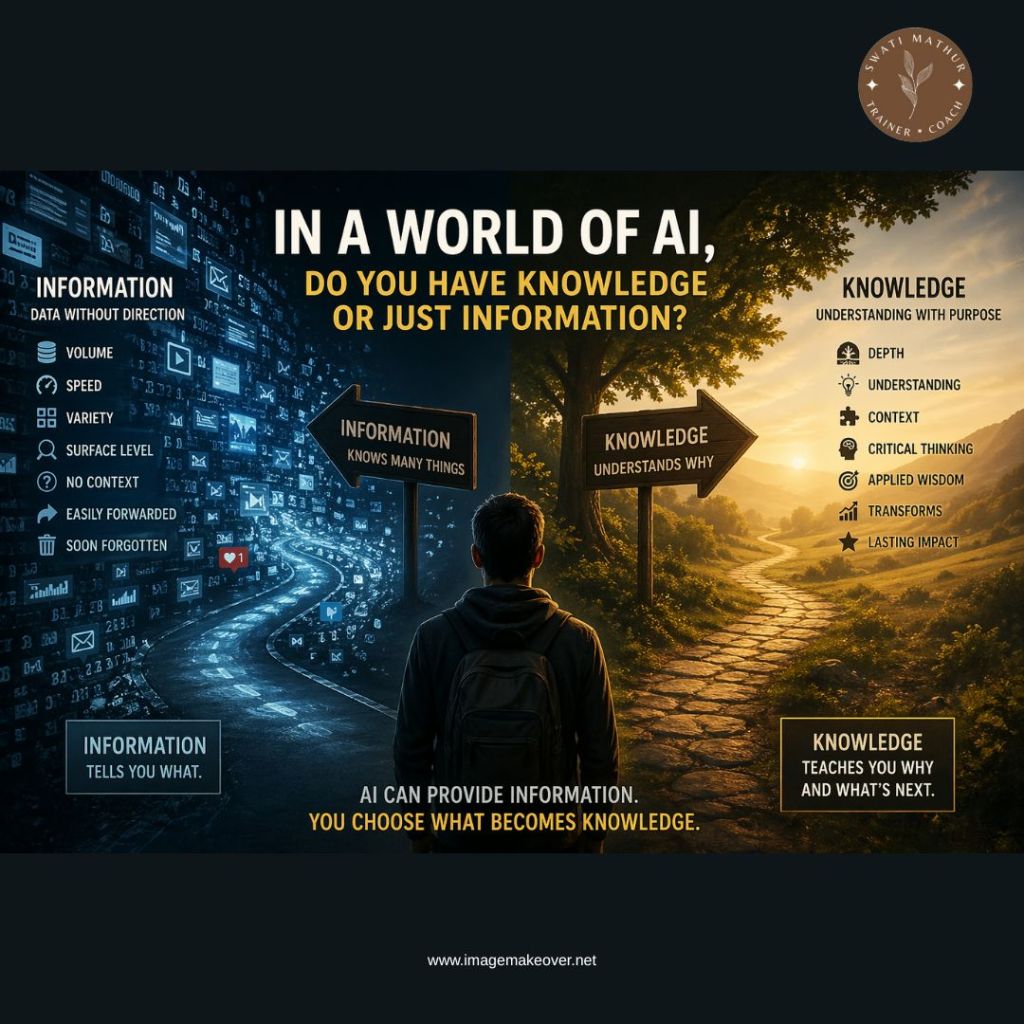
In a World of AI, Do You Have Knowledge or Just Information? #KnowledgeMatters

In a world powered by Artificial Intelligence, information is everywhere but knowledge is still rare. AI can give you answers in seconds. It can summarize books, explain concepts, and generate ideas instantly. But having access to information is not the same as having knowledge. And that distinction is what truly sets people apart.

As Albert Einstein once said:

And in the age of AI, this difference matters more than ever. Today, you can ask AI anything and get an answer immediately. But the real question is—do you understand it?

Information is quick, accessible and temporary and knowledge is deep, applied and lasting. For example, a student can use AI to get answers to questions instantly. But unless they take the time to understand the concept, question it, and apply it, that information remains surface-level.This is where many people get stuck. They confuse speed with learning. AI is an incredibly powerful tool for learning—but only when used actively.

It can explain complex ideas in simple ways, provide examples and analogies and help you explore multiple perspectives. But knowledge is built when you reflect on what you learn apply it in real situations and connect it with your own understanding Consider two learners one asks AI for answers and moves on and the other asks why, how, and what if. Over time, the second person develops knowledge. The first only collects information.

One of the biggest risks in the AI era is passive consumption. When everything is available instantly, it becomes easy to read without thinking copy without understanding, agree without questioning and this creates an illusion of knowledge.

For instance, you may feel confident after reading an AI-generated explanation. But when asked to explain it in your own words or apply it in a new situation, the gaps become visible. That’s because knowledge requires engagement, not just exposure.

To truly benefit from AI, you need to shift from passive use to active learning.

A simple approach: should be,

  • Don’t just ask for answers—ask for explanations
  • Don’t stop at understanding—try applying it
  • Don’t accept everything—question and verify

For example, instead of asking, give me an answer you should ask explain this concept with a real-life example and test me on it. This small shift transforms AI from a shortcut into a learning partner. True knowledge gives you something AI cannot—confidence without dependency. When you understand something deeply you can explain it clearly, can apply it creatively and you can adapt it in new situations. But when you rely only on AI you hesitate without it, you struggle to think independently and most importantly you lack clarity. Knowledge gives you ownership.

A Simple Reflection

Ask yourself,

  • Am I just consuming information or building knowledge?
  • Can I explain what I learn without using AI?
  • Am I using AI to think or to avoid thinking?

Your answers will reveal where you stand. AI can give you access to unlimited information.
But only you can turn that information into knowledge. Because knowledge is not what you read it is what you understand, apply, and remember.

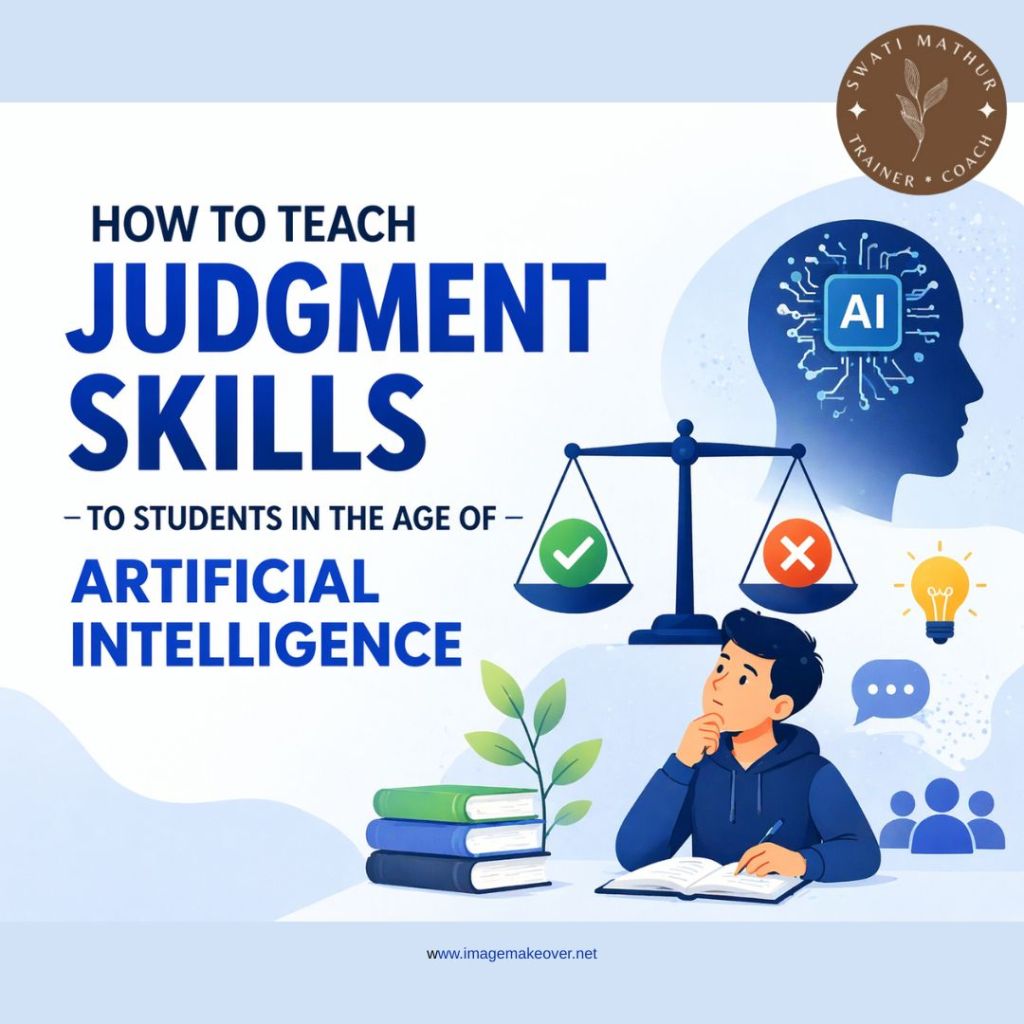
How to Teach Judgment Skills to Students in the Age of Artificial Intelligence #JudgementMatters

In today’s AI-driven world, where Artificial Intelligence (AI) can generate answers in seconds, the real challenge is no longer finding information, it is deciding what to do with it. As a soft skills trainer and a blogger, I often emphasize that success today is not about speed, but about sound decision-making.

Judgment, therefore, becomes the defining skill. It is the bridge between information and action, knowledge and wisdom. Without it, even the best tools can lead you in the wrong direction. It is not just about making decisions but about making thoughtful, responsible, and context-aware decisions. In a world full of automated outputs, judgment helps you pause, evaluate, and choose wisely. It is very important to critically evaluate every information instead of just blindly accepting it. At the same time having clarity of purpose and awareness regarding consequences is equally important before taking any decision. When you develop judgment, you move from being a passive user of AI to an active thinker.

AI today can do anything from writing essays and reports to suggest career paths or provide business ideas and even offer solutions instantly. But what it cannot do is fully understand your personal context, emotions, and long-term goals. That gap is where judgment plays its role. Without judgment you may follow advice that doesn’t suit you, you may lose your originality or you may become dependent on tools. But with judgment you filter what truly matters, adapt ideas to your reality and make decisions aligned with your values.

In the AI age, not everything that sounds right is actually right. AI often presents information confidently, which can create an illusion of correctness.

Strong judgment begins when you start questioning:

  • Is this accurate?
  • Is this relevant to my situation?
  • What might be missing here?

For example, when a student receives a ready-made answer, instead of copying it, they should analyze whether they truly understand it.

AI works on general patterns, but your life is unique. What works for others may not work for you.

Good judgment requires you to:

  • Understand your strengths and limitations
  • Consider your environment and goals
  • Customize AI suggestions accordingly

For instance, a productivity method suggested by AI may not suit your learning style. Judgment helps you adapt it instead of blindly applying it. One-size solutions don’t work in real life therefore personalization is the key to effectiveness.

One of the biggest risks in the AI era is the temptation to take shortcuts. It is easy to generate assignments, projects, or answers without effort. But judgment asks a deeper question, Is this helping me grow? Ethical judgment helps you to maintain integrity, build trust and focus on long-term success instead of short-term gains. As I often tell students AI can help you finish tasks, but only honesty will help you build a future.

AI can give you multiple options, but it cannot take responsibility for your choices. That responsibility lies with you. Strong judgment means, evaluating pros and cons, accepting uncertainty and taking ownership of decisions. For example choosing a career path, making a business decision, or handling relationships, AI can guide, but you must decide and stand by it. Remember every decision has consequences and every choice shapes your future.

Judgment is not something you are born with, it is something you build over time.After every decision, take a moment to reflect what worked well, what could I improve and what did I learn? This habit strengthens your thinking and prepares you for better decisions in the future.

We are living in a time where intelligence is easily accessible.
But what will truly set you apart is not how much you know but it is how wisely you choose.

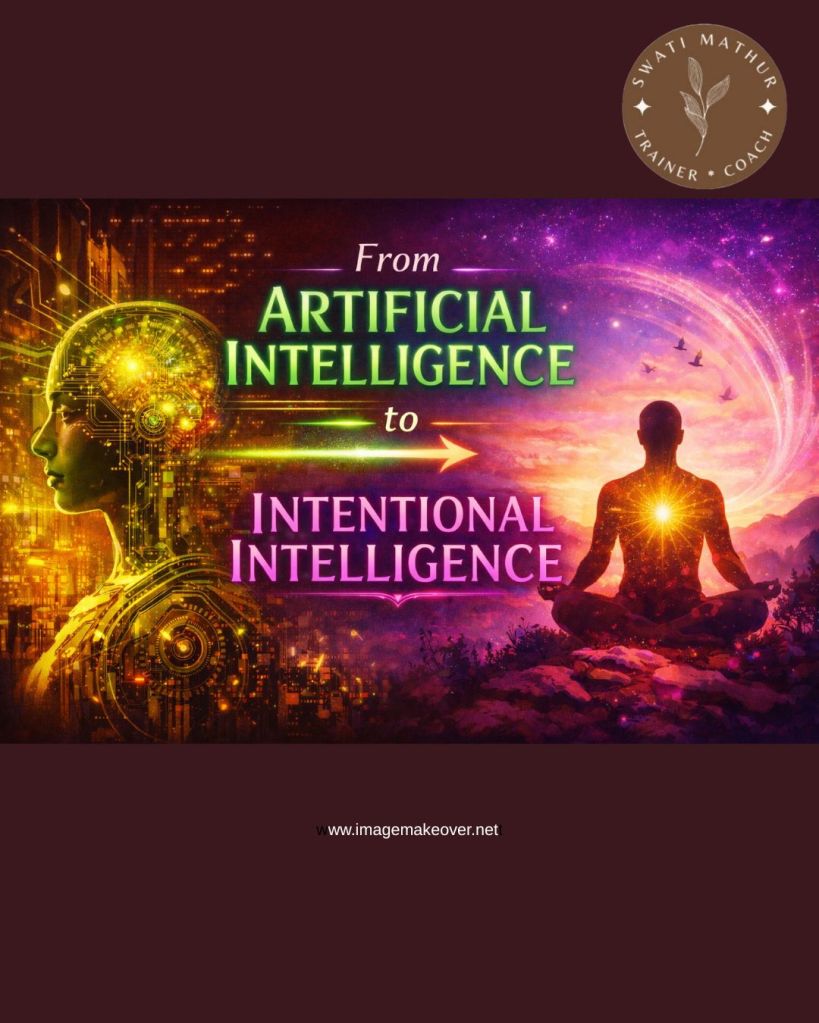
From Artificial Intelligence to Intentional Intelligence: The New Intelligence in AI Age #Intentional Intelligence Matters

In a world where Artificial Intelligence (AI) can think, write, analyze, and even create, the definition of intelligence has fundamentally changed. Earlier, intelligence was about what you know, today, it is about how consciously and purposefully you use what is available to you. This is where the concept of Intentional Intelligence becomes critical.

Intentional Intelligence is not just about being smart but it is about being aware, mindful, and purposeful in how you think, learn, and act, especially when powerful tools like AI are at your fingertips. Without intention, AI can make you faster but not necessarily better. In the age of AI, one of the biggest mistakes people make is jumping to tools without clarity. They open AI platforms, type random prompts, and expect meaningful results. But AI is like a mirror, it reflects the quality of your thinking. Before you use AI, pause and define your intention clearly,

  • What exactly am I trying to achieve?
  • What problem am I solving?
  • What kind of output do I really need?

When you operate with clarity, AI becomes a powerful assistant. Without it, it becomes a source of distraction and confusion. For example, a student who asks, “Explain this chapter so I can understand it deeply” will gain far more than someone who simply says, “Give me answers.” The difference is not in AI but it is in intention.

AI gives fast answers but high performers don’t accept them blindly. They engage, challenge, and refine. In fact, one of the most important skills in the AI age is learning how to question. Whenever you receive an output, train yourself to think,

  • Is this accurate and relevant?
  • What perspective is missing?
  • Can I improve or expand this idea?

This habit builds critical thinking, which is something AI cannot replace. For instance, if AI generates a business idea, an average user may accept it. But a high performer will always question like, “Is this practical in my context?”, “What are the risks?”, and “How can I make it unique?” This is where real intelligence begins not in receiving answers, but in refining them.

Most people use AI to consume, read, copy, paste, and move on. But high performers use AI to create. The goal is not to depend on AI for output, but to use it as a thinking partner. You can use AI to brainstorm ideas, to build your own frameworks from AI suggestions or combine your originality with AI efficiency. When you shift from consumption to creation, your value increases. For example, instead of copying an AI-generated assignment, a student can understand the structure, add personal insights and present a unique perspective. Now this transforms them from a user into a creator.

One of the most underrated habits in the AI age is reflection. When everything is instant, people rarely stop to think about what they actually learned. But learning does not come from access, it comes from processing. After using AI, take a moment to reflect, what new idea did I understand today? Did this improve my thinking or just save time? How can I apply this knowledge? Reflection converts information into deep intelligence.

For example, after completing a task using AI, instead of immediately moving on, a learner who reflects will retain more, think better, and grow faster.

AI is powerful but it can also make you lazy if used without discipline. Over-dependence reduces your ability to think independently. That’s why intentional users build boundaries. They decide when to use AI and when to think on their own. They avoid using AI for everything instead challenge themselves before seeking assistance. Discipline ensures that AI remains a tool and not a replacement. For instance, a student might first attempt solving a problem independently, and only then use AI to check or improve their answer. This builds confidence and capability.

In the age of AI, the gap is no longer between those who have access and those who don’t. The gap is between those who use AI passively and those who use it intentionally. Two people can use the same tool, but their outcomes will be completely different.

Which category you fall into?

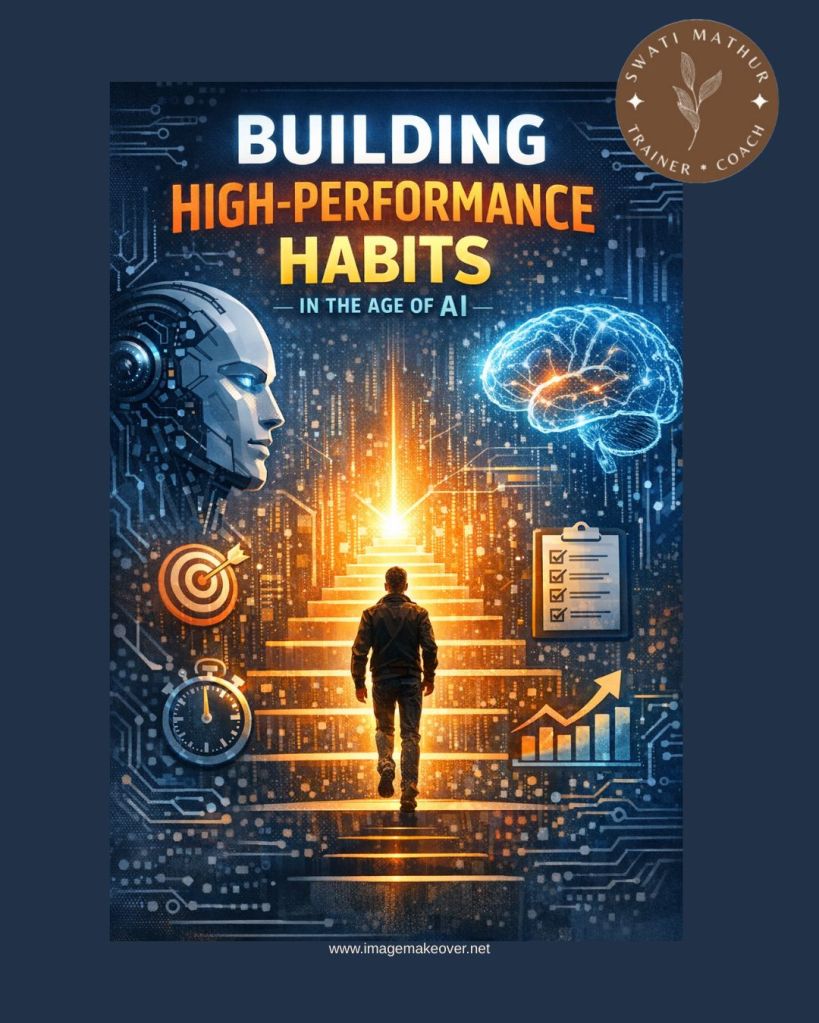
Building High-Performance Habits in the Age of AI #HabitsMatters

In the age of AI, your habits is not just your intelligence but it will define your success.

We often believe that intelligence, talent, or access to the right tools gives people an edge. But today, with Artificial Intelligence making knowledge accessible to everyone, the playing field has changed.

The real differentiator is no longer what you know, but what you repeatedly do. AI can not only give you answers in seconds or can simplify complex problems but it can even think alongside you. But there is one thing it cannot do and that is, it cannot build your habits. And that is exactly where your future is decide.

There was a time when information was limited. People who had knowledge had power but today, information is unlimited. Anyone with a smartphone can learn anything. So what matters now?

  • Consistency over intensity
  • Discipline over motivation
  • Execution over intention

You don’t need to know everything, but what you really need is the habit of learning continuously. Imagine two students, one who studies only before exams, using AI to quickly prepare. and another one studies a little every day, using AI to understand deeply. The difference is not intelligence. The difference is habit. We need to remember success is not a one-time event, it is a system. and habits are that system. They operate quietly in the background, shaping your skills, thinking patterns, your confidence and your Identity. You don’t wake up one day confident instead you become confident by repeatedly doing things that build confidence.

Similarly, in the AI era, you don’t become future-ready overnight instead you build it through daily habits of learning, adapting, and applying.

AI has made life faster, but it has also made distractions stronger and patience weaker. This creates two kinds of people:

1. The Reactive User

  • Uses AI for quick answers
  • Avoids effort
  • Seeks shortcuts
  • Feels productive but isn’t growing

2. The Intentional Learner

  • Uses AI to explore deeper
  • Asks better questions
  • Practices and reflects
  • Builds long-term capability

The difference lies in one thing: habitual behavior. We often underestimate small actions because they don’t show immediate results. But transformation is never instant, it is accumulated. Consider these simple but powerful habits:

  • Writing or journaling for 10 minutes daily
  • Learning one new concept every day using AI
  • Practicing speaking or communication regularly
  • Asking “why” and “how” instead of just accepting answers

Individually, these feel small but collectively, they create exponential growth.

One of the most powerful ideas that I have come across is that “You don’t rise to your goals. You fall to your habits.” how beautiful and true. Your habits are constantly answering on every important question and that is “Who am I becoming?” If you practice daily, you will become disciplined, ff you avoid effort, you will become dependent and if you think deeply, you will become insightful. In the AI age, identity matters more than ever because tools are common but mindsets are not.

AI is powerful but how you use it depends on your habits. Use AI to learn, and not just to finish any tasks. It is extremely imperative to cross-check and validate information also learn to apply what you learn in real situations and also build original thinking alongside AI. Apart from empowering us there are certain things that we need to be cautious about, like not blindly trusting AI outputs, not to copy-past without understanding, not making enough effort because AI makes things easy and also not to become mentally passive.

Remember, If you don’t control your habits, your habits will control your future. Habits don’t show results immediately which is why people quit early. But over time, they create a powerful effect. For example 1% improvement daily leads to massive growth in a year and 1% neglect daily leads to gradual decline. A student who practices communication for just 10 minutes daily may not see change in a week. But in 6 months, their confidence can completely transform. Similarly, someone who avoids effort daily may not fail immediately but slowly loses competence.

In the age of AI, tools are available to everyone but discipline is not. And discipline is built through habits.

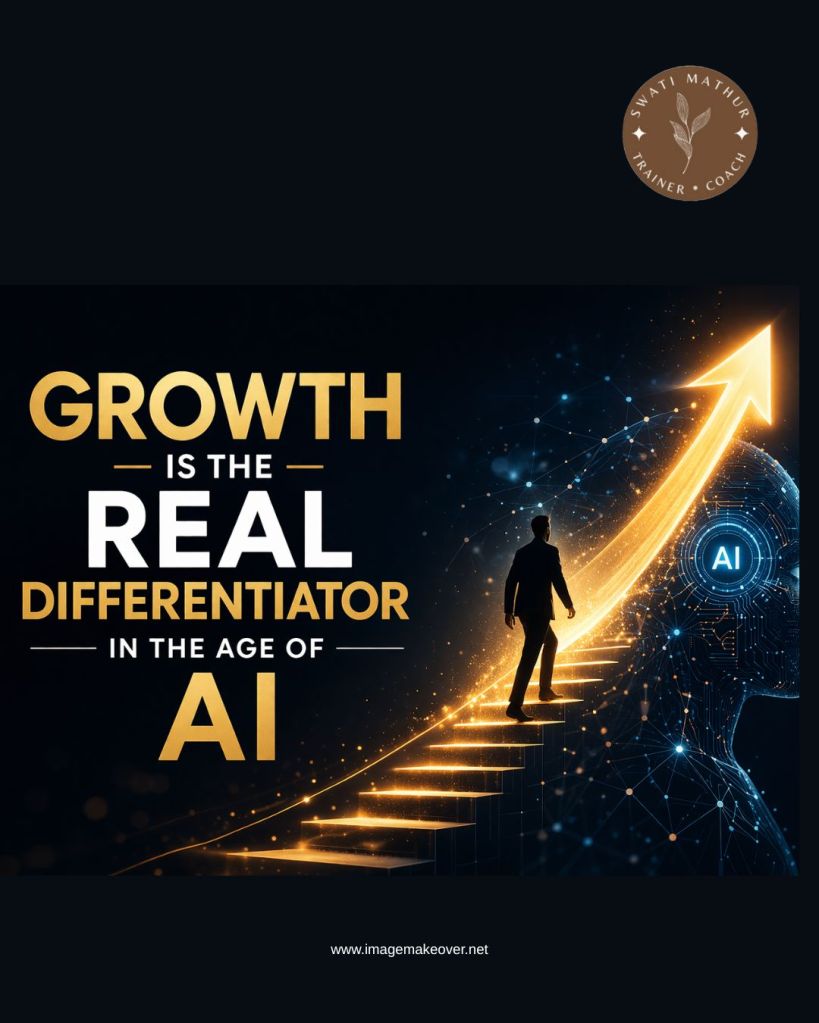
Growth Is The Real Differentiator In The Age Of AI #GrowthMatters

In a world where Artificial Intelligence is evolving every single day, the real question is not whether technology is growing but it is whether you are growing with it.

AI is not just changing industries, it is reshaping the way we learn, think, and adapt. But one thing that we all are aware that growth, unlike technology is not automatic. It is a conscious choice one that requires effort, awareness, and intention.

As John C. Maxwell wisely said,

And in the age of AI, this truth has never been more relevant. We often assume that having access to advanced tools will automatically leads to progress. But access does not guarantee growth but intentional effort definitely does. Today, almost everyone has access to AI, yet not everyone grows equally.

Consider this example, where, One person uses AI to complete tasks quickly and another uses AI to understand deeply, question ideas, and improve thinking. here both are using the same tool but only one is truly growing. This highlights an important reality that, access gives you opportunity where as effort turns it into growth. Therefore, without effort, AI becomes a shortcut. but, with effort, it becomes a learning accelerator.

AI has the potential to become one of the most powerful tools for personal and professional growth but only if you use it actively, and not passively. It can

  • Help you learn new skills faster
  • Provide instant explanations and feedback
  • Expose you to diverse perspectives
  • Encourage experimentation without fear

For example, a student preparing for exams can simply ask for answers or can go deeper by asking “Can you explain this in a simpler way?”, “Can you give real-life examples?” or “What are alternative ways to solve this?” This shift from answer-seeking to understanding transforms learning completely.

Similarly, a professional can use AI to,

  • Refine presentations
  • Improve communication
  • Brainstorm creative ideas

But growth only happens when you engage with the process and not when you depend entirely on the output. One of the biggest risks in the AI era is confusing convenience with growth. AI makes things easier and that is its strength but growth often happens when things are challenges.

If you always choose the easiest path your thinking becomes passive, your skills stop developing and your confidence becomes tool-dependent On the other hand, when you try solving problems yourself first and use AI to validate or refine this will reflect on what you have actually learned and that when you build real capability. Let’s understand this by simple example.
A person learning writing may use AI to generate content instantly. But someone focused on growth will write, edit, fail, improve, and then use AI to refine their work. Over time, the second person develops a strong voice, while the first remains dependent.

That difference is not talent it is effort and mindset.

At the heart of growth in the AI era lies one critical factor and that is mindset.

A fixed mindset believes that abilities are limited. It avoids challenges, fears failure, and often depends on shortcuts. In the context of AI, a fixed mindset might say, “Why should I try? AI can do it better anyway.” Over time, this thinking creates dependency, reduces confidence, and limits real progress.

On the other hand, a growth mindset believes that abilities can be developed with effort and learning. It embraces challenges, learns from mistakes, and uses tools like AI as support and not replacement. A growth mindset says, “AI can help me—but I will still think, learn, and improve. This difference may seem subtle, but it defines everything.

As a soft skills trainer, this is something I emphasize repeatedly to students. I often tell them that AI is not here to replace their intelligence but it is here to test their mindset. The real question is not how advanced the technology is, but how willing they are to grow alongside it.

In my sessions, I share a simple thought with students, If you use AI only to finish tasks, you may get quick results but if you use AI to learn, question, and improve, you build a future. I remind them that skills may become outdated, tools may change, but a growth mindset stays relevant forever. It is what helps you adapt, evolve, and stay confident even in uncertainty. Because in the end, success in the AI era will not belong to those who know the most tools but to those who are willing to keep learning.

Growth does not happen in comfort, it happens when you stretch yourself beyond what feels easy. AI can make life comfortable, but comfort can quietly limit progress.

Growth demands-

  • Asking deeper questions
  • Trying unfamiliar tools
  • Making mistakes and learning from them
  • Staying consistent even when results are slow

This is where mindset plays a crucial role.

As Carol Dweck said:

When you see challenges as opportunities, AI becomes a partner in exploration and not just a tool for convenience.

Adaptability is the Core of Growth

In the AI era, adaptability is no longer optional, it is essential. Technology will continue to evolve, and those who grow are those who stay open to learning.

Remember, AI will keep evolving with or without you. The real advantage lies in choosing to grow alongside it. Because growth is not about keeping up it is about becoming better than you were yesterday.