#BlogchatterA2Z : “G” – Go to guide for Patterns in Clothing (A2Z of Image Management)

Hi Everyone,

This is my 7th Post for #BlogchatterA2Z. And today I am going to share with you A2Z about patterns in clothing. Technically speaking , pattern is not a separate element of design. Pattern is a combination of several design elements – lines and shapes in colors, arranged in or on textural material. Each element is totally interrelated when you look at the pattern design. Because pattern have their own visual effects and because you can manipulate or change the character of a pattern and its effects, it seems appropriate to treat pattern as a specific element to work with it or make it work for you.

Patterns add interest to plain surface fabric and helps coordinate two or more solid-colored items. They can create a point or area of emphasis and affect the body and mind, the way you think, feel and act. Patterns camouflage and create powerful illusions about the size, shape and weight of the body. They communicate visual meaning, message, or moods.

Remember choice in patterns becomes a visible expression of personal style and individuality.

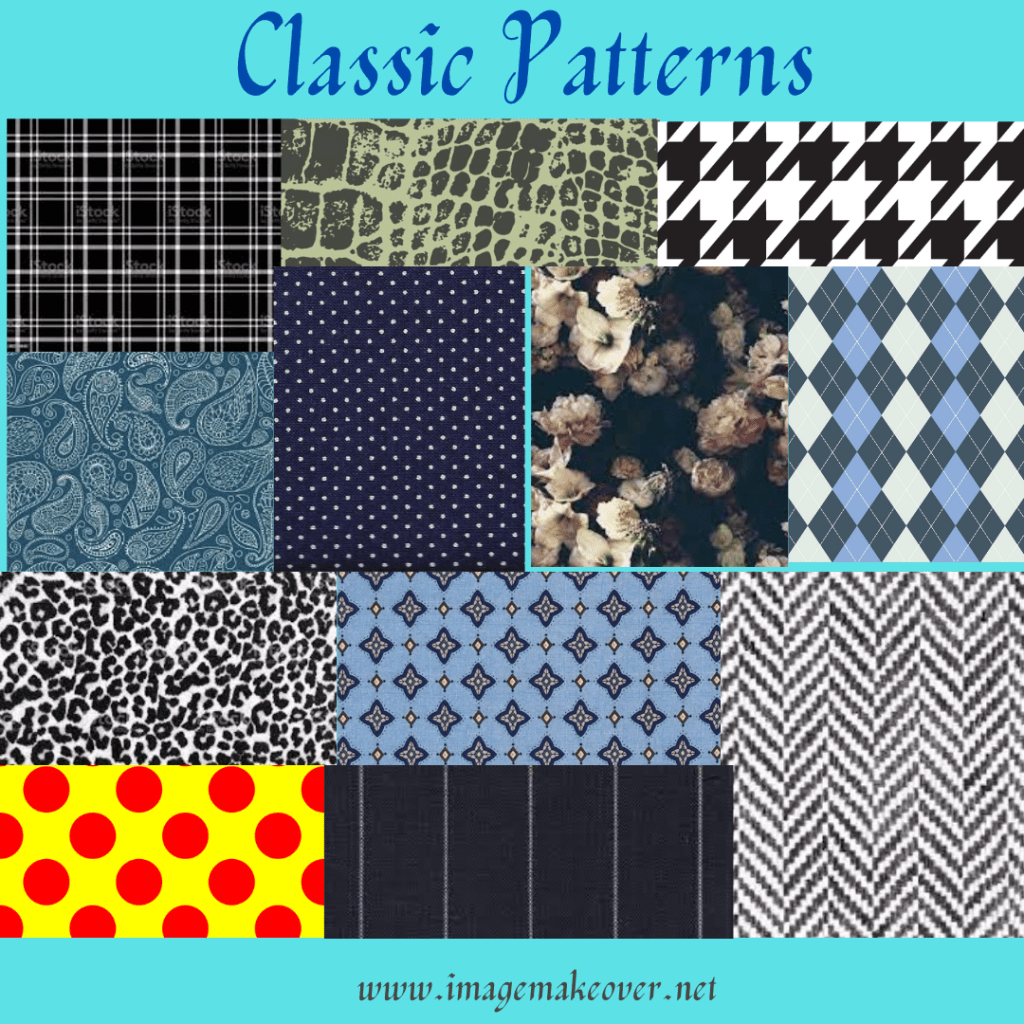
Pattern can be categorized into two: Classy classic Patterns and Trendy Patterns

Classy Classic Patterns

Plain, solid colors fabrics provide a foundation for your wardrobe and combine easily with other solid colors, but don’t stop there. You can count on classic patterns – in prints, stripes and plaid design on clothing, to add interest and variety needed to enliven what might otherwise becomes a dull wardrobe composed entirely of solid colors.

Continue reading “#BlogchatterA2Z : “G” – Go to guide for Patterns in Clothing (A2Z of Image Management)”

Know Your Perfect Fit and Fashion For Your Body Shape(A2Z of Image Management)

Hi Everyone,

This is my 6th post for #BlogchatterA2Z challenge . As I have already talked about Body Shape and Different Garment Shapes, now it’s the right time to recommend style lines and shapes for different figure or body type. As I have already mentioned earlier every body is unique and few ideal figures existing. Virtually every figure has some figure variations , variations from that so called ideal figure used as a standard for comparison. It does not matter how many people have a particular figure variation. You need to recognize the variation and know how to dress or alter to camouflage or minimize it.

To determine your general figure type or body build, try the time tested “Blink test”. Dress in form- fitting clothing, in possibly a t-shirt and tights. In this attire your attention will be generally drawn to the largest area of your body shape. Then compare that area to other areas of your body and to the body type description I have mentioned in my previous post here.

Now lets discuss the figure type, their characteristic figure variations and how to cover, camouflage, counter, create the illusion of the ideal figure by selecting appropriate clothing.

Triangular Body Shape : They have narrower shoulders, wider hips, average to smaller bust, narrow back and smaller waist. They have low hip curve, rounded buttocks. Possibly low waist and average to shorter legs.

Fit and Fashion Strategy : They should focus on minimizing lower torso and give more emphasize to upper torso, this will lead the attention upward toward their face. Try filling out shoulder and upper torso with soft fullness and design details. Try wearing smooth, loose fit below the waist.

Inverted Triangle Body Shape : They have Wider shoulders, narrower hips & thighs , average to larger bust, wider back, larger waist , high hip curve, flatter buttocks, slim legs. Possibly high waist, average to longer legs.

Fit and Fashion Strategy : They should focus on minimizing upper torso and give more emphasize on center-front at neckline or anywhere below waist. Lead attention inward at shoulders toward neck. Try filling out area below waist with soft fullness or design detail. Try wearing smooth loose fit above the waist.

Continue reading “Know Your Perfect Fit and Fashion For Your Body Shape(A2Z of Image Management)”

#BlogchatterA2Z : “E”- Elements Of Design (A2Z of Image Management)

Hi Everyone,

This is my fifth post for #BlogchatterA2Z challenge, here I am talking about “Elements of Design”. Technically this should be my first post. We often hear or read “Watch out for the messages your clothes send,” or “Be careful about the statement you make with your clothes.” But almost no one knows what’s doing the talking. It’s the “elements of design”, the lines, shapes, colour, texture and patterns. They speak before you do. In fact they never shut up, Change one detail of dress and you change the message or statement you make.

All clothing is a combination or composition of lines, shapes, colour, texture and pattern that is called “Elements of design”. Below is the brief description of all the elements-

Line: It is an elongated mark that connects two or more points. Line divides and encloses space, creating shapes and forms. Seam lines decides and enclose space on a garment. The characteristic of lines could be straight and curved.

Shapes: It refers to the area or empty space enclosed by a line, creating the outline or outer edge of an object. The outer edge or silhouette of a garment is a shape. Shapes or forms within a garment might include sleeves, cuffs, pockets, shirt yokes and plackets, skirt, gores and so forth. The characteristic of a shape could be angular and rounded.

Continue reading “#BlogchatterA2Z : “E”- Elements Of Design (A2Z of Image Management)”

#BlogchatterA2Z : “D” – Different types of Garment Shapes (A2Z of Image Management)

Hi Everyone,

This is my fourth post for #BlogchatterA2Z challenge and all those who have read my previous posts especially Body Shape would be able to relate to this. In order to understand how different body shapes require specific garment shapes to be worn , first we need to understand – What Shape in a garment is all about?

Shape is the element of design created when a continuous line encloses space. The space within the lines is called shape. Line and shape are the foundation of all clothing design. Shapes define the outer edge, outline or silhouette of the body and clothing. Shapes add interest to a plain garment design. It create powerful illusions about the size and shape of the body and communicate visual meaning , message or mood.

In clothing two kinds of shapes are formed: Background shapes that are formed by the outline of the garment while Foreground shapes are formed by design details that lie on the surface of the garments and appear to advance. Now lets understand what kinds of garment shapes exists and this will help you in selecting which shape is appropriate for your body type.

Triangular garment shapes: They are composed of predominantly straight lines often with soft flare. They are narrower in the shoulders and wider at the hem. The waist may or may not be defined. They emphasis straight edges and the angularity of the body shape, while they counter roundness and camouflage width in hip and thighs.

Inverted Triangular shapes: They are wider in the shoulders and narrower at the hem. Again the waist may or may not be defined. They emphasis straight edges and the angularity of the body shape, while they counter roundness and camouflage width in upper back and chest.

Rectangular garment shapes : They are just that, rectangular with straight lines and tubes abound the body. Longer than they are wide, the dominant lines are vertical. In clothing, they are in opposition to the body and the waistlines is seldom defined. They accommodate width in the midriff and waist.

Hourglass garment shapes: They are designed with a mix of straight and softly curved lines. The garment is relatively fitted at the waist, emphasizing the smaller waist area as compared to the larger bust above and hip below.

Diamond garment shapes: They are narrower in the shoulder and at the hem as compared to the waist. The waist is not generally defined. They camouflage width around the midriff, waist and high hips area.

Bell garment shapes: They are similar to some triangular garment and full-skirted hourglass shapes, combining straight lines with softly curved to full-rounded lines in the bottom half of the garment. They features a mix of vertical and horizontal line directions, conforming more easily to the body yet camouflaging hip area.

Rounded or curved garment shapes: They featured more curved lines than other shapes. The shape changes depending on how full or rounded the curves are. They emphasize roundness and counter angularity in the figure.

Shapes can be manipulated and arranged to create illusions. A general goal in using clothing as a resource is to select and arrange design shapes in ways that enhances the body – in ways that make the face and figure appear more nearly ideal. Clothing lines and shapes can be used in ways that emphasize the most attractive lines and shapes of the body and camouflage or counter those body lines and shapes considered less attractive, in effect minimizing or eliminating them. The garment silhouette may or may not define or reveal body silhouette depending on the degree of fit or ease allowed. Degree of fit with its ease amount can be categorised as:

A very close fitting garment is snug to the body, repeat and reveals body contours exactly, with little or no ease allowed for body movement or comfort.

A slightly close fitting garment repeat and reveal body contours to a lesser degree, having allowed standard or traditional amounts of ease for body movement and comfort.

A slightly loose fitting garment stands slightly away from the body or flows loosely over it, due to a considerable amount of added ease or fullness for a relaxed and comfortable fit.

A very loose fitting garments stands stiffly away from the body or falls very loosely in folds around the body due to added or extreme fullness. Not revealing body contour at all.

A combination of close and loose fit in a garment is also partially fitted. The garment is more close fitting in specific areas such as the shoulders or upper bodice, the midriff and the waist while being more loose fitting in all other areas.

You can use different degree of close or loose fit to present your figure attractively, to accommodate and camouflage a figure variation and to reduce or eliminate the need for alteration.

No matter what the fashion trend , you are smart to select and wear only those degree of fit that flatter your body and its variations and that focus attention where you want it- closeness only in those areas you want the world to see and looseness everywhere you want.

This post is part of #BlogchatterA2Z Challenge.

In case you missed my previous posts you can find them here A B C

@Swati Mathur

#BlogchatterA2Z : “C” – Colour Dimensions (A2Z of Image Management)

Hi Everyone,

This is my 3rd post for #BlogchatterA2Z challenge and today I am going to talk about “Colour Dimensions”.

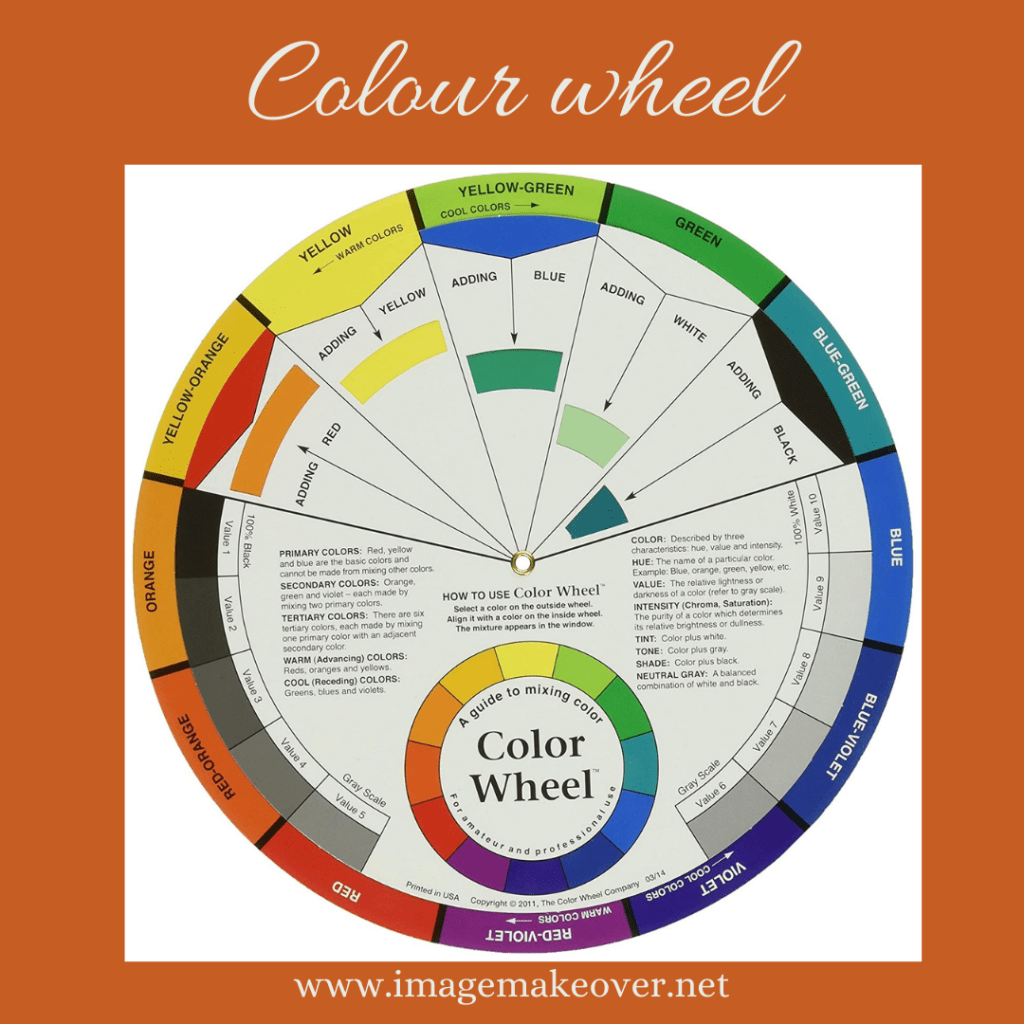
Colours are talked in terms of dimensions. Each sensation that we experience is a combination of three dimensions. They are Hue, value and intensity. Difference in these dimensions accounts for the difference we see in colours. Each dimension of colour makes specific contribution to the appearance. If we understand the effect of these dimensions we will better be able to colour match and coordinate clothing with accordance with mood and feelings.

Hue refers to the actual name of the colour. There are three kids of hues- primary, these are original and cannot be obtained my mixing other hues, secondary, these are obtained by mixing two primary colours in equal amount and tertiary, they result from a mixture of the primary and secondary hue in equal amount. Hues also refers to a colour’s relative degree of warmness and coolness. Red, orange and yellow are warm hues while blue and green are considered as cool hues.

Values refers to the relative degree of lightness and darkness of a colour.

Where are Intensity refers to the relative degree of brightness and dullness.

To understand which colour goes well with which other colour we should understand the use of Colour Wheel. When any colour is added with white it is called as Tint, and if any colour is added with gray it is called Tone and when any colour is added with black it is called as Shade. Hues, values and intensity from all around the colour wheel can be creatively combined and worn by all individuals. You only have to look around you. The combination are endless, limited only by the bonds of your imagination.

To achieve the individual effect you want, you can manipulate the specific combination of hue, value and intensity in your garment. For example if you want to stand out in a crowd while doing a professional presentation but do not want to appear overly bright than go for warmer colour like red but tone it down a bit by choosing darker duller red such as burgundy or wine.

Colour is the most obvious, powerful, stimulating and demanding element of design. it tends to be noticed first and remembered longest. Colour is also the most complex, creative, confusing and controversial of the elements. It evokes highly physical and emotional response, which may be conscious or unconscious. Our reactions to colour are immediate, inescapable and long lasting. While we may forget the texture and design details, we are more likely to remember the colour and our reaction to it.

The perception of colour is a very personal experience, physically and psychologically or culturally. No two people perceive a colour in exactly the same way, even within a framework of general perception.

Each of these dimensions are present in each colour you see and must be recognized to fully understand the essence and effect of colour. Right amount of colour combination can give you the look and feel, you want to portray. In combining colours in clothing, your goals to maintain a consistent theme or mood, occasion and personality, while achieving an interesting and harmonious balance among them- balance between warm and cool hues, light and dark values or bright and dull, in a variety of style lines, shapes and textures. For example some people love to see pink and fuchsia in the flower garden, but feel uncomfortable wearing them. They are psychologically more comfortable in shrimp, coral, brick and red.

Experiment a little and discover which colour are most in harmony with you, the place you go, and what you do there. As you experiment, you will discover colours you like to wear so much that they become part of your personal style- colours so specifically associated with you that they trigger an image of you in the mind of the people who knows you.

This post is part of #BlogchatterA2Z Challenge.

@Swati Mathur

#BlogchatterA2Z : “B”- Body Shape Evaluation (A2Z of Image Management)

Hi Everyone

This is my second post for #BlogchatterA2Z challenge, where in I am going to share about A2Z of Image Management.

Looking attractive is the basic human need. What you wear is not that important than but how you wear. So that’s when the need of body shape evaluations comes into picture. If a person wear what suites them, that is what makes them attractive. There are eight different body shape: Ideal type, triangular type, Inverted triangle type, rectangular type, Hourglass type, diamond type, Tubular type and Rounded type. Each of these body shapes has their own characteristics which defines them and differentiate each other. Once a person understand what body shape he or she has, it becomes easier to understand what kind of clothes suit them and which all to avoid, they can  choose appropriate colour, texture, style and pattern which suit their body, They can create an attractive and ideal look for various occasion with right message and can save their time, money and effort in shopping for right clothes. No matter what the fashion trends, you are smart to select and wear only those degree of fit that flatter your body and its variation, and that focuses attention where you want it to be.

Every body is unique and few ideal figures existing. Virtually every figure has some figure variations , variations from that so called ideal figure used as a standard for comparison. It does not matter how many people have a particular figure variation. You need to recognize the variation and know how to dress or alter to camouflage or minimise it.

A few specific figure variations occur in typical combination, those having to do with horizontal width or the size of the shoulders, bust, waist, hips and thighs- combinations so typical that we tend to recognize the stereotypical shapes and give them names. Typical horizontal body shapes are often called figure types. They define how body shape parts relate proportionally to one another and to the total figure.

Ideal Figure Shape: (only for women) : They are average in weight, appear similar in width in the shoulders and hips with medium bust size and a small waist. They have a slightly curved abdomen, moderately curved buttocks and slim thighs.

Triangle Figure : They are narrower in the shoulders and wider in the hips/thighs, with a low hip curve. They are often smaller in the bust or chest or chest and waist, narrower in the back and rounder in the buttocks. They have longer torso and shorter legs.

Inverted triangular figure: They are wider in the shoulders and narrower in the thigh/hips, with a high hip curve. They are generally larger in the bust or chest, wider in the back and flatter in the buttocks. They have shorter torso and longer legs.

Rectangular figure: They are average to above average weight range from their height. They are similar in width in the solders, waist and hips/thighs. Their is little to no defined waist. Body line generally appears straight.

Hourglass figure: Have full -rounded body lines with proportionally bust, hips and buttocks and a proportionally small waist. Emphasis is on bust and buttocks but may shift quickly to the contrast in size in the waist.

Diamond figure : They are wiser in the midriff and waist area, narrower in the shoulders and thighs/hips, with a high hip curve and slim legs. The bust and chest is often smaller and the buttocks flatter. Emphasis in on the waist area.

Tubular figure : They are slim to thin and below the average weight range for their height with generally straight body lines and bony angles. They generally few to no obvious curves.

Rounded figure: They are generally above the average weight range for their height. Being larger throughout the figure, body lines are fully rounded curves, with line movements in horizontal directions ans emphasis on width.

Body shape also vary vertically from top to bottom. The figure may have a proportionally shorter head, torso area and longer legs, or longer head, torso area and proportionally shorter legs. Within the torso itself, the upper torso may be proportionally shorter and the lower torso longer here the figure has high waist. The upper torso may instead be proportionally longer and the lower torso shorter in that case the figure has a low waist.

Remember:

  • Stop referring to your body as having figure problems, faults, flaws, defects, liabilities and abnormalities. These words are self defeating from the start.
  • Be kind to yourself and more correctly call them figure variations.
  • Ignore those social and cultural influences that causes you to feel dissatisfied with your body.
  • You don’t have figure problems rather you have fitting problems. And fitting problem can be solved with the art of dress, and illusions in line, shape, colour, fabric and pattern.

Accept those features about your figure you cannot change and make them part of your individual beauty.Then change what you can and you will learn to camouflage or counter what you can to enhance your figure. This is a wonderful growing experience that leads to self-acceptance and self-appreciation.

This post is written for #BlogchatterA2Z challenge.

@Swati Mathur

#BlogchatterA2Z : “A” : Art in Every Day Dressing (A2Z of Image Management)

Hi Everyone,

This is my first post for #BlogchatterA2Z challenge. Here I am going to talk about A2Z of Image Management. Image management is all about developing your inner strength and at the same time reflect them on the outside appearance. Developing inner strength is all about working on your self esteem, attitude and soft skills while reflecting them to the outside world through creating impact full first Impression and by developing flawless visual communication through appearance. Creating a powerful first impression is essential to get more opportunities in life. We all carry certain skills ability and experience but the people we meet often judge us only by what meets the eye.

Most of us feel “Why to put an effort on everyday dressing”. But I am sure when we have some important occasion we all put an effort to make sure we all look presentable. But remember clothing is considered as artistic visual design and therefore it is an art form which we can see and touch. It can stimulate our senses as beauty of well-designed clothes can meet our needs and serve to uplift our spirit. Hence clothing can be seen as wearable art. Most people want to be attractive, but too often they assume appearance just happens. Some view it as a matter of luck or inherent trait. But the matter of the fact is, it takes knowledge, thought and effort to create an attractive appearance, the artistic approach holds the most hope and help. Think of yourself as part of the artistic composition with your clothes. Once you wear clothes, you yourself become part of the artistic composition. You cannot separate your body lines, shapes, colour  with the lines, shapes and colour of you clothes. One influence the appearance of the other.

Dressing is truly an art when it relates to, reflects or expresses the individual person within. The artistic approach to clothing selection and coordination encourages individuality, creativity and conformity. When the design details are appropriate for your physical, social, psychological and aesthetic needs, the image you present will more likely be an accurate reflection of you. You have the liberty to create any desired effect in your outfit and that’s brings out your creativity , imagination and self-expression.

Analyze and evaluate often the way in which each element of design is used and each principle of design is achieved in a dress whether in window or door display, in magazine, on yourself or on another individual. People watching is fascinating and you will learn as you look. This exercise is essential if you want to understand the art of every day dressing.

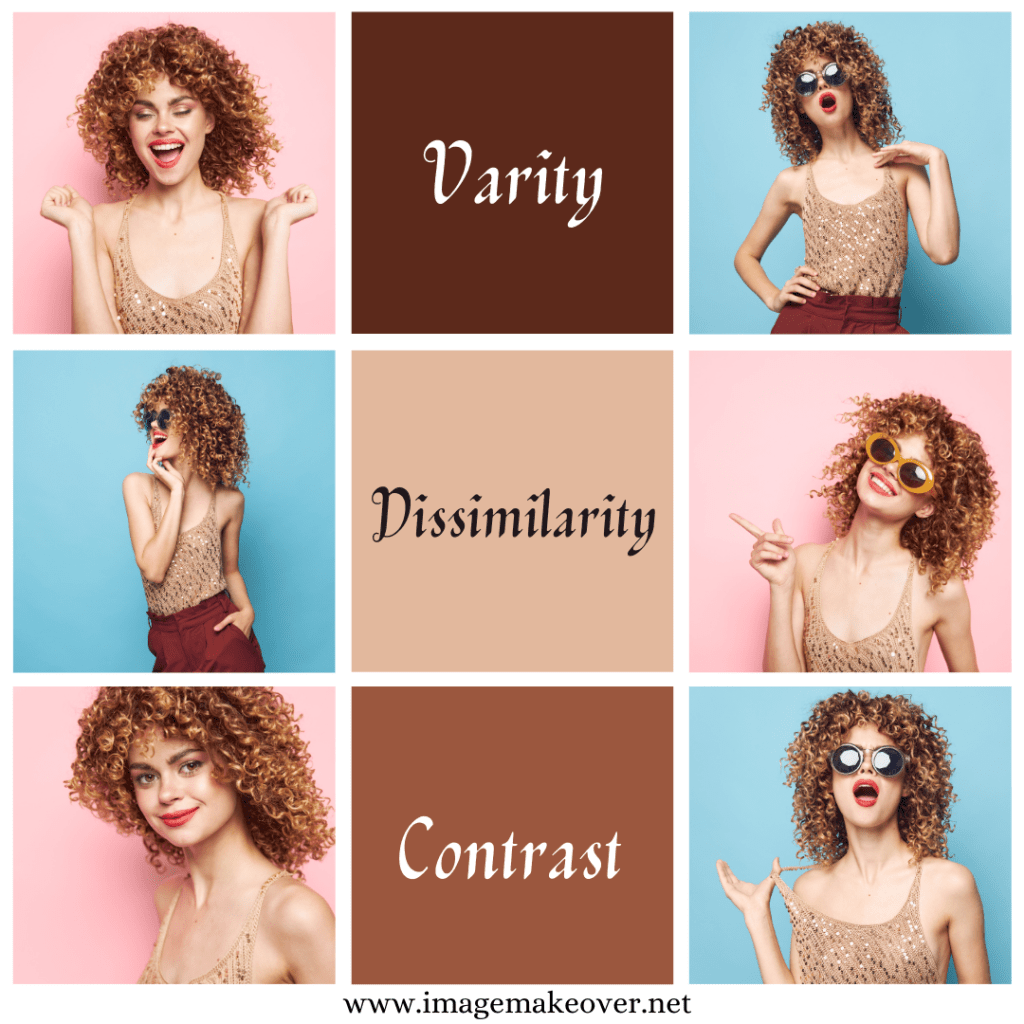
In all art form, including dress, the main part of the composition must be similar. Without similarity among the parts our senses would become confused and we would be uncomfortable. Most people feel comfortable with similarity. Similarity is desirable, but we don’t want everything so much the same the composition becomes boring, or predictable. It is important to introduce some variety, some dissimilarity or contrast in the composition. Without variety our senses cannot be fully stimulated . People are intrigued by the unexpected. They enjoy the new or surprise element. Variety is desirable but we do not want so much that similar elements begin to conflict or fight for attention. Too much variety results in chaos, confusion and mixed message.

If you always wear clothes with similar, lines, shapes, pattern and fabric, people become accustomed to seeing you look the same ,that soon they hardly notice you. Some variety or contrast is good for breaking the monotony and to attract some attention to your uniqueness. On the other hand if everything you wear is totally different from the day before , or every element within the outfit is unrelated to others, the effects becomes confusing. You might loosed your identity altogether. Therefore some similarity or repetition is necessary to provide stable base. To avoid both boredom and confusion , you should learn to compromise between similarity and variety.

Some clothes works better for you than others. They work because the elements of design selected are used correctly, they worn because the elements are arranged correctly, They meet your need and enhances your appearance. You like the way you look. The clothes are in harmony with you. It is not what you wear but how you wear. What works for you becomes what you prefer and what you prefer can develop into your personality.

Keep all these in mind , you will love the way you look and the way people respond to your style.

This post is written for BlogchatterA2Z challenge .

@Swati Mathur

A 2 Z of Image Management: Series about Developing Inner Strength and Reflecting them Outside #BlogchatterA2Z #TheThemeReveal

Hi Everyone,

From the time I have become member of Blogchatter’s community , I have been waiting to participate in A2Z campaign. And now when we are few days away from it to begin , I am feeling jittery , excited and nervous, all at the same time. This is my first time participation in the most happening campaign #BlogchatterA2Z, organised my one of the most selfless and active community.

To be part of such a campaign one needs to be committed, disciplined, proactive and positive. It’s a month long campaign , 26 Alphabet, 26 post in 26 days. Wow! it is going to be fun as there is going to be lot of good reading and writing and sharing.

Being an Image consultant I will be sharing “A2Z of Image Management”. Image management is all about developing your inner strength and at the same time reflect them on the outside appearance. Developing inner strength is all about working on your self esteem, attitude and soft skills while reflecting them to the outside world through creating impact full first Impression and by developing flawless visual communication through appearance. Creating a powerful first impression is essential to get more opportunities in life. We all carry certain skills ability and experience but the people we meet often judge us only by what meets the eye.

The concept of image management applies to anyone who has ever needed to improve self image , self-worth, self-confidence, capability and credibility. It applies to all those who ever wanted to get an idea across to someone else, to influence opinion or action, be it in the home , the school, community or workplace.

It is all about creating an authentic, appropriate , attractive and affordable image. As an individual living and working in a highly complex or competitive society, it become even more important to recognize and understand the impact of your appearance as it communicates first to you and to others.

What you wear and the way you look affects the way you think, feel, behave and the way people react to you. You cannot afford to create a negative impression. When you appear personally authentic, appropriate for the and attractively dressed and groomed, you create a positive impression and others are more able to perceive your positive traits and regard and respond to you more favourably.

I am not going to reveal much as surprises make things more riveting. But I can assure you this series can reveal some of the facts which are going to be interesting and revealing too and applying them can help you succeed in your personal and professional life.

Stay tuned as Blogchatter is definitely going to make this campaign more interesting and intriguing.

@SwatiMathur

Habits that affect our lives and Ways to deal with them #CauseAChatter

A momentary impulse, an occasional indulgence, a passing whim may by repetition become a habit difficult to uproot, a desire hard to control, and finally an automatic function that is no longer questioned. By repeated gratification of a desire , a habit is formed and thus habitual conditioning can grow into compulsion – Nyanaponika Thera

We all repeat certain behaviour that is harmful to us, be it on an emotional, mental, spiritual or physical level. We may lie, procrastinate, nail biting, struggle to be punctual, snore, play with our hair, drink too much coffee or smoke twenty cigarettes a day?? Most of us reading this list would have identifies with at least one of the examples. All of these and many not listed , may be irritating or even detrimental to our health in the long run but does ease our tension in the short term.

Why is habitual behaviour is so intrinsic to our existence? Until now we have denied or ignored our habits, but as we understand that their is mind body connection , we have to acknowledge that there must be a connection between what we do physically and what we feel emotionally.

Issues with people and circumstances that causes strong emotions upsets or balance of emotions and that’s when we are more likely to experience mood swings, instability and persistence negative emotions.

How habits are formed?

Certain emotions which triggered certain behaviour when done repeatedly converts it into a permanent habit. Therefore behaviour has become ingrained response to a particular state of being and follows as a cycle. Lets take an example.

A housewife who is experiencing anger towards her husband, whom she experience as abusive and belittling. This causes huge resentment and anger. She does not want to accept the fact that her relationship is unhappy and that there s a serious problems in the home. She wants everything appears to be just fine. Literally, on the surface everything needs to look good. So she cleans and re-cleans to make everything sparkle- except of course herself, who is actually far from sparkling. Lets understand her cycle: Trigger emotions that makes her feel guilty. Not expressing her anger and allowing her husband’s words to make her feel small leads to self-esteem issues. This makes her sad and she loses her self confidence. The truth is that she is still not honest with herself and stay in a denial mode as in there is no problem in the relationship. As a result performing the habit makes her feel better as at least she can do something well and feel some sense of achievement and things appears to look all right on the surface. There are number of habits out of which i will be taking about those which seriously affects our lives and we are not even aware about it.

There are certain habits that seriously affect our lives

In spite of overwhelming proof that these habits can do more harm , most of us do indulge in at least one of them on regular basis. Why? Because they make us feel good while we are doing them.

Self Harming

Self harming is a way of dealing with emotional pain in a physical way. A history of abuse is most often the prime cause, be the abuse emotional, physical or sexual. Most of the time dismissed by the people who call this as an attention seeking behaviour. That’s the reason majority of self-harmers are secretive about their habit. Self-harmers are often understandable angry at the situation yet feel unable to do anything about it. In this case a person feels that they have little or no control in the outside world, harming gives one a feeling some degree of control, even if it causes harm to themselves.

When the emotional pain becomes so intense that we unable to feel and deal with it, harming our self physically becomes only way to deal with it. There are a number of different techniques which can be used to stop self harming:

  • Yoga and deep breathing exercise
  • Finding an outlet as a punch-bag to vent out anger on such as a sport
  • Keeping a journal and recording your feelings
  • Removing potential self harming objects
  • Starting to learn to talk to others about how you feel
  • Using ice cubes and holding them- its painful but not harmful

Skin picking

Skin picking results from a build up emotional stress and anxiety, which is relieved through picking. It is also a habit that involves much shame and guilt, which is why people seldom admit that they do it and seek help. The skin consists primarily of boundary and communication aspects (how we interact with out side world). Digging and picking into it is a way of getting to what;s under our skin that is what is bugging us. This picking relieves boredom, anxiety, sadness as emotional stress.

Issues with the skin are an indication that we do like, that we are showing to the world about ourselves. We somehow want or feel that we should be less flawed and we we seek to rectify the problems by picking at our faults, which makes us feel better when we are doing it, but guilty and shameful afterwards.

Cognitive Behavioural Therapy is commonly used a means to understand the emotions triggers to this problem. Once these are understood , alternative coping strategies are adopted like , using gloves or bandage to reduce sensory urge , enrolling in web base programs which involves commitment that aims to help you reach a greater understanding of the problem and to work to heal it. Taking a professional help is advisable.

Shop lifting

For each shop lifter there is a different underlining cause. For some it occurs as a result of professional activity, for some it could be a thrilling experience, for some its like they have an entitlement , as if society rules don’t apply to them and they believe themselves to be above other people, laws and rules. Some people do it due to socio-economic issues as they are deprived of attention, material requirements and love as a children. And there are some habitual shop-lifters, for them stealing is both thrill and an opportunity to take revenge on a society which they perceive has failed or wronged them. Another category is of Kleptomaniacs, they do not plan to steal and commonly take items for which they have little use.

How can you stop this? Realise that what you are doing is very harmful. Should you be caught, you may face a prison sentence or community service. Stealing is no way to retaliate against a society where the law is upheld. If you are tempted , visualize yourself being apprehended and the effect that this would have on yourself and on those you love. There may be underlining problems, such as depression, that are provoking you to steal. Get help before you are caught or find any other positive activity to replace stealing.

Hair pulling

While shame and guilt must be the overriding result of hair-pulling. Tension and frustration are its main causes. we feel flawed and therefore afraid to voice who we really are, for fear that those shortcoming will be revealed. Our shame act as an inner critic, telling us that we aren’t worthy of being listened to, that we aren’t bright enough, pretty enough or knowledgeable enough for our needs to be expressed. Our guilt and shame about our hair pulling, then, confirms this assumption. Feeling inadequate and constantly giving in to the will of others at the expense of our own creates huge tension which we relieve through hair-pulling.

There are few healing strategies one can adopt for example Cognitive Behavioural Therapy where in people are taught to identify the trigger points and then substitute the impulse with other, less harm full habits. Another way to deal with this is by simply interrupting their hair-pulling by putting bandages on their fingers or keeping records and journals of their need to pull and when and how it is triggered. There are some medical treatments available which can be adopted. Support groups have been very helpful, as simply knowing that they are not alone.

Can you change your habits? The answer is yes you can if you are determined…

The first and the foremost thing which you need to do is identify what triggers these habits. Follow few steps by answering these questions

  • Write down a habit which you would like to overcome and set a time limit for this.
  • Review the last three times you have exhibited that habit.
  • How did you feel emotionally, before performing the habit.
  • How did you feel physically.
  • How did the habit make you feel afterwards.
  • Is there a pattern.
  • How do other people respond.
  • What is the outcome of performing your habit.
  • What is it, that triggers your habit.

Having gained insight into what really triggers your behaviour, you need to look at ways in which you stop doing what you do.

Three ways to Stop these negative habits

Substitution

In this you substitute your behaviour with less harmful practice, for example you cannot stop snacking on chocolate, so before urge occurs, you have made the decision to substitute chocolate for fresh fruits, which you have to made sure is handy. Each victory, no matter how small, affirms the one to come. This substitution method works really well for most physical cravings.

Interruption

Our negative behaviour often occurs unconsciously. But once we become aware of what triggers the behaviour , we can decide on another action to take, before we do whatever habit it is we want to indulge in. For example if you often find yourself having too many cups of coffee, make a rule of having long glass of water, another example, if you know you get angry on particular situation, make a rule to count till 10. Such interruptions not only make us more aware of when we are acting in a particular manner, but by the time we have done them, they often also alleviate our need to act in that way altogether.

Affirmations and goal setting

Goal setting for your behaviour is a wonderful way of affirming your progress as well honestly identifying your downfalls. The key is not to focus on those days when things went wrong but to affirms those days you stuck with your plan. Affirmations are wonderful way of enhancing the process. By repeating the phrase you have decided upon, make it more of a reality. Make sure your affirmations are positive and is spoken in present tense, as if the desired behaviour is already been achieved.

These strategies will definitely work if you believe in yourself.

This post is part of Blogchatter #CauseAChatter

@SwatiMathur

Picture Courtesy /Edit : Pexels /Canva

Emotional Health During Pregnancy – How to Look and Feel Good Series #CauseAChatter

In this series , I have talked about how to look good now let focus on how to feel good during Pregnancy.

Pregnancy can be overwhelming but if you are struggling to be happy than remind you, you are not alone. On other hand, if you find pregnancy to be your happy time than their are lot of women who enjoy this phase in their life too.

Experiencing vast range of emotions during pregnancy is quite normal. It’s is not easy being pregnant but it is also not that miserable that you cannot find happiness. While it is wonderful to feel happy during pregnancy but there are some external circumstances that can influence the way you feel this includes your financial status, whether you have a committed relationship, whether your pregnancy was intentional, age of the people involved and if their is any pre – existing mental and physical health conditions.

But why is it that some people are able to stay happy during their pregnancy while other’s find it difficult to handle their emotions. What can we do to remain happy during pregnancy?

Tips to Remain Happy During Pregnancy

Spend time with your loved ones

The more you surround yourself with the people you love and want to be with, the more positive you will feel about the whole situation. Try avoiding people who pushes you towards negativity or stress. Women adjust better during the transition to motherhood when they have satisfying and authentic relationships. As gratifying as motherhood can be it is inevitably taxing , so positive self affirmations and appreciation from people around you makes it easier to deal with it.

Spend time engaging in mindfulness

Meditation and mindfulness have innumerable benefits. It helps in reducing stress, aids in controlling anxiety, improves sleep, have controlled blood pressure, reduces pain, enhances self awareness, promotes positive outlook and makes you more kind towards other’s and yourself.

Connect with other expecting parents

Supporting and authentic relationships make a big difference in happiness during your pregnancy and the journey of parenthood. Sharing similar feeling and situations will aids you with solutions and guides you to to deal with unknown situation you might face during pregnancy. You will feel better to know that you are not alone sailing in this boat of pregnancy and you can take comfort that someone truly understands what you’re going through.

Exercise

We all know whether you are pregnant or not exercise has an ability to affect your mood positively. It helps in reducing anxiety and feelings of depression. Medically exercise not only bring feelings of happiness, but help reduce feelings of pain. Though it is important that you do not engage in any intense exercise without proper doctor’s guidance.

Eat healthy

A healthy diet is an important part of a healthy life style at any time but especially vital if you are pregnant. Eating well can keep your blood pressure, blood sugar levels and weight at healthy levels to reduce the incidence of complications. Eating healthy foods can also help prevent or treat common pregnancy maladies, such as morning sickness and leg cramps. When a women is away from all this complications and sickness she ought to feel good.

Sound Sleep

Pregnancy is a magical time in many ways, but sleep schedule during these nine months might be less than dreamy. The growing belly, the aches, the pains, the heartburn ,many women experience sleepless nights long before there’s a hungry, crying infant in the picture.

Pen down your thoughts, maintain a journal

Record how you feel and what you experience as it make beautiful lifetime memories which you can cherish for a long long time. This is like a stress buster as there are lot of things which you hesitate to share with others or experience you want to keep it to yourself can be written and revisited if that makes you happy.

Detach from Technology

We all know the usage of electronic gadgets like a cell phone or laptop is inevitable today. Although, we cannot avoid them completely but being informed of the radiation from these devices on children and pregnant women are necessary. The radio waves emitted from these gadgets may alter the DNA structure of growing fetus and unlikely mutations are possible. Too much usage also harm eyes and can be very stress full. Therefore Walks in fresh air and reading books are more holistic approaches to relaxing during pregnancy and keeping both mother and baby healthy.

A pregnant women exposes her child to all the experience she goes through. This includes the sounds in the environment, the air you breathe, the food you eat and the emotions you feel. When you feel happy and calm, it allows your baby to develop in a happy, calm environment. However, emotions like stress and anxiety can increase particular hormones in your body, which can affect your baby’s developing body and brain. It is normal to have occasional negative thoughts, dreams or fleeting doubts. With any new or difficult situation, sometimes you are able to cope with the challenge, and sometimes you can feel overwhelmed. So all I can say from my own experience is take each day at a time and do not get bogged down by new situations and feelings. Just remember one thing you are not alone.

This post is part of Blogchatter #CauseAChatter

This blog post is part of the blog challenge â€˜Blogaberry Dazzle’ hosted by Cindy D’Silva and Noor Anand Chawlaand generously SPONSORED BY Bugshield Clothing – Enjoy Outdoors More!

@Swati Mathur