Learn How Embracing A Growth Mindset Fosters Continuous Learning, Self-improvement, and Personal Growth

Canva/ pexels

“Every failure and disappointment teaches you something”. People say ‘why me,’ but I say ‘why not.’ You should think you are the chosen one who can have better learning, as each experience teaches you to be a better version of yourself.” Instead of viewing challenges as setbacks, seeing them as opportunities allows individuals to confront difficulties head-on. For instance, if someone faces rejection in a job interview, they could choose to see it as an opportunity to reflect on their skills and improve for future interviews. Each failure or disappointment can serve as a building block for resilience. When facing obstacles, individuals can choose to adapt and grow stronger rather than succumb to despair. Let’s say, a student who fails a test can use that experience to develop better study habits and resilience for future academic challenges. Every setback provides valuable lessons that contribute to personal development. Whether it’s a failed project at work or a broken relationship, there are insights to be gained from analyzing what went wrong and how to do better next time. Someone who experiences a business venture failure might learn valuable lessons about market research, financial management, or team dynamics. Instead of dwelling on self-pity or feeling like a victim of circumstances, adopting the mindset of “why not me?” can foster a sense of empowerment. This perspective shifts the focus from feeling singled out by adversity to believing in one’s ability to overcome it. An athlete who faces a career-threatening injury might use the experience to develop mental resilience and come back even stronger.

Recognizing that failure is not a final destination but rather a stepping stone toward growth enables individuals to embrace a continuous journey of self-improvement. Each setback becomes an opportunity to refine skills, broaden perspectives, and evolve into a better version of oneself. An entrepreneur whose startup fails can use that experience to refine their business model, identify areas for improvement, and ultimately achieve success in future endeavors. By reframing failures and disappointments as opportunities for growth and learning, individuals can harness their experiences to become more resilient, adaptable, and ultimately, better versions of themselves.

A growth mindset is a psychological concept developed by psychologist Carol Dweck, which describes the belief that abilities, intelligence, and talents can be developed through dedication and hard work. People with a growth mindset see challenges, setbacks, and criticism as opportunities for growth and learning, rather than as indicators of their fixed abilities.

  1. Belief in Potential: Individuals with a growth mindset believe that their abilities and intelligence can be developed over time. They understand that with effort, perseverance, and effective strategies, they can improve and achieve their goals.
  2. Embracing Challenges: Instead of avoiding challenges or giving up when faced with obstacles, those with a growth mindset see challenges as opportunities to learn and grow. They approach difficult tasks with enthusiasm and are willing to put in the effort to overcome them.
  3. Persistence and Resilience: People with a growth mindset are resilient in the face of setbacks. They understand that failure is a natural part of the learning process and use setbacks as opportunities to gain valuable insights and adjust their approach.
  4. Viewing Effort as Path to Mastery: A growth mindset values effort and hard work as essential components of success. Rather than relying solely on innate talent or intelligence, individuals with a growth mindset understand that consistent effort and practice are necessary to achieve mastery in any endeavor.
  5. Learning from Feedback: Feedback, whether positive or negative, is seen as valuable information for growth and improvement. Instead of feeling threatened or discouraged by criticism, those with a growth mindset use feedback to identify areas for development and refine their skills.
  6. Celebrating Others’ Success: Rather than feeling envious or threatened by others’ achievements, people with a growth mindset celebrate the success of others. They see others’ accomplishments as inspiration and evidence that with effort and dedication, they too can achieve their goals.
  7. Continual Learning and Improvement: A growth mindset is characterized by a commitment to lifelong learning and development. Individuals with this mindset are always seeking new challenges, acquiring new skills, and expanding their knowledge base.

Transitioning from a fixed mindset to a growth mindset requires intentional effort and the implementation of strategies aimed at changing ingrained beliefs and behaviors.

  1. Self-awareness: Recognize when you’re exhibiting fixed mindset beliefs or behaviors. Pay attention to your inner dialogue and the language you use when faced with challenges or setbacks. Are you attributing failures solely to lack of ability, or are you viewing them as opportunities for learning and growth?
  2. Challenge fixed beliefs: Challenge the beliefs that contribute to a fixed mindset by questioning their validity. Ask yourself whether there is evidence to support the belief that abilities are fixed and cannot be changed. Consider alternative perspectives and examples of people who have achieved success through effort and perseverance.
  3. Learn from failures: Instead of viewing failures as evidence of incompetence, see them as opportunities for growth and learning. Reflect on what went wrong, what you can learn from the experience, and how you can improve in the future. Embrace the idea that setbacks are a natural part of the learning process and provide valuable feedback for improvement.
  4. Set learning goals: Shift your focus from performance goals to learning goals. Instead of solely focusing on achieving specific outcomes, prioritize acquiring new skills, expanding your knowledge, and developing expertise in areas of interest. Celebrate progress and effort, regardless of the outcome.
  5. Embrace challenges: Seek out opportunities to challenge yourself and step outside of your comfort zone. Embrace challenges as opportunities for growth and development, rather than avoiding them out of fear of failure. Recognize that facing challenges head-on is essential for building resilience and developing new skills.
  6. Cultivate a growth-oriented environment: Surround yourself with individuals who have a growth mindset and support your efforts to cultivate one as well. Engage in discussions about learning, development, and personal growth. Seek out mentors and role models who embody a growth mindset and can provide guidance and encouragement.
  7. Practice self-compassion: Be kind to yourself and recognize that transitioning from a fixed mindset to a growth mindset is a gradual process that takes time and effort. Acknowledge and accept your limitations, but also believe in your capacity to learn and improve. Treat yourself with the same kindness and understanding that you would offer to a friend facing similar challenges.
  8. Celebrate effort and progress: Acknowledge and celebrate your efforts and progress, regardless of the outcome. Recognize that growth and development are ongoing processes, and every step forward, no matter how small, is worth celebrating. Focus on the journey of self-improvement rather than solely on the destination.

By implementing these strategies consistently and intentionally, you can gradually shift your mindset from fixed to growth-oriented, unlocking your full potential and achieving greater success and fulfillment in various aspects of your life.

Let me explain you the concept of growth mindset with an inspiring stories of Ramya who have turned setbacks and obstacles into catalysts for growth and success through her resilient mindset.

“Beyond the Screen: Respecting Children’s Autonomy in the Digital Age” #MentalHealth

Canva/Pexels

Whether children under 18 should be on social media, it’s a complex issue with no one-size-fits-all answer. Social media can help children stay connected with friends and family, especially those who may be geographically distant. Social media can provide educational resources, creative outlets, and opportunities for skill development.

But at the same time risk is much higher. Children may be exposed to inappropriate content, cyberbullying, or grooming by online predators. Excessive use of social media has been linked to negative effects on mental health, such as increased feelings of loneliness, anxiety, and depression. Children may not fully understand the implications of sharing personal information online, leading to potential privacy breaches or identity theft.

Ultimately, whether a child should be on social media depends on various factors, including their age, maturity level, and the specific platforms they’re using. Parents and guardians should carefully consider these factors and actively supervise their child’s online activities to ensure their safety and well-being. While children can certainly participate in influencer activities, it’s crucial to approach this with caution and prioritize the child’s best interests. Parents and guardians should consider the child’s age, maturity, and understanding, and ensure that they have the necessary support and protection in place to navigate the complexities of social media influencer culture. It’s important to obtain consent from the child before sharing any content involving them and to respect their boundaries and preferences regarding their online presence.

“Lost In The Web” – The Temptation Of Digital Distraction Can Be Extremely Tragic #Mental Health

Canva/Pexels

While technology and the internet offer incredible opportunities for connection and entertainment, excessive obsession and addiction to them can have devastating consequences. It emphasizes the importance of moderation, self-awareness, and maintaining a balance between digital engagement and real-life experiences. Additionally, the story underscores the significance of seeking help and support when struggling with addiction, as well as the profound impact that our choices can have on our lives and the lives of those we love.

Digital distraction can be both beneficial and harmful:

  1. Increased Connectivity: Digital devices facilitate communication and connection with others, enabling networking and collaboration on projects or ideas.
  2. Access to Information: The internet provides vast amounts of information on virtually any topic, which can be beneficial for learning, research, and problem-solving.
  3. Entertainment and Relaxation: Digital media offers a multitude of entertainment options, including streaming services, games, and social platforms, which can help individuals relax and unwind.
  4. Productivity Tools: Digital tools and applications can enhance productivity by streamlining tasks, organizing schedules, and providing resources for work or personal projects.
  1. Decreased Productivity: Constant access to digital devices can lead to distractions that impede productivity, as individuals may spend excessive time on non-essential activities.
  2. Impaired Focus and Attention: Digital distractions can disrupt concentration and focus, making it difficult to engage fully in tasks or activities that require sustained attention.
  3. Negative Impact on Mental Health: Excessive use of digital devices has been linked to various mental health issues, such as anxiety, depression, and social isolation, particularly when individuals compare themselves to others on social media or experience cyberbullying.
  4. Physical Health Risks: Prolonged use of digital devices, especially without breaks, can lead to physical health problems such as eye strain, neck and back pain, and poor posture.
  1. Setting Boundaries: Establishing specific times or situations for digital device use and implementing rules, such as turning off notifications during focused work periods.
  2. Prioritizing Tasks: Identifying and prioritizing important tasks can help individuals allocate their time and attention more effectively, reducing the likelihood of succumbing to digital distractions.
  3. Utilizing Productivity Tools: There are numerous apps and tools available that can help individuals manage their time, organize tasks, and block distracting websites or applications.
  4. Practicing Mindfulness: Being mindful of digital usage habits and their impact on productivity and well-being can help individuals make conscious choices about when and how to engage with digital devices.
  5. Taking Breaks: Incorporating regular breaks into daily routines allows individuals to recharge and refocus, reducing the temptation to succumb to digital distractions continuously.
  1. Apple: With features like Screen Time, Apple provides users with tools to monitor and limit their screen time, set app usage limits, and schedule downtime away from screens.
  2. Google: Google offers similar features through Digital Wellbeing, which includes tools for tracking screen time, setting app limits, and enabling a “Wind Down” mode to help users disconnect before bedtime.
  3. Forest: Forest is a productivity app that helps users stay focused and reduce distractions by growing virtual trees. When users set a timer to focus on a task, their tree grows, but if they leave the app to check their phone, the tree dies.
  4. Freedom: Freedom is a website and app blocker that allows users to block distracting websites and apps across their devices for set periods, helping them stay focused and productive.
  5. RescueTime: RescueTime is a time-tracking tool that helps users understand how they spend their time on digital devices, providing insights and reports to help them make more informed decisions about their digital habits.
  6. Time Well Spent: Time Well Spent is a movement and organization focused on advocating for technology that promotes well-being and human flourishing. They work to raise awareness about the impact of technology on mental health and promote design practices that prioritize user well-being.

Echoes of Regret: The Unspoken Story of Emily and Lily” #MentalHealth

Canva/ Pexels

Today marks the first occasion where I share a story to explain what I really meant when I say empathy, understanding and forgiveness are rare virtues, or more accurately, embark on my journey into the realm of fiction by putting pen to paper and crafting a narrative that has been brewing within me for some time.

The story could be interpreted in several ways, but one key takeaway could be the importance of empathy, understanding, and forgiveness in relationships.

  1. The story highlights the consequences of envy and jealousy and how they can lead to destructive behavior. By empathizing with others and recognizing their struggles and insecurities, we can avoid acting on negative emotions and harming those around us.
  2. The characters in the story are portrayed with their own flaws and insecurities, illustrating that everyone has their own struggles and challenges. Understanding that people are more than just their outward appearances or actions can foster compassion and connection.
  3. Despite the betrayal and hurt caused by Lily’s actions, the story suggests that forgiveness is essential for healing and moving forward. Emily’s realization that she never truly knew the depths of Lily’s struggles highlights the importance of forgiveness and letting go of resentment.

Overall, the story emphasizes the value of empathy, understanding, and forgiveness in fostering healthy relationships and navigating the complexities of human emotions. It encourages readers to look beyond surface appearances, extend grace to others, and cultivate empathy and forgiveness in their interactions with others.

Modern society often emphasizes individualism and self-interest over collective well-being. This focus on personal achievement and success can lead to a lack of empathy and understanding for others’ experiences and struggles.

While technology has connected us in many ways, it has also created barriers to genuine human connection. Social media, in particular, can promote comparison, jealousy, and a superficial understanding of others’ lives, making it harder to empathize with their real-world experiences. Society is increasingly polarized, with people retreating into echo chambers where their beliefs and opinions are reinforced. This can breed intolerance, judgment, and a lack of empathy towards those who hold different views or identities.

Many people today lead busy, stressful lives, leaving little time or energy for cultivating empathy and understanding. In the rush to meet deadlines and responsibilities, relationships can suffer, and conflicts may go unresolved.

Despite these challenges, empathy, understanding, and forgiveness are more important than ever in today’s world. Empathy and understanding are essential for building strong, meaningful connections with others. By listening attentively, seeking to understand different perspectives, and showing compassion for others’ experiences, we can foster deeper relationships based on mutual respect and trust. Conflict is inevitable in any relationship, but empathy and forgiveness can help facilitate resolution and reconciliation. By empathizing with others’ feelings and perspectives, we can find common ground and work towards resolving conflicts in a constructive manner.

Cultivating empathy, understanding, and forgiveness not only benefits our relationships with others but also contributes to our own personal growth and well-being. By practicing empathy, we develop greater emotional intelligence, resilience, and compassion, which can lead to greater fulfillment and happiness in our lives.

How Can You Empower Young People To Use Their Latent Potential?

Pic courtesy/Edit: KnowledgeWroks / Canva

Do you know out of 13 million people who join India’s workforce each year, only one in four management professionals, one in five engineers and one in ten graduates are employable? This is definitely a hard-hitting fact but brutally true.

Empowering young people to utilize their latent potential involves a multifaceted approach that addresses various aspects of their personal, academic, and professional development. Here are some effective strategies that one can adopt:

  1. Provide Mentorship and Guidance: Pair young people with mentors who can offer support, guidance, and encouragement as they navigate their personal and professional journeys. Mentors can share their experiences, provide valuable advice, and help young people set and achieve their goals by holding them accountable. There are many companies that want to build employees skills often create mentoring programs that create high quality and productive workforce.
  2. Promote Self-Discovery and Exploration: Self-Discovery is a powerful tool for personal growth and development. By understanding ourselves better one can better decisions, build stronger relationships and can live a full filling life. Therefore, encourage young people to explore their interests, passions, and strengths through experiential learning opportunities such as internships, volunteer work, and extracurricular activities. Help them discover their talents and potential career paths by exposing them to a variety of experiences.
  3. Encourage a Growth Mindset: Growth mindsets understand the importance of determination and persistence. By changing the way you think , can change the way you learn. Knowing your strengths and abilities allows you to explore, experience and achieve more in life. Teach young people the value of a growth mindset, emphasizing the belief that abilities and intelligence can be developed through dedication and effort. Encourage them to embrace challenges, learn from failures, and persist in the face of obstacles.
  4. Provide Access to Education and Resources: Easy access to education and resources can lead to better quality, social mobility, economic development and ensure brighter future for individuals. It allows you to gain a more comprehensive understanding considering different perspectives and interpretations. Ensure that young people have access to quality education, including formal schooling, vocational training, and online learning resources. Provide scholarships, grants, and other forms of financial assistance to support their educational pursuits.
  5. Build Confidence and Resilience: We are often told that” you are stronger than you think”. Confidence is believing in ones abilities and beliefs. This deep self-belief becomes resilience. That resilience will never make you feel disappointed if things don’t work out or feel scared of anything. That is part of the beautiful emotional spectrum of human nature. What confidence and resilience do together is to keep you feeling hopeful. Help young people build self-confidence and resilience by acknowledging their accomplishments, encouraging them to step out of their comfort zones, and teaching them coping strategies for dealing with adversity and setbacks.
  6. Encourage Goal-Setting and Planning: One of the most effective way to feel motivated and to accept change is to set specific goals and plan ahead of time. It focuses your acquisition of knowledge, and helps you to organize your time and your resources so that you can make the most of your life. Guide young people in setting realistic, achievable goals and developing action plans to accomplish them. Teach them the importance of setting both short-term and long-term goals and provide tools and resources to help them track their progress.
  7. Promote Leadership and Advocacy Skills: Advocacy is all about taking action and being accountable for oneself in creating a better life on the other hand leadership is the ability to empower others to achieve a collective set of goals for a progressive future. These are the skills that can be acquired through experience and not given from birth. The creation of a strong foundation starts with the family, education, peers, and other experiences to develop those necessary skills.  The goal in all of these is to develop the child’s own strong capacity to self-advocate and to become a leader, based upon their own experiences. Encourage young people to take on leadership roles in their schools, communities, and extracurricular activities. Provide opportunities for them to develop leadership skills, such as public speaking, teamwork, and decision-making, and support their efforts to advocate for causes they believe in.
  8. Promote a Supportive Environment: Foster a supportive and inclusive environment where young people feel valued, respected, and empowered to express themselves. Create safe spaces for them to share their ideas, opinions, and concerns without fear of judgment or criticism. This will keep them motivated and more focused at the same time.
  9. Celebrate Diversity and Inclusion: Embrace and celebrate the diversity of young people’s backgrounds, experiences, and perspectives. Create opportunities for them to learn from each other, collaborate on projects, and build connections across cultural, ethnic, and socioeconomic lines. Diversity and inclusion leads to innovation as they don’t have a fixed mind set like, “We have always done it this way”, it create an environment where people can be themselves without any judgment and probably that is the reason they are more fearless and ready to take risks.
  10. Lead by Example: Be a positive role model for young people by demonstrating qualities such as integrity, perseverance, and compassion. Share your own experiences and challenges to inspire and motivate them to pursue their goals with determination and resilience. I feel the mark of the great achiever lies in their ability to “Walk the Talk”. Lead by example is very important as it boosts the people’s morale especially those who are following you, it builds respect and trust and create positive work culture that lead to increased productivity.

I am sure it really makes sense now as investing in youth empowerment directly leads to not just economic growth but greater innovations. By giving the quality education, vocational training and supportive environment we are equipping them with the skills and knowledge that will contribute to the workforce effectively.

Creating a Safe Internet Environment at Home: Best Practices for Parents

According to Nationally representative poll, two third of parents are worried about children’s  increased time on devices, including overall screen time and use of social media, taking number 1 and number 2 spots on the children’s health concerns this year.(Hindustan Times). 

Recent Common Sense Media research shows that media use by tweens (ages 8–12 years) and teens (ages 13–18 years) rose faster in the two years since the COVID-19 pandemic than the four years before. The research found 8- to 12-year-olds spend an average of five and a half hours a day on screens and consuming media. That rate climbs to over eight and a half hours a day for teens.

Among teens, 79% said they use social media and online videos at least once a week, and 32% of these said they “wouldn’t want to live without” YouTube. And nearly two-thirds (65%) of tweens said they watch TV, 64% watch online videos and 43% play games on a smartphone or tablet every day.

In another survey, 71% of parents with younger children (under 12 years old) said they were concerned about their child spending too much time in front of screens

Quite alarming right?

Technology inherently neither beneficial nor detrimental. It all depends upon its usage. But again, it is the responsibility of a parent to assess what is developmentally appropriate for their child. This can be done by informing children about pros and cons of specific digital media consumed by them. But again, the question arises is how much is too much. The answer is not that straight forward. There are various factors that are involved in this.

First and foremost, what type of digital media your child is consuming, be it games, social media, the news, online videos, apps, texting, FaceTime, educational content etc?

Secondly what is the motivation behind using technology be it peer pressure, boredom, research, socializing or just a feelgood factor?

Thirdly, how much time a child is spending on using technology  and doing any other things like reading book, sleeping, playing etc.?

Fourthly, whatever a child is watching is it aligning with the family values or not?

It also depends upon child’s personal attributes like, his or her personality, mental health condition, age, etc.

Lastly, what is the setting of child using any technology, is he watching alone, or with friends, or with an unknown person.

Only when all these questions are considered, you would be able to answer how much  screen time is actually Ok.

Concern remains the same if we don’t find a solution to control what they should watch and for how long? I have come across a word called digital diet. It is like any other healthy diet we look for a child. For example, how much sugar a child should consume? Neither too much nor too less, anything which is balanced. Similarly, Digital diet is consuming digital media without compromising on their physical and cognitive learning and development.

It might seem overwhelming but with all the information available online be it parental control, parenting groups, scholarly research, monitoring apps and Happinetz technology which is definitely a revolution in this digital world, parenting do look possible.

Happinetz is a safe internet for kids’ box that connects to your home router wired or wirelessly. Once connected, it creates a separate WiFi which filters out age-inappropriate internet and helps you set screen time schedules for devices connected to this WiFi. Happinetz continuously monitors more than 110 million websites and apps and is preconfigured to block more than 22 million adult and unsecured websites.

  • Exhaustive filtering system
  • Customizable internet schedule
  • Insight to help parents monitor what websites & apps children are opening
  • Quick setup: A quick 2 step-5 minutes process
  • Zero kid involvement: No need to download apps on your child’s device
  • Device compatibility: Connect up to 10 devices, including Android or iOS phones, tablets, laptops, and smart TVs.

By using Happinetz you will definitely be solving much of your problems but with this we can also make a Family Technology Plan. In this plan you can list down certain rules.

  • Device can only be used after finishing studies and before dinner and should not be used during mealtime, school time and before going to bed.
  • Device can be used only for 30 mins at a stretch.
  • What type of digital media to be used need to be decided like, YouTube, WhatsApp etc.
  • Where to use the device? For example, in the presence of parents or in common area etc.

10 Virtues To Stay On Top Of Your Game

Who doesn’t want to stay on top of the game. It’s my desire and It’s a desire of millions of people too. The most important or I can say the bottom line of success journey is that it starts with a thought which leads to action. When we do each thing full-speed ahead with the best of our ability, doors open.

I knew a boy who worked in the grocery store across the street. During covid time, most of the stores used to keep limited inventory and most of the shopkeepers were borrowing from one another. This boy used to run from one shop to another so that they can serve the customer. One day when I visited the store I asked one of the shopkeeper why this boy always run everywhere he went. So this shopkeeper replied that he is working for a raise, and he is going to get one, I then asked him how he knew that he is going to get a raise, and the shopkeeper replied “If the man this boy is working for won’t give him one, I will.

Maintain five attitude in your life and you will be well on your way to the top. First is self esteem, feeling of your own worth influences every facet of your life. The second attitude is Love, attitude towards others, real love always thinks in terms of what is best for the other person. The third is faith, attitude towards God, it will influence your attitude towards people around you. The fourth attitude is hope, attitude towards your future, it is the realistic expectation that something good is going to happen. The fifth attitude is forgiveness, which deals with our past. The ability to forgive others.

Sometimes little mistakes and failures come in our way that are not earth shattering or life changing but they cause a momentary stop in our progress. So what do you do? First thing is acknowledge that you are in a trouble. Step two is recognize that this is neither permanent nor life threatening. Accept responsibility for improving your circumstances and you will realize that you have turned a small tragedy into a big win.

A study of three hundred world class leaders including Mahatama Gandhi, Mother Teresa, Sir Winston Churchill Jr, Martin Luthur King, revealed that 25% of them had serious physical disabilities and an additional 50% has been abused as children or were raised in poverty. All of them responded positively instead of reacting negatively towards their situation. Remember, It’s not what happens to you, It’s how you handle what happens to you that’s going to make the difference in your life.

Merlin Olsen, an American football player, who played in NFL Pro Bowl fourteen times as an American defensive player. Once his mother asked him a question, “What would you like to be”? he said “I want to be big and and be athletic. His ambition doesn’t seemed practical then as everyone in his family were small in stature and because he was clumsy he was never chosen to be part of the game. But rest is history.

The proper utilization of our time and resources involves some truth which are so simple and basic that many people miss them completely. We need to understand that there is no point in doing well those things which we should not be doing at all. When you take on a task , you should ask yourself, if this is something you should be doing? Focus on effective use of time, rather than efficient use of time.

Good habits must be grabbed firmly, forcefully, with a strong commitment. Regardless of how you feel at the moment, any decision reinforced by your will to take action on your commitment, will produce some marvelous results in an amazingly short period of time.

Most people who fail in their dream, fail not from lack of ability but from lack of commitment. Commitment produces consistent, enthusiastic effort that inevitably produces greater rewards. Commitment, discipline and responsibility keep you going when the going gets tough.

It is a fact of life that you need to know where you are and where you want to be. The goal setters earned an average of twice as much per month as the non action group. Action group tended to be more enthusiastic, more satisfied with life and work and have happier and healthier life.

What is Mid-Life Crisis And How To Survive It? #MentalHealth #CauseAChatter

I remember on my fortieth birthday my family organized a special party. Everyone especially my kids and hubby were really excited, they wanted to give me a surprise but me being a one man army when it comes to my house work, nothing can be hidden from me. So that was something which they weren’t really happy about but can they really do anything about it? of course not..hahaaha. Amidst the wishes, something struck me, don’t know what but all I could hear was, ” we are sorry you have reached so far”, I know it was all in my head, It was my imagination but that made me question myself, ‘ Where did my life go? ,’Have I achieved anything worthwhile? I couldn’t believe I am already in my forties.

But to be frank I am a positive sole, who love herself too much to be affected by all these but I know people who do get paranoid and get into their own cocoon. This is probably the midpoint of your life. For the first time you must have noticed grey hair, weight gain, wrinkles, the real sign of ageing. Why forties are stressful? have you ever thought? The major life event occurs during this time, deteriorating health of parents, children leaving home and that’s why emotionally you are completely drained out while taking stock of current situation. After years of striving to make it to the top professionally and personally, your career and life may also reach a plateau. So, it is quite natural to feel boredom or disenchantment to set in. Menopause is another well-known effect during this time which can be extremely depressing. Self-questioning, unexpected anger, lack of motivation, self-doubt, lack of ambition, depression, anxiety, attracted towards unhealthy options are few symptoms during this phase.

But hold on, this can also be a time for healthy changes that lead to a fulfilling middle and older age.

Can we deal with this?

Coping with mid-life crisis definitely takes time and effort, but it can help you find greater satisfaction and pleasure in life.

  • Acceptance is the key. Accept that ageing is inevitable and decline is not. With acceptance, you allow yourself to grieve losses and which is absolutely needed and normal too.
  • Sharing will bring peace. By sharing your feelings, you can relive fears and frustration that you are going through.
  • Introspect what happened, what is happening and what can happen. Make it a habit of spending time thinking about your life. This will give you a better perspective towards life.
  • Rediscover you relationship with your partner. This will help you to bond better with them.
  • Set new SMART goals for yourself that are exciting and realistic too.
  • Try out new things and surprise yourself. Be it sport, hobby or a certification courses which can add value in your life.
  • Make a travel itinerary. Visit places which have always fascinated you. This will provide you with some rich experience at the same time can make you feel refreshed.
  • Contribute towards society, by working with non-profit organizations, this will give you peace of mind and immense satisfaction. You will feel fulfilled.
  • Spend quality time with your loved ones especially your children.
  • Maintain healthy lifestyle, by eating healthy food, indulging in fitness regime like, yoga, gym etc.

Look at mid-life as your greatest opportunity. It may help you to takeout time and write down a list of all things that you would like to achieve with the second half of your life. Instead of imagining your life bleak, visualize it as a full of opportunities and possibilities. Allow your mid-life to be a time of creative change. Although it may be painful at first, it can be your greatest opportunity for having the life you want or gaining a sense of peace.

Chris Wildt has rightly said ” I have decided middle age is hard to determine- it depends on how long you live”.

This Post is a part of Blogchatter’s #CauseAChatter Program.

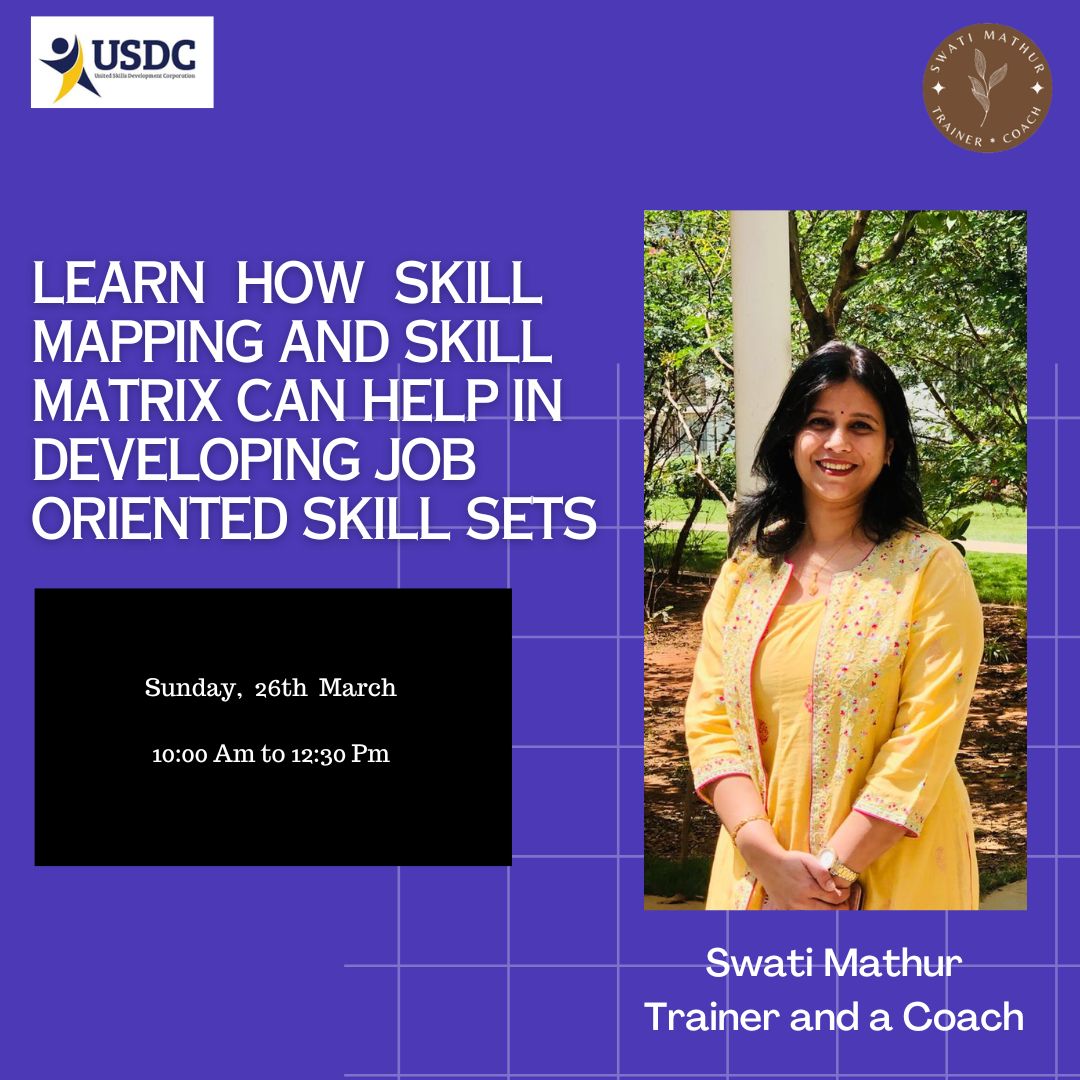
Workshops Conducted For USDC Group #Workshop #Training

Such sessions apprise the students of the current career prospects in different fields of Information, Technology, Research etc.. To groom students for their prospective career, such sessions aim at enhancing the aptitude and reasoning capabilities of the students and familiarizing them with pattern of various placement on regular basis.

I also conduct personality development program to polish and groom the students to the ground of personality, knowledge, sociability, attitude and skills so as to prepare them for the written tests, interviews and other competitive examinations. These sessions actively address the key human resource challenges faced by the world of academia and industry – and thereby help bridge the divide that separates these two islands.

Soft Skill Development Program

The session emphasizes on practical & functional skills for the real life situation in the world outside class room. The objective is to understand the communication and its importance, Voice and accent enhancement-Pronunciation, Language enrichment & speech- Fluency grammar, Vocabulary enhancement, Speech Fluency, Listening skills with pre and post assessments. For Interview Skills we work on the Barriers for Effective Communication like:

  • Basic & Intermediate – English Grammar, Sentence Formation, Spoken English, Fluency, Basics of communication
  • Spoken English, Accent Neutralization, Intonation, Accent Comprehension, Conversation Skills, Advanced Grammar
  • Presentation Skills
  • Study Skills (Note Taking, Organizing, Data, Memory etc)
  • Memory Techniques
  • Team Skills
  • Group Interaction Extempore
  • Developing verbal & non-verbal communication skills
  • Role Plays

In Skill mapping session students are introduced to mapping their skills which is a visual representation of the skills needed to perform well in any given role and comparing that with the existing skills. This comparison will allow to identify the gaps. Skill maps can provide a view of the entire team by showing the contributions and skills of each individual in teams.

Anyone who is interested in these sessions can approach us and we can help you customize these session according to your need.

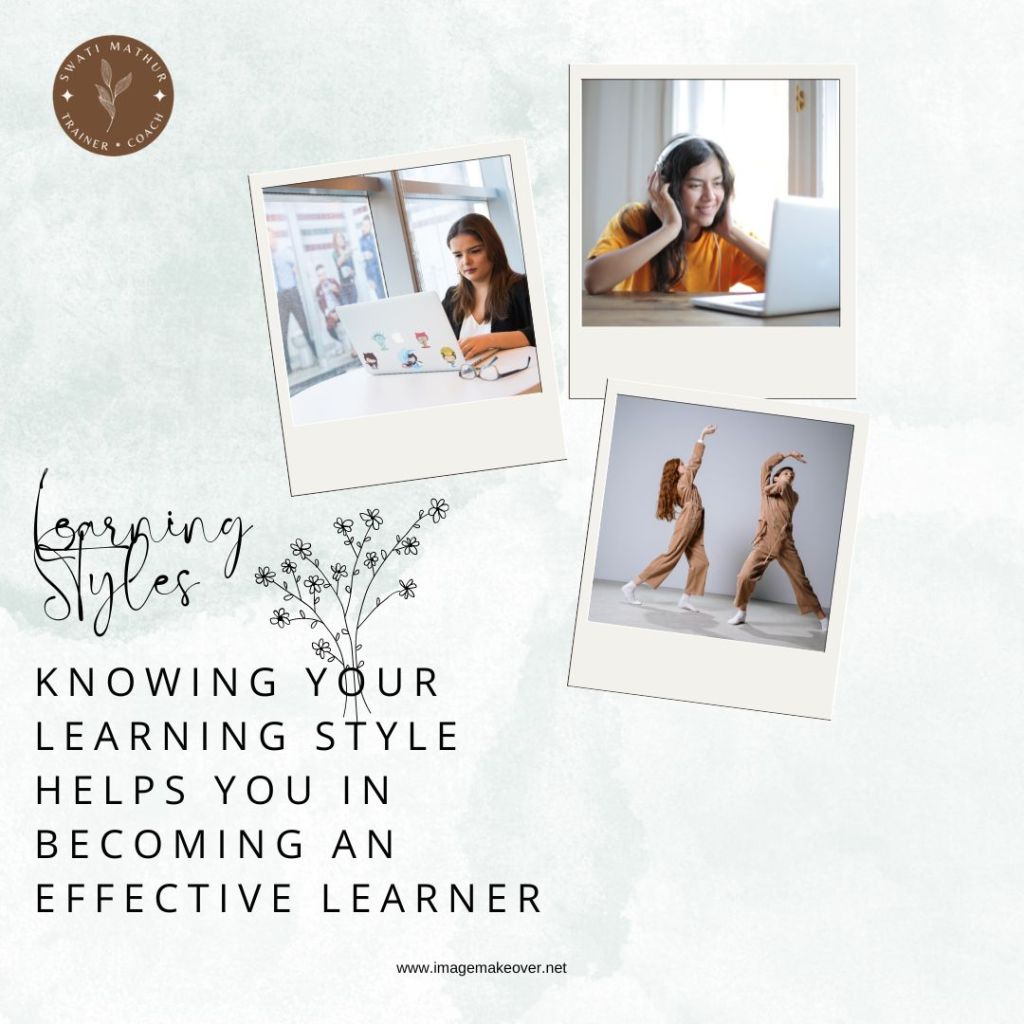
Knowing Your Learning Style Helps You In Becoming An Effective Learner

Different learning styles coincides with your personality style. Each of us has different learning style or combination of styles. We all learn differently but we can all learn effectively. How? Well, the first step towards this is reassess one’s approach of learning. It is vital to understand ones own learning style and use it to your best advantage.

We have as many as 12 learning styles and it is definitely a challenge to accommodate different multiple intelligence with diverse learning needs. Multisensory learning approach is one of the most effective approach that uses different senses in teaching. I am sure most of you must have heard about Gardner’s Theory of Multiple Intelligence , where he had categorized 8 Intelligence.

  1. Visual-spatial: In this people learn better when they use their sense of sight to decode any information, be it flow chart, images or videos.
  2. Linguistic-verbal: In this people enjoy reading and writing and have a very strong language skills. They can remember anything written or spoken and that’s why they are very good when it comes to debating or persuasion skills.
  3. Logical-mathematical: In this people are good at reasoning, recognizing patterns, and logically analyzing problems and that’s why they are very good thinkers and researchers.
  4. Body-kinesthetic: In this people have excellent physical coordination and that’s why they are extremally good at sports, dance or anything to do with bodily movements.
  5. Musical: These are the people who love music and compositions. They always follow patterns and rhythm in everything they do.
  6. Interpersonal: They love to be surrounded by people so basically they are people’s person. They are very easy with interactions and can strike a conversation with deep understanding of people’s emotions.
  7. Intrapersonal: These people are aware about their own emotions and feelings. They love spending time with themselves and are great thinkers.
  8. Naturalistic: They love to be surrounded with nature and are often interested in nurturing, exploring the environment, and learning about other species. These individuals are said to be highly aware of even subtle changes to their environments.

Each of these intelligence or learning styles can be tapped by using different teaching methods.

  1. Visual teaching
  2. Auditory teaching
  3. Tacticle teaching
  4. Kinesthetic teaching
  5. Sequential teaching (Step by step)
  6. Simultaneous teaching (bigger picture)
  7. Logical teaching
  8. Verbal teaching
  9. Interactive teaching
  10. Indirect experience (through other experience)
  11. Personal experience
  12. Rhythmic teaching

How to manage when there is a mismatch between teaching style and learning style.

  • Try to put your heart and soul in whatever course you take up.
  • Make your own notes and translate the materials into a form that is best understood by you
  • Questioning is a best way of understanding. Make sure you take interest in the questions as well as answers given by your friends or people around you.
  • Understand your needs and accordingly ask for it be it additional reading materials, more freedom, more structured way of learning etc.
  • Have a clear, direct and respectful communication while learning.
  • Build a pattern of study with breaks for recreation .
  • Make study groups, as collaborative learning helps you not just to understand your learning style better but making learning more effective.
  • Identify the best studying place for yourself with good ventilation, lighting, uncluttered and with zero distractions.

There are different methods that can help you understand your learning style, most of them are available online. Knowing your learning style help you grow into an effective learner. It will not only maximize your true potential or gives you an edge over your competitors but will also make you a very confident person.

So what are you waiting for, check out Learning Styles Test and be an effective Learner